




About Satpura National Park
Satpura National Park, draped across the ancient Satpura range in the heart of Madhya Pradesh, is one of India’s most distinctive and least commercialised wildlife destinations. Meaning ‘Seven Mountains’ in Sanskrit, Satpura National Park offers what few Indian reserves can – walking safaris through tiger territory, canoe rides on the Denwa River, forest camping under star-lit skies, and the enchanting Pachmarhi hill station within its boundaries. Formed by the merger of Satpura, Bori, and Pachmarhi sanctuaries, this vast 2,133 sq km reserve is a mosaic of rugged sandstone peaks, narrow gorges, cascading waterfalls, and dense sal-teak forests. Home to tigers, leopards, sloth bears, Indian giant squirrels, and the reintroduced barasingha, Satpura National Park is celebrated for its rich birdlife – including the iconic Malabar pied hornbill – and for rock shelters with paintings dating back 10,000 years.
- Area2,133 sq km
- Established1981
- StateMadhya Pradesh
- DistrictNarmadapuram
- Safari Zone7
Satpura Travel Guide
Biodiversity

Wildlife
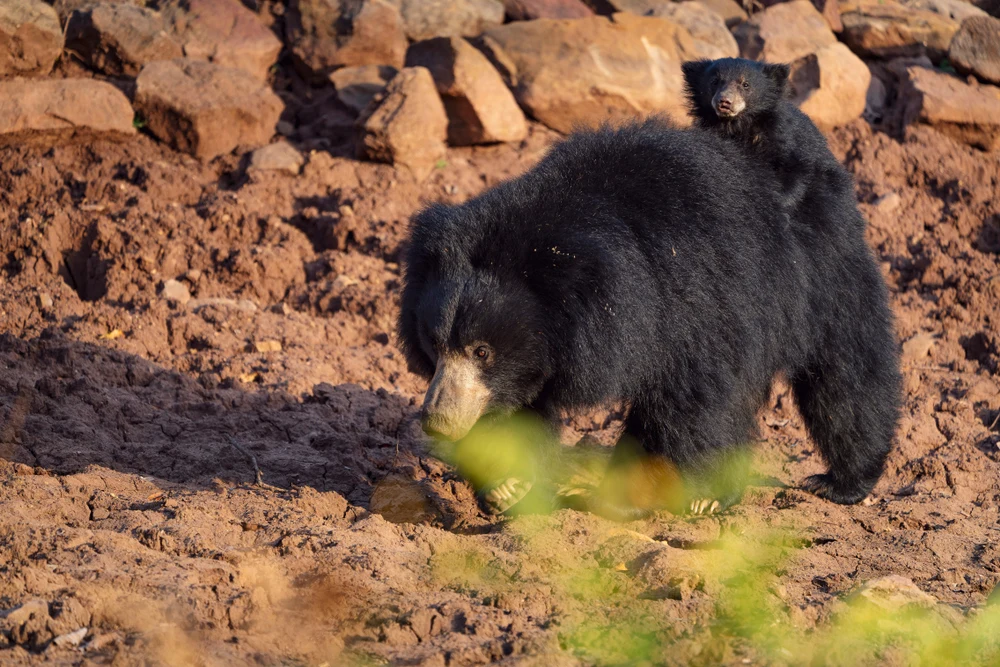
Satpura hosts tigers, leopards, sloth bears, wild dogs (dhole), Indian gaur, sambar, chital, nilgai, four-horned antelope, blackbuck, mouse deer, Indian giant squirrel, flying squirrels, barasingha (reintroduced), and marsh crocodiles.

Flora
Satpura National Park features dense sal and teak forests, bamboo thickets, and diverse mixed deciduous trees, along with grasslands and riverine vegetation, supporting rich biodiversity across varied landscapes.

Landscape
Rugged sandstone peaks rising to 1,352 m, narrow gorges, deep ravines, cascading waterfalls, dense sal-teak forests, bamboo groves, grasslands, and the meandering Denwa River with Tawa reservoir backwaters.
Safari Guide
Best Time to Visit
Things to Do
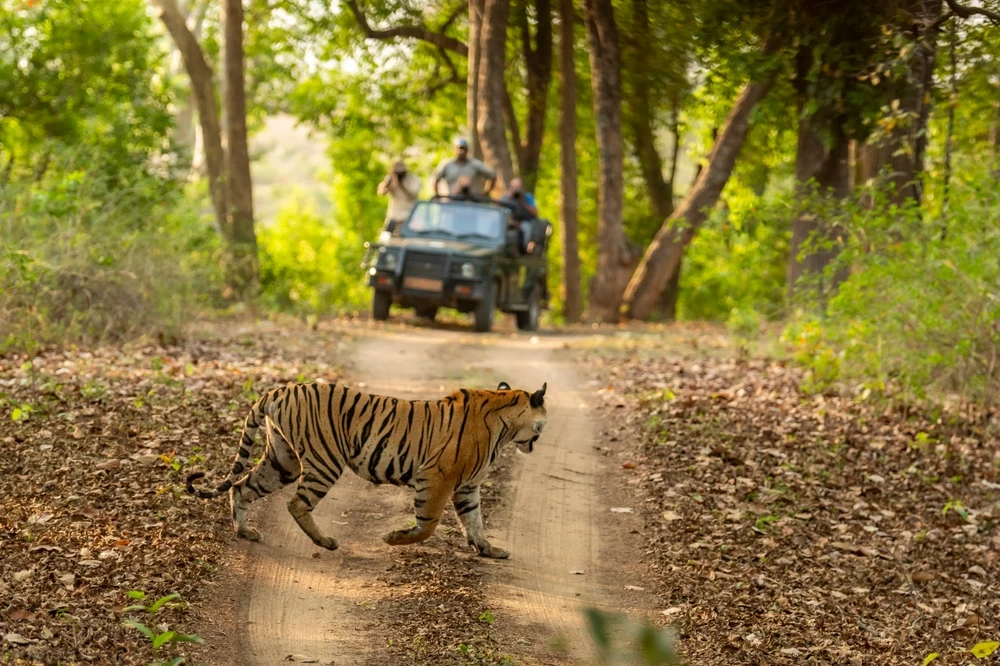
Jeep Safari
Explore Madhai and Churna core zones in open 4x4 vehicles tracking tigers, leopards, and sloth bears across diverse terrain.

Walking Safari
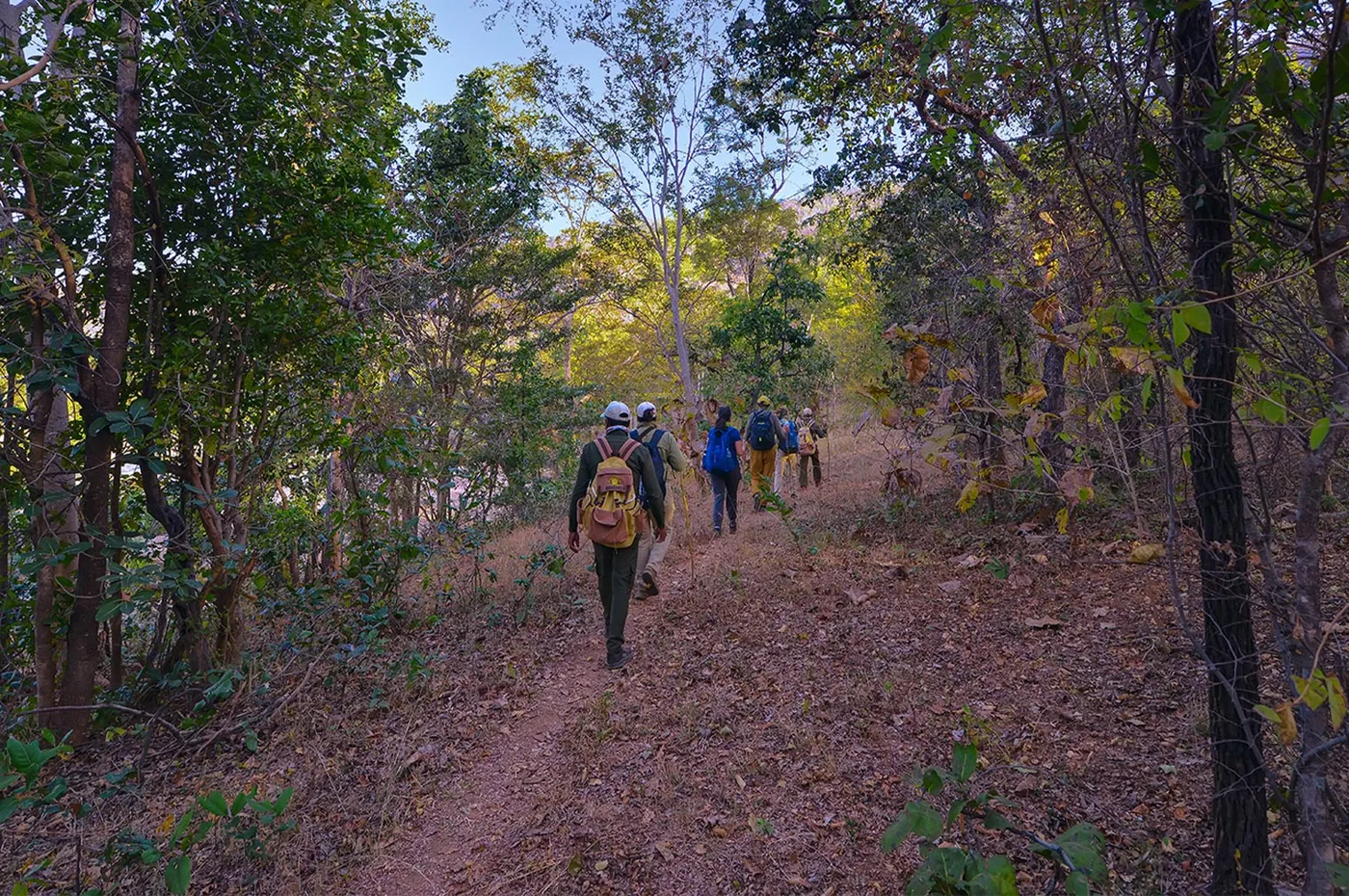
One of few Indian parks allowing foot safaris in tiger territory – guided treks through sal forests with naturalists and forest guards.

Forest Camping Stay
Overnight stays at Churna Forest Rest House deep inside the core area, surrounded by wilderness – a truly immersive experience.

Canoe Safari & Boat Cruise
Glide along the Denwa River spotting crocodiles, otters, kingfishers, and waterbirds from a unique water-level perspective.

Bird Watching
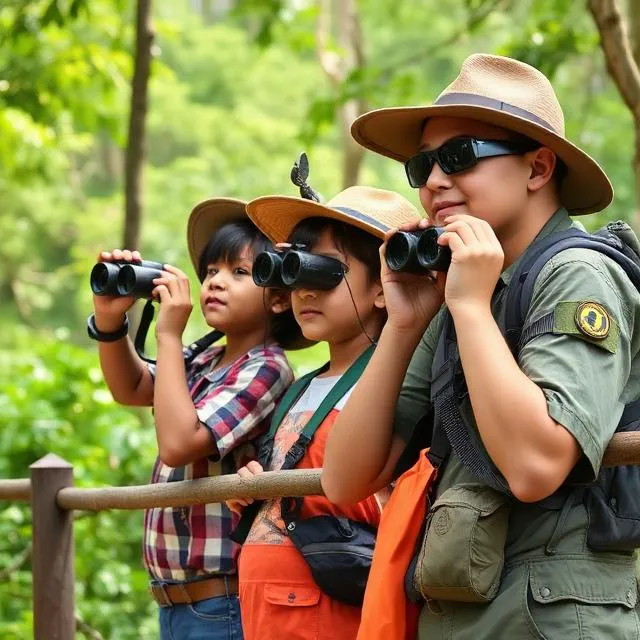
Spot 300+ species including Malabar pied hornbill, paradise flycatcher, black eagle, and migratory waterfowl on Denwa backwaters.

Wildlife Photography
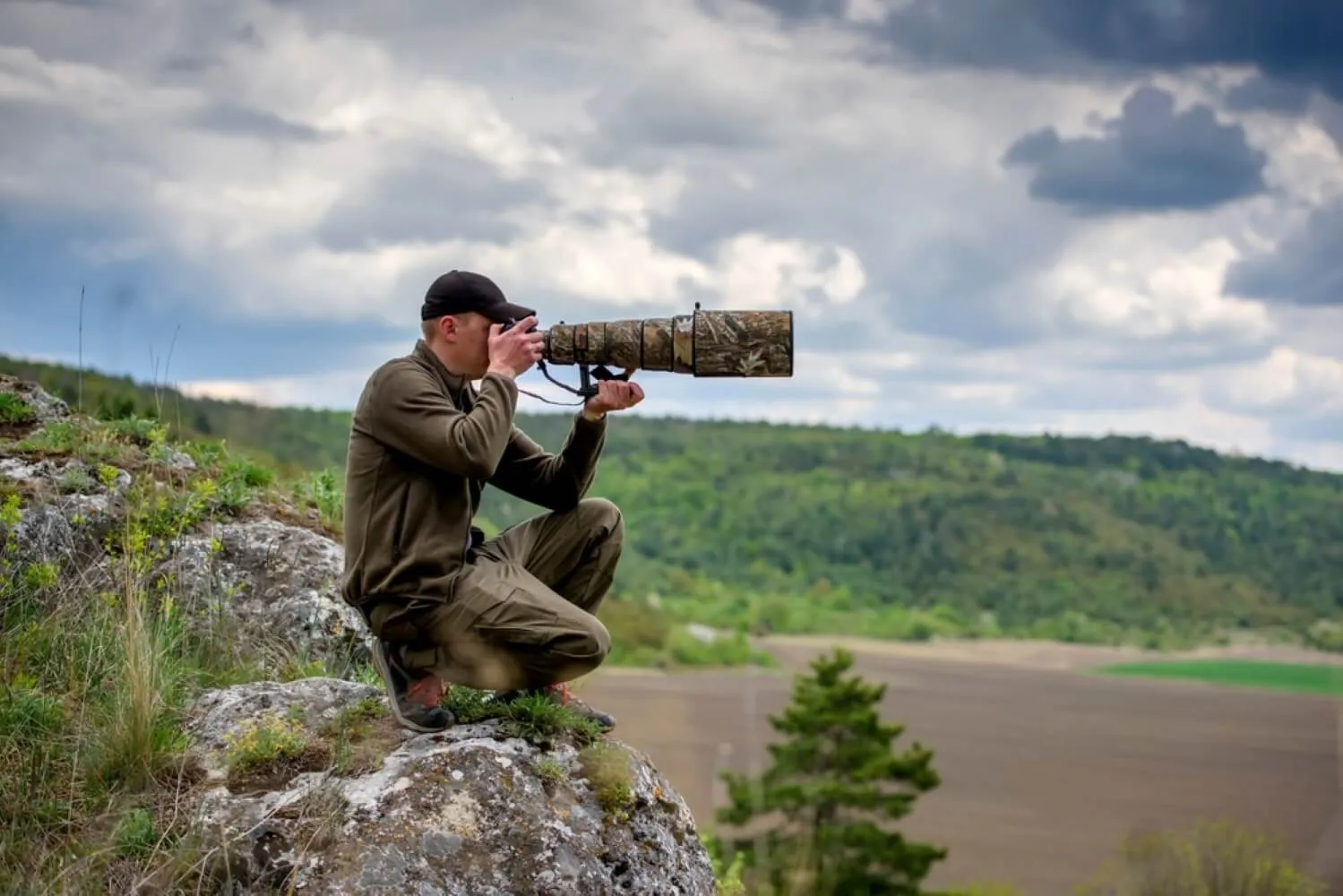
Capture dramatic landscapes, leopards on rocky outcrops, giant squirrels in canopy, and hornbills against misty Satpura hills.

Local Sightseeing
Visit Pachmarhi hill station, Bee Falls, Pandav Caves, Bhimbetka rock shelters, and Dhoopgarh Peak for panoramic sunset views.

Tribal & Cultural Experience
Engage with Korku and Gond tribal communities for indigenous crafts, dance, music, and traditional forest-based knowledge.
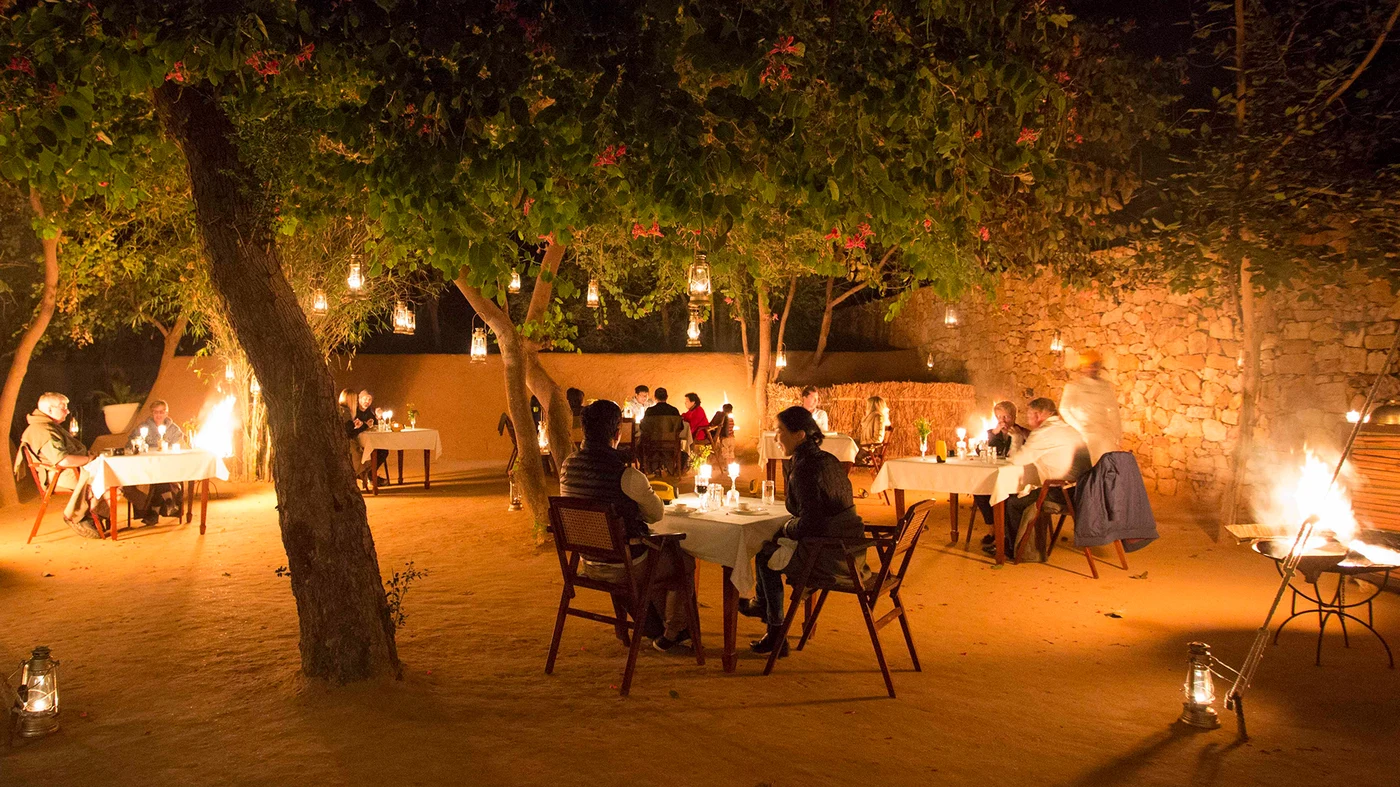
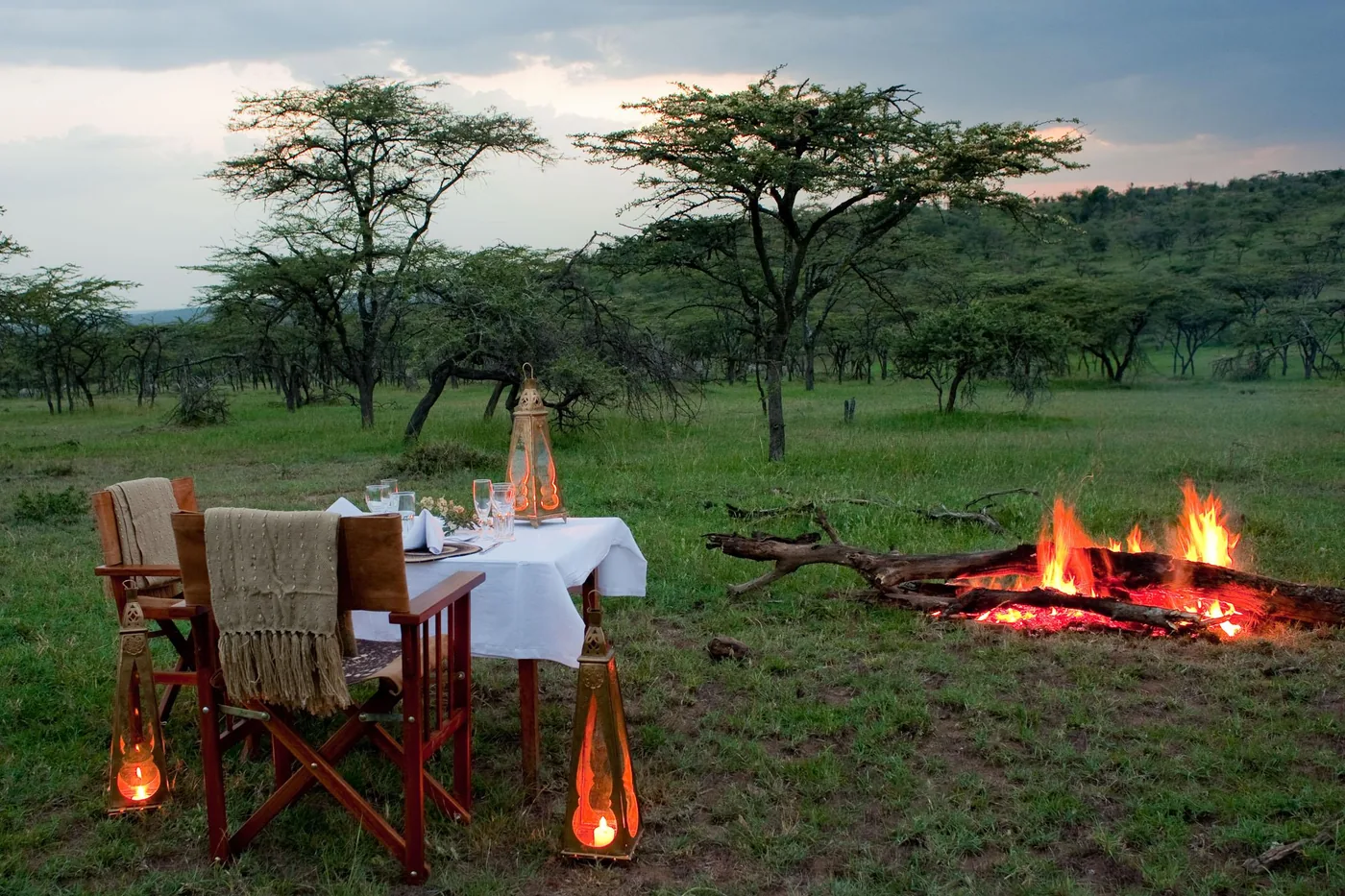
Bush Dinner
Dine under the stars at curated forest-edge setups by eco-lodges along the Denwa backwaters with campfire storytelling.

Sundowners
Enjoy golden-hour beverages overlooking the Denwa River with the Pachmarhi hills as a stunning backdrop.
How to Reach
Attractions

Denwa River Landscape
The park’s lifeline – winding through forests creating backwaters, islands, and vital habitats for crocodiles, otters, and waterbirds.

Madhai Gate
The primary and most popular entry point offering jeep, boat, canoe, and walking safaris with the highest tiger density zone.

Churna Forest Range
A remote core zone with large grasslands, the Churna Forest Rest House, and excellent chances of tiger and leopard sightings.

Satpura Hills
Ancient hill range meaning ‘Seven Mountains’, offering dramatic sandstone peaks, gorges, and ravines throughout the reserve.
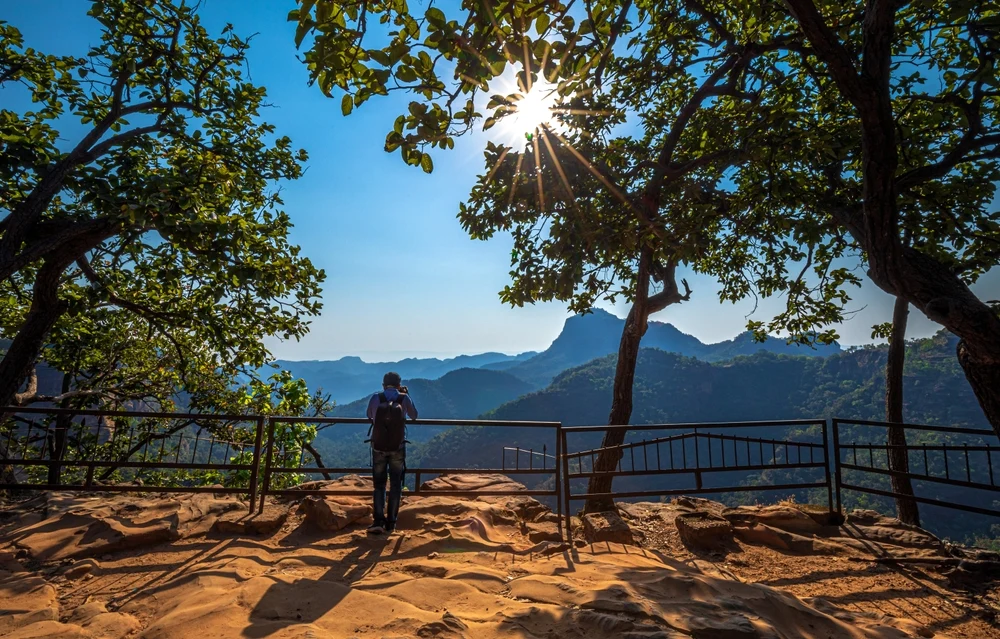
Dhoopgarh Peak
The highest point in Central India at 1,350 m, offering spectacular sunrise and sunset views over the Satpura landscape.

Pachmarhi Hill Station
MP’s only hill station nestled within the reserve, with colonial heritage, viewpoints, waterfalls, and pleasant year-round climate.

Bee Falls
A popular 35-metre waterfall near Pachmarhi, cascading through lush forest – ideal for photography and relaxation.

Handi Khoh
A dramatic 300-foot-deep ravine near Pachmarhi, surrounded by dense forest and shrouded in mist and legend.

Bhimbetka Rock Shelters
UNESCO World Heritage Site near Satpura with prehistoric cave paintings dating back 30,000 years depicting animal and human life.

Pandav Caves
Ancient cave formations near Pachmarhi, linked to Mahabharata legends and offering scenic forest surroundings.

Nagdwar Swami Temple
A revered pilgrimage site within the Satpura range, attracting devotees during the annual Nagpanchami festival.

Bori Wildlife Sanctuary
India’s first forest reserve (1865), now integrated with Satpura Tiger Reserve, offering pristine habitat with minimal disturbance.
Satpura Tour Packages
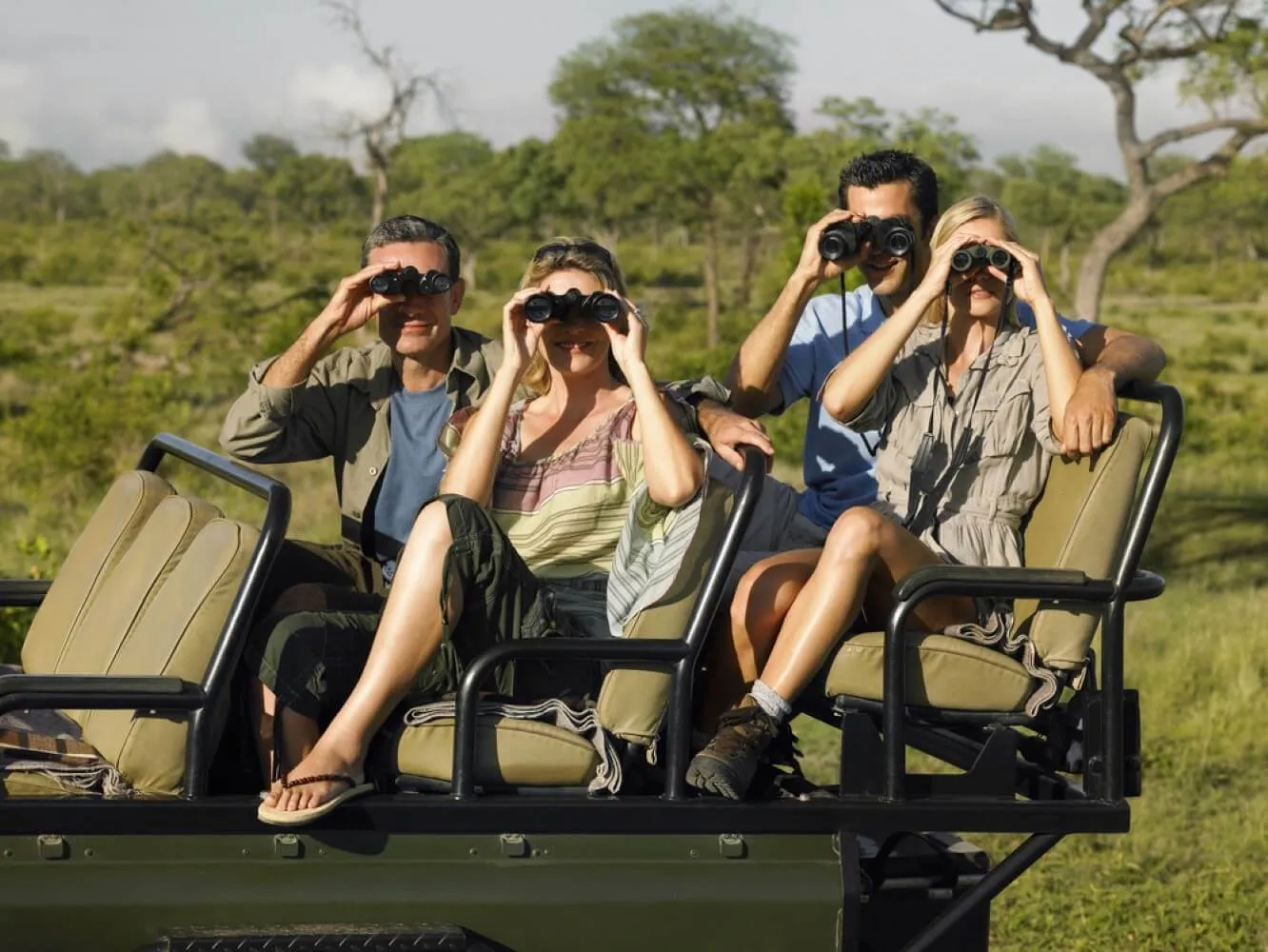
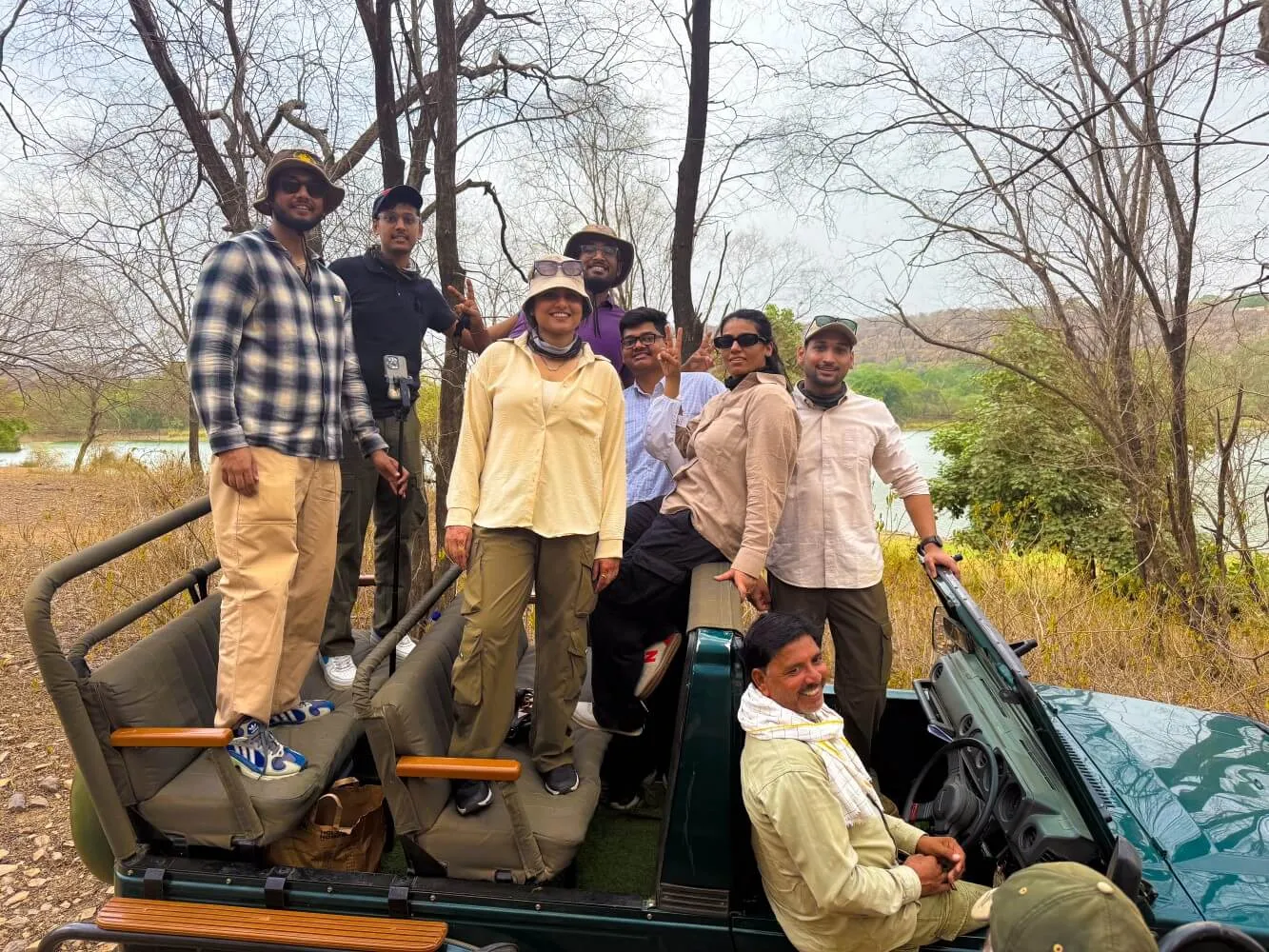
From walking safaris and canoe adventures to luxury forest escapes, every Satpura package is handcrafted around your travel style and love for authentic wilderness.






Satpura Hotels & Resorts — Luxury Jungle Lodges
We partner with Satpura's exclusive forest lodges and luxury wilderness camps—chosen for their exceptional service, immersive adventures, and serene natural settings.
Stay at Satpura National Park's finest handpicked wildlife lodges, where comfort meets the untamed wilderness.


Signature Experiences, Curated Around Satpura
From immersive outdoor experiences and nature exploration to peaceful moments in the wilderness, every experience is crafted to elevate your Satpura safari.












Nearby Destinations to Satpura

Pachmarhi
MP’s Only Hill Station

Bhopal
City of Lakes & Heritage

Bhimbetka
UNESCO Cave Paintings

Pench National Park
Jungle Book Country

Jabalpur
Marble Rocks & Waterfalls

Kanha National Park
Barasingha Country

Itarsi
Major Rail Junction
Other Parks in Madhya Pradesh


Other Parks in India


Satpura National Park FAQ's
What is Satpura National Park famous for?
Satpura National Park is famous for being one of the few Indian parks offering walking safaris in tiger territory. It is celebrated for its rugged, undisturbed landscapes, diverse safari experiences (jeep, boat, canoe, walking, camping), rich birdlife with 300+ species, and the Pachmarhi hill station located within the reserve. Its off-the-beaten-path character makes it a favourite among discerning wildlife enthusiasts.
Can we see tiger in Satpura National Park?
Yes, tigers are present in Satpura National Park, particularly in the Madhai and Churna zones. However, tiger sightings are less frequent than at Bandhavgarh or Kanha, as Satpura’s thick forests and rugged terrain make tigers harder to spot. Leopard and sloth bear sightings are more reliable. Satpura compensates with its uniquely diverse safari experiences and pristine wilderness.
Which animal is found in Satpura National Park?
Satpura National Park hosts tigers, leopards, sloth bears, wild dogs, Indian gaur, sambar, chital, nilgai, four-horned antelope, blackbuck, barasingha (reintroduced from Kanha), Indian giant squirrel, flying squirrels, mouse deer, pangolins, marsh crocodiles, Indian python, and over 300 bird species including the Malabar pied hornbill.
What is the best time to visit Satpura National Park?
October to March is ideal with pleasant weather (8–28°C) and excellent conditions for walking safaris, boat rides, and bird-watching. April to June is hot but good for tiger sightings near water. Core zones close during monsoon (mid-July to mid-October). Pachmarhi remains accessible year-round.
How many tigers are in Satpura National Park?
Satpura Tiger Reserve has an estimated 50+ tigers. The Madhai and Churna zones have the highest tiger density. While sightings are less frequent than in smaller, more concentrated reserves, the growing population reflects successful conservation efforts. Leopards are more commonly sighted.
Which zone is best in Satpura National Park?
Madhai Zone is the most popular and best-equipped zone, offering jeep safaris, walking safaris, boat rides, and canoe rides. Churna Zone (accessible via Bheemkund Gate or full-day safari from Madhai) offers remote wilderness with large grasslands and strong tiger/leopard sighting potential. Pachmarhi Zone is ideal for trekking, viewpoints, and hill station experiences.
Which animals vanished from Satpura National Park?
Historically, lions and cheetahs once roamed the Satpura ranges, as depicted in rock shelter paintings dating back thousands of years. Both species went extinct from the region long ago. However, conservation success stories include the reintroduction of barasingha from Kanha Tiger Reserve in 2015, with the population growing to 200 by 2024.
Which bird is Satpura National Park famous for?
Satpura is famous for the Malabar pied hornbill, a spectacular large bird frequently sighted in the park’s sal and teak forests. Other notable species include the paradise flycatcher (Madhya Pradesh’s state bird), black eagle, Malabar whistling thrush, brown fish owl, Indian skimmer, and bar-headed geese (winter migratory visitors).
Where is Satpura National Park located?
Satpura National Park is located in the Narmadapuram (formerly Hoshangabad) district of Madhya Pradesh, India, within the Satpura mountain range south of the Narmada River. Nearest towns: Pipariya (40 km), Sohagpur (20 km). Nearest city: Bhopal (150 km).
How to reach Satpura National Park?
Fly to Bhopal’s Raja Bhoj Airport (150 km, 3.5 hrs). By train, reach Pipariya (40 km), Sohagpur (20 km), or Itarsi Junction (70 km). By road, drive from Bhopal (150 km), Nagpur (320 km), or Jabalpur (230 km). Lodge transfers from Pipariya or Bhopal are most convenient.
How to book safari in Satpura National Park?
Book jeep safaris, Walking safaris, boat rides, and canoe safaris can be arranged through Wild Enthusiast’s safari booking third party platform. Forest camping at Churna requires advance booking. Pachmarhi can be explored independently year-round. Stay at eco-lodges near Madhai for the most diverse safari experience.Everything listed above can be conveniently arranged online through Wild Enthusiast Satpura Team.
When was Satpura National Park established?
Satpura National Park was established in 1981, introduced by renowned ornithologist Dr. Salim Ali. The Bori Wildlife Sanctuary (part of the reserve) was India’s first declared reserved forest in 1865. The area became a Tiger Reserve in 2000 and was declared part of the Pachmarhi Biosphere Reserve in 1999.
About Satpura National Park
Satpura National Park is a hidden gem in Central India’s wildlife landscape. Nestled in the ancient Satpura mountain range – whose Sanskrit name means ‘Seven Mountains’ – this vast reserve encompasses 2,133 sq km across the Narmadapuram district of Madhya Pradesh. Formed by the merger of Satpura National Park (524 sq km), Bori Wildlife Sanctuary, and Pachmarhi Wildlife Sanctuary, it is one of the largest tiger reserves in Central India.
What makes Satpura truly special is its extraordinary diversity of safari experiences. It is one of the few Indian national parks where walking safaris are permitted in tiger territory – an adrenaline-charged experience that connects visitors intimately with the wilderness. Canoe and boat safaris on the Denwa River, overnight forest camping at Churna, cycling through buffer zones, and the scenic Pachmarhi hill station within its boundaries create a multi-dimensional wildlife destination found nowhere else in India.
First explored by Captain James Forsyth in 1862 (while searching for freedom fighter Tatya Tope), the area’s ecological significance was recognized early. Bori was declared India’s first reserved forest in 1865. The national park was established in 1981, became a Tiger Reserve in 2000, and is part of the Pachmarhi Biosphere Reserve (1999). The UNESCO World Heritage tentative list includes Satpura Tiger Reserve for its outstanding natural value.
Quick Facts about Satpura National Park
| Feature | Details |
|---|---|
| Full Name | Satpura Tiger Reserve |
| Location | Narmadapuram, Madhya Pradesh |
| Total Area | 2,133 sq km |
| NP Area | 524 sq km |
| Elevation | 300–1,352 m |
| Tigers | ~50+ |
| Mammals | 52 species |
| Birds | 300+ species |
| Plants | 1,300+ species |
| Zones | 5 (Madhai, Churna, Pachmarhi, Sehra, Pathai) |
| Best Time | October to June |
| Park Partially Close | 1st July to 30th September (Monsoon) only buffer zone is open |
| Biosphere | Pachmarhi Biosphere Reserve (1999) |
| UNESCO Tentative | Listed for World Heritage |
The terrain is spectacularly rugged: sandstone peaks rise to 1,352 m at Dhoopgarh, deep ravines and narrow gorges cut through the landscape, and the Denwa and Tawa rivers create vital wetland ecosystems. The elevation ranges from 300 m in the plains to 1,352 m on the Pachmarhi plateau, creating multiple habitat types within a single reserve.
Vegetation includes moist and dry deciduous forests dominated by sal and teak, bamboo groves, grasslands, and rare endemic plants. Over 1,300 plant species are recorded. The park shares botanical affinities with both the Himalayas (26 species) and Western Ghats (42 species), earning it the description ‘northern extremity of the Western Ghats.’ Rock shelters with paintings 1,500–10,000 years old dot the landscape, depicting tigers, lions, deer, and elephants – evidence of the region’s ancient wildlife heritage.
History of Satpura National Park
Captain James Forsyth first explored these forests in 1862. Bori was declared India’s first reserved forest in 1865 for its ecological and commercial timber importance. Satpura National Park was established in 1981, introduced by Dr. Salim Ali. In 1999, the area was designated part of the Pachmarhi Biosphere Reserve – MP’s first. In 2000, it became a Tiger Reserve under Project Tiger. Critical Tiger Habitat was notified in 2007, and the buffer zone was declared in 2010. Twenty-three villages were relocated from the core area to create undisturbed wildlife habitat and new grasslands.
Flora & Fauna of Satpura National Park
Moist and dry deciduous forests with sal dominating the Pachmarhi plateau and teak on lower basaltic slopes. Over 1,300 plant species recorded: 62 tree species, 30 small trees, 58 shrubs, 32 climbers, 64 grasses. Rare endemic species include Psilotum, Cyathea (tree ferns), Osmunda, Lycopodium. Bamboo groves, grasslands, and medicinal herbs add to extraordinary botanical diversity.
Tigers, leopards, sloth bears, wild dogs, Indian gaur, sambar, chital, nilgai, four-horned antelope, blackbuck, barasingha (200 reintroduced from Kanha by 2024), mouse deer, Indian giant squirrel, flying squirrels, pangolins, porcupines, langurs, rhesus macaques. Denwa River hosts marsh crocodiles, otters (both Eurasian and smooth-coated), and Indian python. Over 300 bird species including Malabar pied hornbill, paradise flycatcher, black eagle, Indian skimmer, and bar-headed geese.
Conservation Efforts at Satpura National Park
Satpura Tiger Reserve is one of India’s most successfully managed reserves. The NTCA and MP Forest Department implement anti-poaching patrols, camera-trap monitoring, and habitat management. Twenty-three villages were relocated to create 8,740 hectares of anthropogenic grasslands critical for herbivore prey. Barasingha reintroduction from Kanha (98 animals in 2015, grown to 200 by 2024) is a notable conservation success. Active grassland management through controlled burning prevents woody invasion. The reserve’s low commercialisation and limited vehicle numbers maintain ecosystem integrity.
Walking Safari – Satpura’s Signature Experience
Satpura’s walking safari is its most distinctive offering. One of very few Indian national parks permitting foot safaris in core tiger habitat, these guided treks are accompanied by experienced naturalists and armed forest guards. Walking through sal and teak forests, crossing streams, reading pugmarks, and tracking wildlife on foot creates an intimate, adrenaline-charged connection with the wilderness that no vehicle safari can replicate. Trails traverse varied terrain from plains to hillsides, with encounters ranging from giant squirrels overhead to leopard tracks in the mud below.
Pachmarhi – The Queen of Satpura
Madhya Pradesh’s only hill station, Pachmarhi (1,067 m), lies within the Satpura Tiger Reserve. This colonial-era settlement offers 30+ viewpoints, waterfalls (Bee Falls, Duchess Falls), ancient caves (Pandav Caves), and the dramatic Handi Khoh ravine. Dhoopgarh Peak (1,350 m) – Central India’s highest point – provides spectacular sunrise and sunset panoramas. Pachmarhi remains open year-round and can be combined with wildlife safaris for a unique hill-and-jungle itinerary.