Overview of Periyar National Park
Periyar National Park — officially designated the Periyar Tiger Reserve — is South India's most celebrated, most visited, and most beloved wildlife sanctuary: a place where the drama of the Western Ghats meets the serenity of a century-old artificial lake, where tigers and elephants congregate at the water's edge in full view of silent boats, and where the rolling Cardamom Hills create one of the most atmospheric wildlife settings anywhere on the Indian subcontinent. Located in the Idukki and Pathanamthitta districts of Kerala at the hill station of Thekkady, the reserve encompasses a total area of 925 sq km with a core national park zone of 350 sq km, placing it among the largest protected areas in Kerala and one of the finest in all of South India.
At the physical and ecological heart of the reserve lies Periyar Lake — a 29 sq km artificial reservoir created in 1895 by the construction of the Mullaperiyar Dam across the Periyar River by the British administration. The dam, built to divert water to the drought-prone Madurai plains of Tamil Nadu, inadvertently created one of the finest wildlife viewing landscapes in Asia: a shallow, forest-fringed lake surrounded on all sides by the dense canopy of the Western Ghats, into which elephants, gaur, sambar, wild boar, and the occasional tiger descend from the forest to drink, bathe, and graze on the exposed grass banks. The lake boat safari — gliding silently through mirror-calm water at dawn with the mist rising from the forest and elephants wading at the shoreline — is one of India's most iconic wildlife experiences, and what first draws most visitors to Periyar.
The park's conservation history stretches back to 1899, when the area was declared the Periyar Lake Reserve under the Travancore royal administration to protect the hunting grounds of the Travancore kings. In 1934, the intrusion of tea plantations was formally stopped by the Maharaja. The area was declared a wildlife sanctuary in 1950, included in Project Tiger in 1978 (renamed the Periyar Tiger Reserve), declared a national park in 1982, and brought under Project Elephant in 1992. In 2004, the Periyar Foundation was established, and the Goodrich Range (148 sq km) was added to the reserve, expanding its area to the current extent.
Periyar is internationally acclaimed for one of India's most innovative and socially conscious conservation programmes: the Periyar Tiger Trail, in which former poachers and forest encroachers who once threatened the park's wildlife have been comprehensively rehabilitated as expert wildlife guides, conservation educators, and forest protectors. These ex-poachers — intimately familiar with every trail, waterhole, and wildlife pattern in the reserve — now lead trekking groups deep into the Periyar wilderness on multi-day trails, sharing their extraordinary ecological knowledge while acting as the park's most motivated and knowledgeable guardians. This programme has won international conservation awards and is regarded as a global benchmark for community-based wildlife conservation.
Geography, Topography & Climate
Periyar National Park occupies the Cardamom Hills and Pandalam Hills at the southern tip of the Western Ghats, at the border of Kerala and Tamil Nadu. The terrain is characterised by steep, rolling hills thickly wooded with tropical evergreen and semi-evergreen forest, with the highest peak — Kottamalai — reaching 2,019 metres above sea level inside the park. The park is bounded by mountain ridges of approximately 1,700 m altitude on the north and east, and expands into a 1,200 m plateau toward the west.
The climate is strongly influenced by both the Southwest Monsoon (June–September, contributing approximately two-thirds of the annual 2,000–3,000 mm rainfall) and the Northeast Monsoon (October–December). Temperatures range from 15°C in December–January to 31°C in April–May. The altitude ensures that Thekkady town and the park maintain a pleasantly cool climate throughout the year compared to the Kerala lowlands. The deep valleys of the reserve are covered with tropical evergreen forest where towering trees (reaching 30–42 metres in height) create a dense canopy through which minimal sunlight penetrates — creating a permanently cool, humid microclimate ideal for the remarkable diversity of endemic flora.
Flora: Western Ghats Botanical Heritage
The flora of Periyar National Park is one of the most species-rich of any protected area in peninsular India, reflecting the reserve's position within the Western Ghats biodiversity hotspot — one of the world's 36 globally recognised centres of exceptional biodiversity. The park supports 1,965 flowering plant species, including 171 species of grasses and 143 species of orchids. Of particular botanical significance is the presence of Podocarpus wallichianus — the only conifer tree found in South India, a relic gymnosperm of great biogeographic significance, surviving in Periyar's cool, moist forests as a remnant of ancient Gondwanan flora.
The vegetation comprises tropical evergreen forest in the deep valley habitats, semi-evergreen forest on the middle slopes, and moist deciduous forest on the drier slopes and ridges. Dominant tree species include Rosewood (Dalbergia latifolia), Wild Jack (Artocarpus hirsutus), Teak (Tectona grandis), Bamboo (Dendrocalamus species), Vateria indica, and Palaquium ellipticum. The understorey is dense with shade-adapted herbs, ferns, mosses, and the extraordinary diversity of orchid species that make the Cardamom Hills globally renowned among botanists. Rare medicinal plants — including several species listed in the IUCN Red Data Book — abound in the protected core zone, and the park serves as a critical gene bank for Western Ghats medicinal plant diversity.
Wildlife: Fauna of Periyar National Park
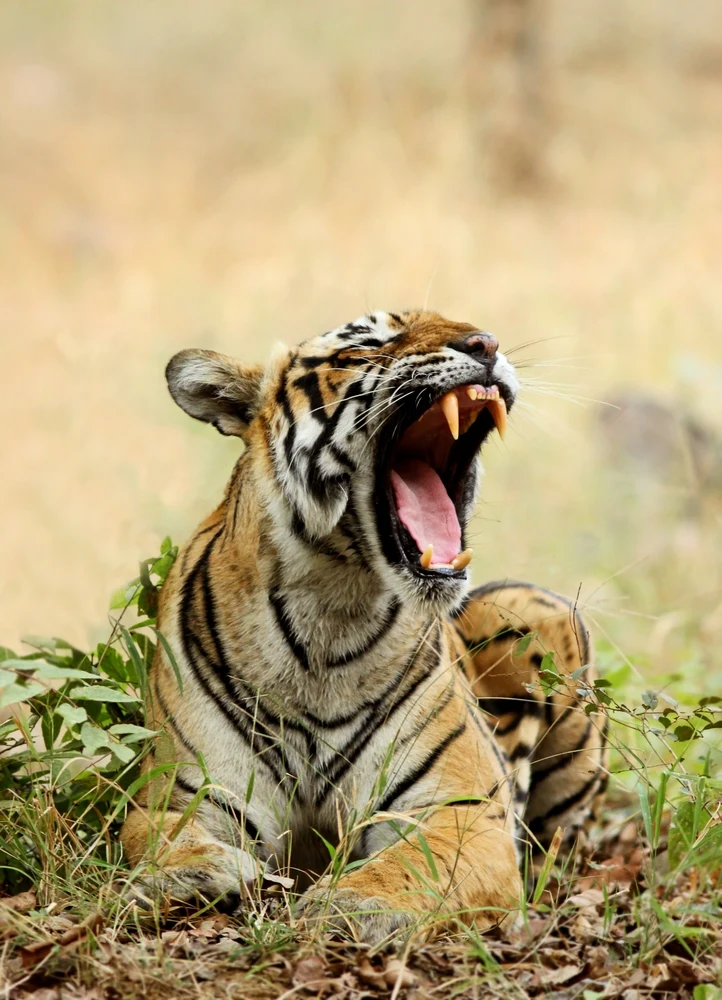
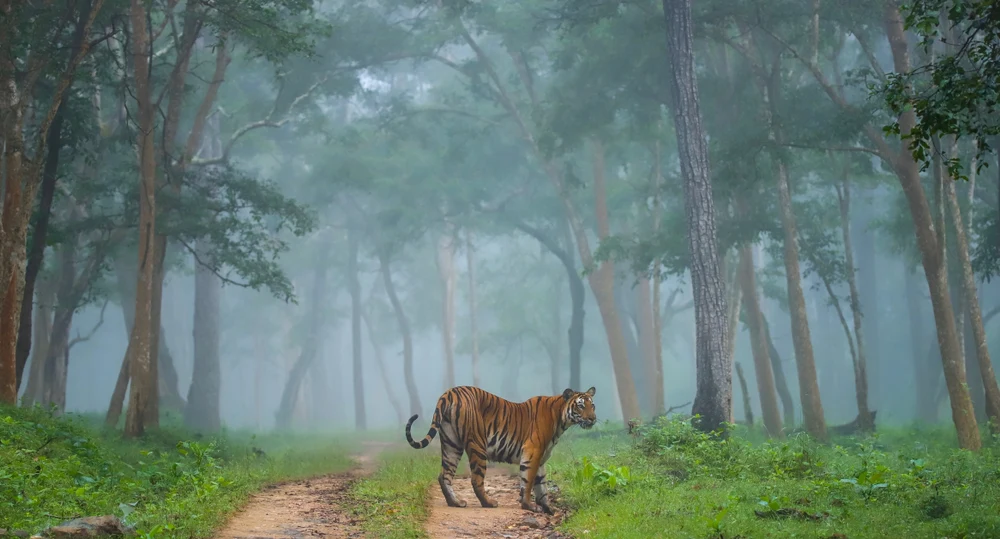
Tiger Population — 50+ Individuals
The Bengal Tiger (Panthera tigris tigris) is Periyar's apex predator and the primary species for which the reserve was designated a Project Tiger reserve in 1978. The current tiger population is estimated at approximately 50 individuals, making Periyar one of the more densely tiger-populated reserves in the Western Ghats. Tiger sightings are most probable during the dry season (March–May) when the forest floor is more open and animals congregate near the lake and waterholes. The boat safari in the afternoon (particularly the 1:45 PM slot) offers genuine tiger-sighting potential when tigers descend to the lake to drink.
Asian Elephant — The Icon of Periyar
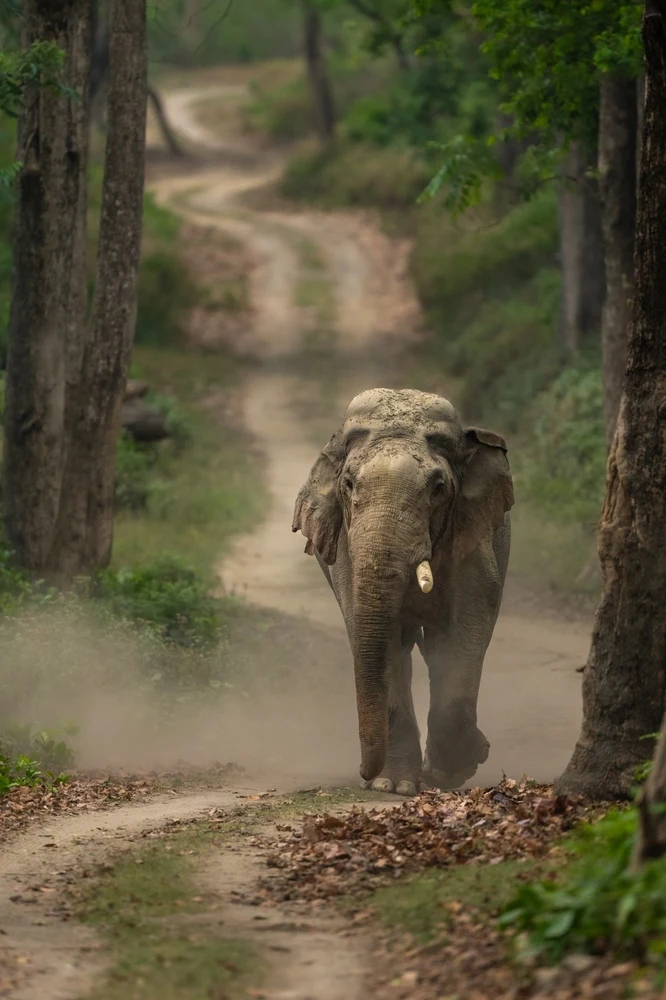
The Asian Elephant (Elephas maximus) is the most frequently sighted and most beloved large mammal of Periyar. Herds of elephants — some numbering 20–30 individuals — congregate at the shores of Periyar Lake in the morning and afternoon, providing some of the most spectacular wildlife viewing experiences available anywhere in India. Periyar is particularly celebrated for the frequency and quality of elephant sightings from the lake boats, with multigenerational herds — including tiny calves — visible wading and bathing in the shallows within metres of the silent boats.
Complete Mammal Roster — 49 Species
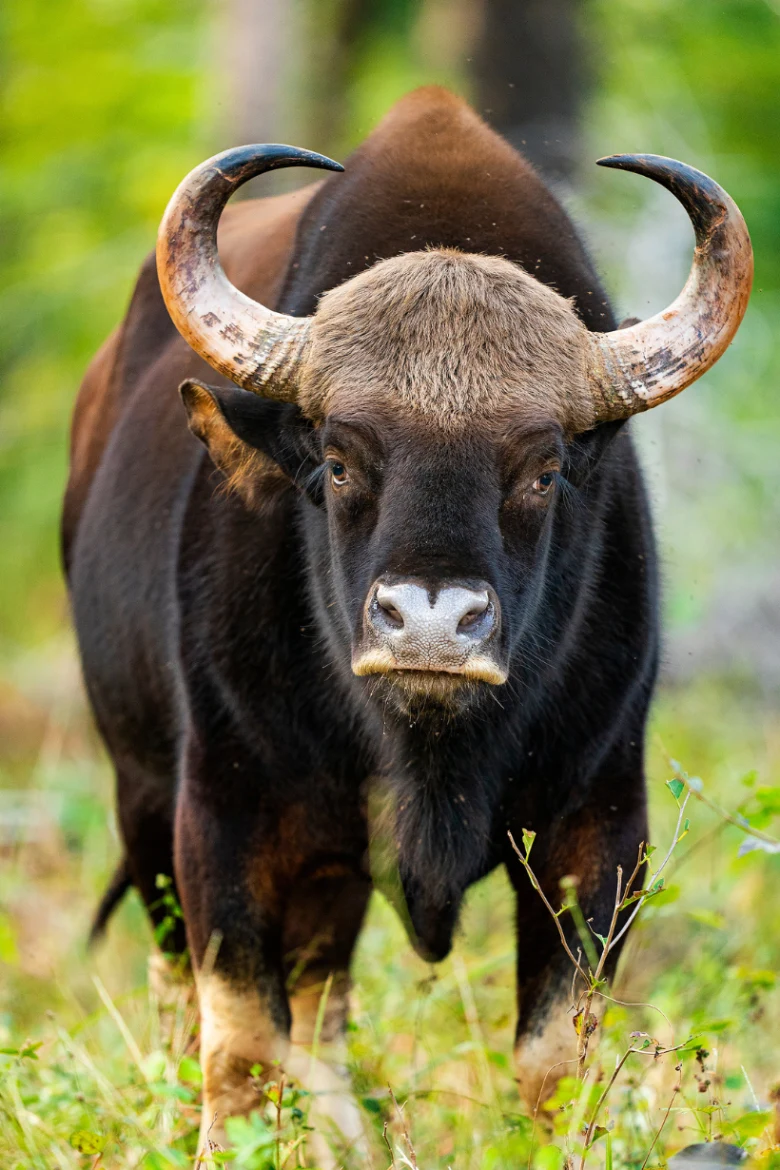
- Gaur (Indian Bison, Bos gaurus) — the world's largest wild bovid; common near the lake margins
- Indian Leopard (Panthera pardus fusca) — present in the rocky terrain and forest edges
- Dhole (Indian Wild Dog, Cuon alpinus) — social pack hunters; regularly seen on forest trails
- Sloth Bear (Melursus ursinus) — found in the forest understorey
- Nilgiri Tahr (Nilgiritragus hylocrius) — Endangered endemic; found on rocky, grass-covered slopes
- Lion-tailed Macaque (Macaca silenus) — Endangered Western Ghats endemic; found in forest canopy
- Nilgiri Langur (Semnopithecus johnii) — Vulnerable Western Ghats endemic
- Sambar Deer, Barking Deer, Mouse Deer — important prey species
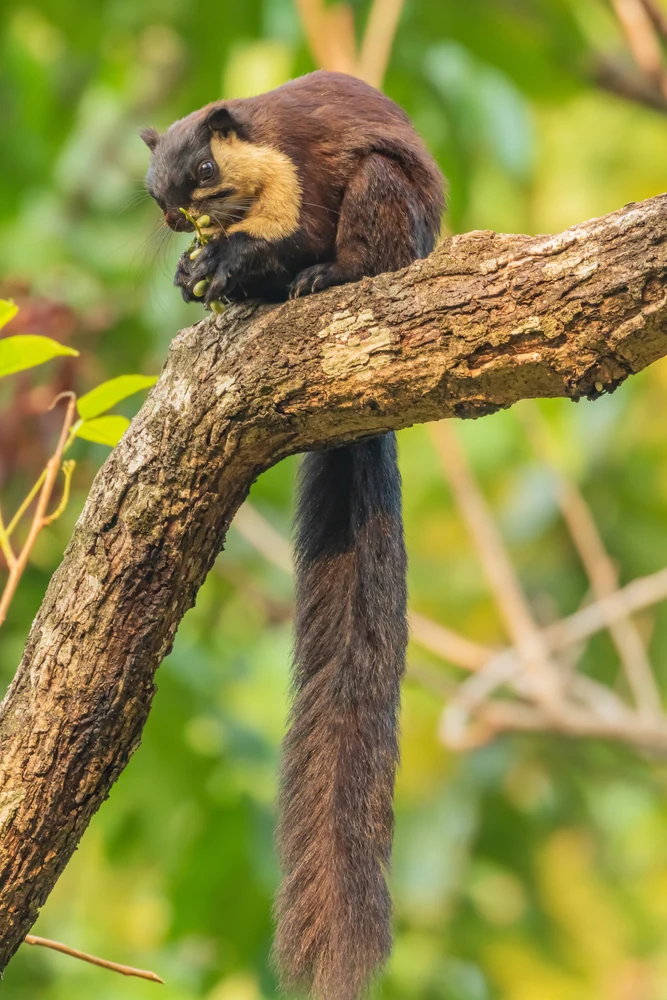
- Wild Boar, Indian Giant Squirrel, Smooth-coated Otter
- Jungle Cat, Small Indian Civet, Common Palm Civet
Avifauna — 266 Species Including Western Ghats Endemics
With 266 documented bird species, Periyar National Park is one of Kerala's premier birdwatching destinations. The reserve falls entirely within the Western Ghats Endemic Bird Area (EBA), and supports numerous species endemic or near-endemic to the Western Ghats: the Malabar Grey Hornbill, White-bellied Blue Robin, Malabar Trogon, Nilgiri Flycatcher, White-bellied Treepie, Kerala Laughingthrush, and many others. Waterbirds on Periyar Lake include Little Cormorant, Indian Darter, Grey Heron, Purple Heron, and various kingfisher species. Raptors include Crested Serpent Eagle, Mountain Hawk-Eagle, and the Changeable Hawk-Eagle.
Reptiles, Amphibians & Butterflies
The reserve supports 28 reptile species (including King Cobra, Indian Rock Python, and the spectacular Monitor Lizard) and 112 butterfly species. The amphibian fauna includes several species endemic to the Western Ghats, reflecting the extraordinary endemism that characterises this globally important biodiversity hotspot. The water bodies host Mugger Crocodile and various freshwater turtle species.
Safari & Activity Options at Periyar
Boat Safari on Periyar Lake — The Signature Experience
The boat safari on Periyar Lake is Periyar National Park's most iconic, most famous, and most beloved activity — and one of the finest wildlife experiences in all of South India. Five safari slots run daily from 7:30 AM to 5:00 PM, each lasting 90 minutes: 7:30–9:00 AM; 9:30–11:00 AM; 11:15 AM–12:45 PM; 1:45–3:15 PM; 3:30–5:00 PM. The Kerala Forest Department operates the boats; wearing life jackets is mandatory. Entry: Rs. 470 for Indians; Rs. 1,130 for foreign nationals. The afternoon slot (1:45 PM) is recommended for wildlife sightings — particularly elephants, wild boar, and sambar descending to the lake. The morning slot offers the finest photography light.
The pick-up point is the Aanavachal Parking Area in Thekkady; visitors are transported by bus to the lake landing point approximately 4 km away. Advance online booking through the official Periyar Tiger Reserve website (periyartigerreserve.org) is strongly recommended — boat safari seats fill rapidly.
Periyar Tiger Trail — The Ex-Poacher Experience
The internationally acclaimed Periyar Tiger Trail is one of India's most extraordinary wildlife experiences: a 2–3 day deep-forest trekking programme led exclusively by former poachers who have been rehabilitated as expert wildlife guides through the Vana Samrakshana Samiti (VSS) eco-development programme. These guides possess unparalleled knowledge of tiger behaviour, wildlife tracking, forest ecology, and the intimate terrain of Periyar's most remote zones — knowledge they once used to harm the forest and now deploy to protect and share it. The trail operates throughout the year and requires advance booking through the Periyar Tiger Reserve office.
Bamboo Rafting
A unique experience available at Periyar: bamboo rafting on the Periyar River in the buffer zone, typically covering 3–4 hours through the forest with 3–4 participants per raft, accompanied by a guide and forest department escort. Fee: approximately Rs. 1,200–1,500 per person. This activity provides intimate close-range access to the riparian forest ecosystem and is particularly productive for birdwatching.
Nature Walks & Green Walks
Guided nature walks of varying duration (2–6 hours) are conducted throughout the day from the park entry points, covering the peripheral forest trails within the tourist zone. Fee: Rs. 100–300 per person depending on route. The morning walks (starting 6:00 AM) are most productive for birdwatching and mammal sightings.
Border Hiking & Night Trekking
Border hiking — a full-day trek along the park's boundary trails — provides access to deeper, less-visited forest zones with high wildlife sighting potential. Night trekking (11:00 PM–3:00 AM) offers a rare chance to encounter nocturnal wildlife under torch and starlight. Both require advance booking and Forest Department permission.
Gavi Jungle Jeep Safari
The Gavi zone — a remote, scenic section of the Periyar reserve approximately 50 km from Thekkady — offers an immersive full-day jeep safari (6:00 AM–4:00 PM or 5:30 AM–1:00 PM for the shorter version) through some of the finest, least-disturbed forest in the reserve. Gavi is particularly celebrated for Nilgiri Tahr sightings on its grassland slopes and for the birding on its forest trails.
Mangaladevi Temple
Situated approximately 15 km inside the Periyar forest, the ancient Mangaladevi Temple is dedicated to Goddess Mangaladevi (Kannaki) and is normally inaccessible to the public — opened exclusively on the occasion of the Chitra Pournami festival (a full-moon day in the Malayalam month of Chithira, usually April–May) when thousands of pilgrims trek through the forest to the shrine. The rare forest trek to this sacred temple represents one of Periyar's most atmospheric and culturally significant experiences.
How to Reach Periyar National Park
By Air
Madurai International Airport (IATA: IXM), Tamil Nadu — approximately 140 km from Thekkady (approximately 3–3.5 hours by road). This is the closest airport. Cochin International Airport (IATA: COK) — approximately 190 km from Thekkady (approximately 4.5 hours). From both airports, hire a taxi or take a private bus to Thekkady/Kumily.
By Rail
Kottayam Railway Station (KTYM) is the nearest major railhead at approximately 106 km from Thekkady (approximately 3 hours by road), well-connected to Thiruvananthapuram, Kochi, Kozhikode, and Chennai. From Kottayam, state-run and private buses operate to Thekkady. Ernakulam Junction (Kochi) at approximately 190 km is the most nationally connected alternative.
By Road
Thekkady/Kumily is well-connected by road: Kochi — 190 km (4.5 hours); Munnar — 90 km (3 hours, spectacular mountain road); Madurai — 140 km (3 hours); Thiruvananthapuram — 250 km (5.5 hours); Coimbatore — 120 km (3 hours). KSRTC operates regular bus services from Kochi, Thiruvananthapuram, Kottayam, and Coimbatore to Kumily (the town adjacent to Thekkady). Private buses and taxis are widely available.
Best Time to Visit Periyar National Park
October to June (Open Season — Best Overall)
Periyar National Park remains open throughout the year — unlike most Indian wildlife parks that close during monsoon — making it one of India's most accessible year-round wildlife destinations.
September to May (Best for Wildlife Sightings)
The post-monsoon period from September to November brings lush green forests and good wildlife activity. December to February is the peak tourist season with the most comfortable weather (15–25°C). March to May is the finest season for large mammal sightings (especially elephants and tigers) as water sources concentrate wildlife near the lake.
June to August (Monsoon — Atmospheric but Wet)
The park remains open during monsoon, making Periyar one of India's unique year-round parks. The forest is intensely green and atmospheric; boat safaris continue. Wildlife sightings are more difficult due to dense vegetation. Monsoon trekking requires proper gear. Bamboo rafting is particularly thrilling during high water.
Entry Fees & Timings
- Park entry: Included in boat safari ticket (Rs. 470 Indians; Rs. 1,130 foreigners)
- Boat safari: Rs. 470/Indian; Rs. 1,130/foreigner — 5 slots daily (7:30 AM to 5:00 PM)
- Bamboo rafting: Rs. 1,200–1,500/person — advance booking essential
- Nature walk: Rs. 100–300/person depending on route
- Border hiking: Full-day programme — check current rates at park office
- Night trekking: Check current rates (Rs. 300–500 approximate)
- Camera fee: Rs. 25 (still); Rs. 150 (video)
- Park open: 6:00 AM to 7:00 PM daily, year-round
- Boat landing accessible: 7:30 AM to 5:00 PM
All bookings: periyartigerreserve.org (official website). Advance online booking strongly recommended for all activities.
Accommodation Options
- Aranya Nivas (KTDC inside reserve): Government hotel within the park premises — superb location for early morning and late afternoon wildlife sightings. Book well in advance.
- Lake Palace (KTDC inside reserve): Heritage hotel on an island in Periyar Lake, accessible only by boat — the most atmospheric accommodation at Periyar. Very limited rooms; book months in advance.
- Periyar House (KTDC near park): Another government option close to the entry gate.
- Kumily town (1–3 km from park): Wide range of budget to premium private hotels, eco-lodges, and resorts. Options include Spice Village (CGH Earth — premium eco-resort), Mickey Homan Residency, and numerous guesthouses.
- Spice/tea plantation bungalows: Several heritage plantation bungalows in the Thekkady-Kumily area offer unique accommodation amid cardamom, pepper, and coffee estates.
Nearby Attractions
Kumily Spice Town (1 km from park gate)
The bustling spice market of Kumily — filled with cardamom, pepper, cloves, cinnamon, vanilla, and nutmeg — is one of the finest spice trading centres in Kerala and a rich sensory experience. Guided spice plantation tours (Abraham's Spice Garden, Green Park Ayurvedic Spices) explain cultivation and processing.
Munnar (90 km)
Kerala's most famous hill station and tea country, offering sweeping views over endless tea gardens, the Eravikulam National Park (home to the Nilgiri Tahr), Anamudi Peak (South India's highest at 2,695 m), Mattupetty Dam, and the iconic Kundala Lake.
Cardamom Hills & Plantation Country
The region surrounding Periyar is the heart of India's cardamom production — the Cardamom Hills create a spectacular backdrop of spice-scented forest-plantation landscape. Pandikuzhi waterfalls and picnic spots are located just 5 km from Kumily.
Ramakkalmedu (15 km from Kumily)
A panoramic hilltop viewpoint with windmills offering spectacular views over the Periyar reserve forest, Tamil Nadu plains, and the surrounding Western Ghats ridgeline.
Travel Tips for Periyar National Park
- Book boat safari tickets online at periyartigerreserve.org well in advance — popular slots (7:30 AM and 1:45 PM) sell out weeks ahead during peak season (November–March).
- Arrive at the Aanavachal Parking Area at least one hour before your boat safari slot. Visitors are transferred by bus to the lake landing point 4 km away.
- Carry binoculars — they are essential for the boat safari when elephants and birds are visible across the water at distance.
- The 1:45 PM boat safari slot has the highest probability of elephant sightings as herds descend to the lake in the afternoon heat. Morning slots offer better photography light.
- Wear neutral-coloured clothing (olive, khaki, beige). Life jackets are mandatory on the boat — do not resist the rules.
- Kumily town has excellent Kerala cuisine — try the local spice-infused Malabar cooking at town restaurants after your safari.
- For the Periyar Tiger Trail (2–3 day trek), book at least 2–3 months in advance — the programme is extremely popular and places are limited.
- The Elephant Junction near Kumily offers elephant interaction and feeding experiences (separate from the park) for visitors seeking direct elephant contact.
Conservation Significance
Periyar National Park occupies a position of exceptional importance within the conservation landscape of the Western Ghats. Its large area, altitude range, and connectivity to the Anaimalai and Agasthyamalai mountain complexes make it a critical node in the Peninsular India tiger landscape — linking tiger populations of Kerala with those of Tamil Nadu and sustaining gene flow across one of the subcontinent's most important wildlife corridors. The park's integration of tribal communities — particularly through the Vana Samrakshana Samiti's eco-development programme and the extraordinary Periyar Tiger Trail — has established it as an international model for participatory conservation in which local communities are transformed from threats to the forest into its most passionate defenders.
Frequently Asked Questions (FAQ) - Periyar National Park
What is the best time to visit Periyar National Park?
Periyar is open year-round - a rare feature among Indian national parks. The best overall time is September to May. March-May concentrates elephants and other wildlife near the lake for maximum sightings. December-February offers the most comfortable weather. The park also operates during the monsoon (June-August) with boat safaris available, making it one of India's finest all-season wildlife destinations.
How do I book the Periyar Lake boat safari?
Book online at periyartigerreserve.org - the official Kerala Forest Department booking portal. Five slots run daily between 7:30 AM and 5:00 PM, each lasting 90 minutes. Cost: Rs. 470 for Indians, Rs. 1,130 for foreigners. Advance booking is essential - popular slots (especially 7:30 AM and 1:45 PM) fill up weeks ahead during peak season.
What is the Periyar Tiger Trail?
The Periyar Tiger Trail is an internationally award-winning eco-tourism programme in which former poachers - rehabilitated through the Vana Samrakshana Samiti programme - now lead 2-3 day deep-forest trekking groups through Periyar's most remote zones. These guides possess unparalleled wildlife and ecological knowledge, providing one of India's most extraordinary and authentic wildlife experiences. Advance booking through the park office is mandatory.
How many tigers are in Periyar National Park?
The tiger population of Periyar Tiger Reserve is estimated at approximately 50 individuals. Tiger sightings are possible during boat safaris (particularly the afternoon slots when tigers descend to the lake) and on Periyar Tiger Trail treks. The dry season (March-May) offers the highest sighting probability.
What is the Mullaperiyar Dam and why is it significant to Periyar?
The Mullaperiyar Dam was constructed by the British in 1895 across the Periyar River to divert water to the Madurai plains of Tamil Nadu. It inadvertently created the 29 sq km Periyar Lake - the ecological heart of Periyar National Park. The lake provides the water body around which the entire wildlife and safari experience of Periyar is structured. The dam remains a subject of ongoing legal and political discussion between Kerala and Tamil Nadu regarding its safety and water rights.
How do I reach Periyar National Park from Kochi?
From Kochi (Ernakulam), Periyar National Park is approximately 190 km (4.5 hours by road). Take NH-85 toward Kottayam, then continue on the mountain road to Kumily/Thekkady. Regular KSRTC and private buses connect Kochi to Kumily. Alternatively, take a train from Kochi to Kottayam and hire a taxi or bus onward (106 km, 3 hours).
Is Periyar National Park open during monsoon?
Yes - uniquely among major Indian national parks, Periyar remains open during the monsoon (June-August). Boat safaris continue, and the forest is spectacularly green. However, certain trekking activities may be restricted and animal sightings are more challenging due to dense vegetation. Bamboo rafting is particularly exciting in high water. Always confirm current activity availability before visiting.
What is bamboo rafting at Periyar?
Bamboo rafting at Periyar is a 3-4 hour guided activity in which visitors float downstream on traditional bamboo rafts through the forest buffer zone of the reserve, accompanied by a trained guide and Forest Department escort. Fee: approximately Rs. 1,200-1,500 per person. The activity provides intimate close-range forest access and is excellent for birdwatching. Advance booking is essential.
What is the Mangaladevi Temple at Periyar?
The Mangaladevi Temple is an ancient shrine dedicated to Goddess Mangaladevi (Kannaki) located approximately 15 km inside the Periyar forest reserve. The temple is inaccessible to the public for most of the year and opens exclusively on Chitra Pournami (a specific full-moon festival day, usually in April-May) when thousands of pilgrims trek through the forest to the shrine under Forest Department supervision. This represents one of Periyar's most unique cultural-ecological experiences.
What endemic species are found at Periyar?
Key Western Ghats endemic species at Periyar include the Lion-tailed Macaque (Endangered), Nilgiri Tahr (Endangered, found on higher rocky slopes), Nilgiri Langur (Vulnerable), Malabar Giant Squirrel, and numerous endemic bird species including Malabar Grey Hornbill, White-bellied Blue Robin, Malabar Trogon, and Kerala Laughingthrush. The flora includes Podocarpus wallichianus - the only conifer in South India - and over 143 orchid species.