Dholpur-Karauli Tiger Reserve: The Complete Travel Guide to Rajasthan's Newest & 5th Tiger Reserve
| Feature | Details |
|---|---|
| Location | Dholpur & Karauli Districts, Eastern Rajasthan, India |
| Total Area | Approx. 1,075–1,253 sq km (Core: ~599–757 sq km; Buffer: ~457 sq km) |
| Established | Officially notified August/October 2023 |
| Status | India's 54th Tiger Reserve; Rajasthan's 5th Tiger Reserve |
| Tiger Population | ~5–8 tigers (including adults T-116, T-117; natural dispersals from Ranthambore) |
| Constituent Areas | Dholpur WLS + Karauli WLS + National Chambal (Gharial) Sanctuary portions + Kaila Devi WLS buffer |
| Key Ecosystem | Chambal River Basin, Vindhyan Plateau, dry deciduous forests, ravines |
| Nearest Cities | Dholpur (~30 km from core); Karauli (~25 km); Agra (~55 km from Dholpur) |
| Nearest Airport | Agra (Kheria) Airport (~55 km from Dholpur) |
| Nearest Railway | Dholpur Railway Station (on Delhi-Mumbai Central Railway) |
Overview of Dholpur-Karauli Tiger Reserve
Dholpur-Karauli Tiger Reserve is the newest, most recently established, and arguably the most strategically significant tiger reserve in Rajasthan — a bold and forward-looking conservation intervention in the semi-arid landscape of eastern Rajasthan, where the ancient Chambal River basin meets the southern extension of the Vindhyan Plateau. Officially notified in August-October 2023 by the National Tiger Conservation Authority (NTCA) and the Government of Rajasthan, it became India's 54th tiger reserve under Project Tiger and Rajasthan's fifth, following Ranthambore, Sariska, Mukundara Hills, and Ramgarh Vishdhari.
The reserve spans the districts of Dholpur and Karauli in eastern Rajasthan, bordering Uttar Pradesh and Madhya Pradesh, and encompasses a combined area of approximately 1,075 to 1,253 square kilometres — with a core zone of approximately 599 square kilometres and a buffer zone of approximately 457 square kilometres. Its constituent protected areas include the Dholpur Wildlife Sanctuary, the Karauli Wildlife Sanctuary, portions of the National Chambal (Gharial) Sanctuary, and buffer areas associated with the Kaila Devi Wildlife Sanctuary — a diverse assemblage of habitats that together create the complex, multi-layered ecosystem the reserve encompasses.
The ecological rationale for Dholpur-Karauli's tiger reserve designation is compelling. The region sits at the eastern edge of Rajasthan's wildlife landscape, directly adjacent to the Chambal River — one of India's cleanest and most ecologically intact major rivers — and positioned along a critical corridor linking Ranthambore Tiger Reserve (to the west) with Madhya Pradesh's Kuno National Park and the wider Madhya Pradesh tiger landscape (to the south and east). This strategic corridor function means that Dholpur-Karauli is not merely a standalone tiger habitat but a vital ecological bridge in India's national tiger connectivity network. At the time of designation, approximately five to eight tigers — including two adult tigresses identified as T-116 and T-117 who dispersed naturally from Ranthambore — were already using this landscape, providing a natural foundation for the reserve's tiger population.
For travellers, Dholpur-Karauli represents a genuinely off-the-beaten-path wildlife destination in the making — a reserve where the eco-tourism infrastructure is being developed from scratch, the wildlife is relatively undisturbed, and the opportunity exists to be among the early visitors to what conservation experts believe will become one of India's most important tiger landscapes in the coming decade. The region's additional appeal includes the Chambal River ecosystem with its gharials and river dolphins, over 40 leopards in the Sarmathura range, a remarkable density of wolves and hyenas, and the historical and cultural richness of the ancient cities of Dholpur and Karauli.
Conservation Context: Why Dholpur-Karauli Matters
India's tiger population has grown significantly over the past two decades — from a low of approximately 1,411 tigers in 2006 to over 3,682 by the 2022 census — a genuine conservation triumph. However, this success creates a new challenge: established reserves like Ranthambore are approaching their carrying capacity for tigers, leading to increased territorial conflicts and dispersal of tigers into unprotected areas where they face greater human-wildlife conflict risks. The establishment of Dholpur-Karauli directly addresses this pressure by providing a formally protected and managed destination for dispersing Ranthambore tigers, reducing conflict and mortality risk for individuals who move into eastern Rajasthan.
The Chambal River, which forms a significant natural boundary and habitat feature within the reserve, reinforces this strategic importance. The Chambal is renowned as one of the cleanest rivers in the Gangetic system — relatively free of industrial pollution and supporting a remarkable aquatic biodiversity that includes the critically endangered gharial, the Gangetic river dolphin (Platanista gangetica gangetica), the mugger crocodile, and numerous rare freshwater turtle and fish species. Bringing this critical river ecosystem formally within the Dholpur-Karauli Tiger Reserve's management framework provides enhanced legal protection for both its terrestrial and aquatic biodiversity.
Landscape & Geography
The landscape of Dholpur-Karauli Tiger Reserve is one of striking contrasts. The Chambal River, flowing northward along the eastern boundary of the reserve before turning east toward Agra, has carved a dramatic system of ravines and gorges into the Vindhyan sandstone — creating the chambal badlands (beehads) that are simultaneously a distinctive landscape feature, a haven for wildlife, and a historical refuge that once sheltered the infamous Chambal dacoits of legend. These ravines, with their steep walls of red and buff sandstone, create a complex microhabitat mosaic of rocky slopes, shaded gullies, and open grassland plateaus.
The vegetation ranges from dry deciduous forest (dominated by dhok, khair, and palash) in the hilly zones to open scrubland and grassland in the lower areas, with dense riparian forest along the Chambal and its tributaries. The Chambal's floodplain and sandy banks are critical for gharial nesting and basking. The mosaic of dense forests, rocky ravines, open scrub, and riverine areas creates the habitat diversity that supports the reserve's extraordinary wildlife assemblage.
Wildlife of Dholpur-Karauli Tiger Reserve
Tigers – The Founding Population
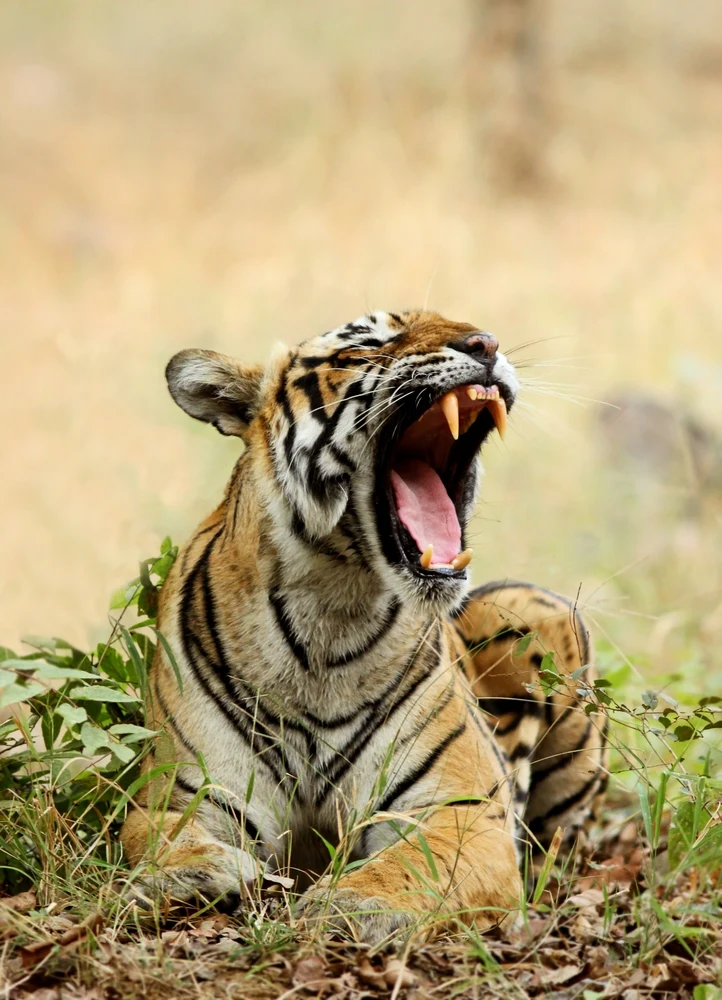
The Bengal tiger (Panthera tigris tigris) is the reserve's flagship species and the primary justification for its establishment. At the time of notification, approximately five to eight tigers were identified as using the landscape, including the adult tigresses T-116 and T-117 that dispersed from Ranthambore, and tigress T-2303 with her cubs. This founding population — established through natural tiger dispersal rather than translocation — represents an excellent ecological foundation. As the reserve's management infrastructure strengthens and human-tiger conflict is managed, the tiger population is expected to grow steadily, supported by the landscape's substantial prey base.
Leopards – The Dominant Large Predator
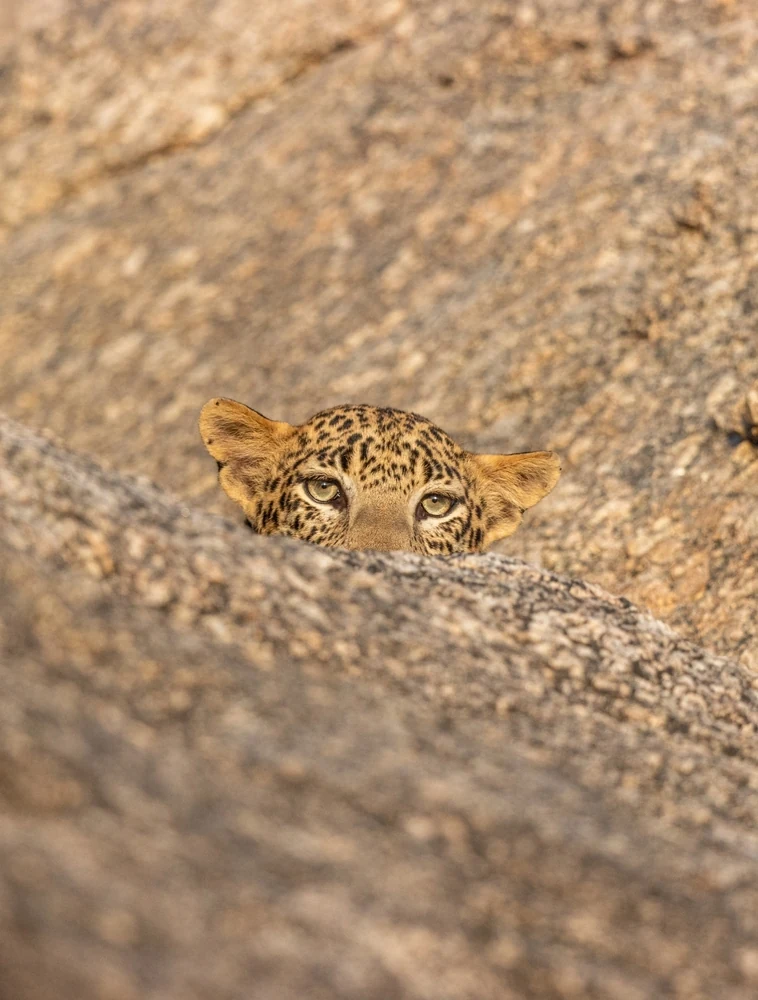
With over 40 leopards recorded in the Sarmathura range alone, the Indian leopard (Panthera pardus fusca) is currently the most abundant large predator in Dholpur-Karauli. The region's rocky ravines, dense scrub, and extensive forest provide excellent leopard habitat. Leopard sightings are relatively more accessible for visitors than tiger encounters, and the high density of this species within the reserve makes it one of the most important leopard habitats in eastern Rajasthan.
Wolves, Bears & Other Carnivores
The wildlife census data for the Dholpur-Karauli landscape reveals an extraordinary density of medium and large carnivores. Estimates include 15 to 20 Indian wolves (Canis lupus pallipes), 10 to 15 striped hyenas, and 25 to 30 sloth bears in the Sarmathura range area alone. The Indian wolf — classified as Schedule I under the Wildlife Protection Act and globally vulnerable — is of particular conservation significance, and Dholpur-Karauli's wolf population represents a meaningful contribution to the species' national conservation. Golden jackals, desert foxes, jungle cats, and various mongoose species are abundant.
Herbivores
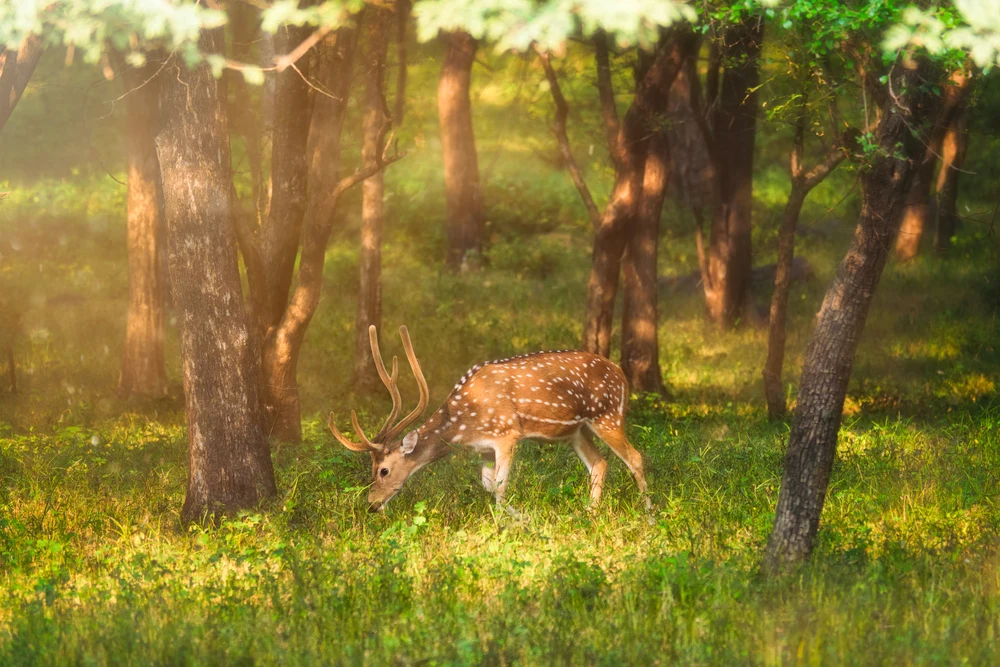
The reserve's prey base is robust. Approximately 400 nilgai (blue bull) and over 500 wild boars inhabit the Sarmathura range, supplemented by substantial populations of sambar, spotted deer (chital), barking deer, and chinkara (Indian gazelle) across the forest and scrubland areas. This prey density — nearly 1,000 large ungulates in one section of the buffer zone alone — provides the foundation for a growing tiger and leopard population.
Gharial, River Dolphin & Chambal Aquatic Life
The National Chambal Gharial Sanctuary portions within the reserve boundary protect a critical section of the gharial's remaining range. The Chambal River within the Dholpur-Karauli landscape is one of the cleanest river stretches in northern India and supports viable populations of the critically endangered gharial (Gavialis gangeticus) as well as the Gangetic river dolphin (Platanista gangetica), mugger crocodile, Indian skimmer, black-bellied tern, river lapwing, and multiple rare freshwater turtle species. The inclusion of this Chambal section within the tiger reserve's formal protection creates a uniquely comprehensive conservation zone protecting both terrestrial and aquatic biodiversity.
Avifauna – 250+ Species
Over 250 bird species have been recorded in the Dholpur-Karauli landscape, benefitting from the diverse habitats of forest, scrubland, grassland, ravine, and riverine ecosystems. Notable species include the Indian peafowl, Indian grey hornbill, Indian roller, crested serpent eagle, Egyptian vulture, black kite, various species of eagles and falcons, red-naped ibis, painted sandgrouse, and the rare Indian skimmer on the Chambal. Wetland areas and the Chambal attract herons, egrets, storks, and winter migratory waterfowl. Dedicated birdwatching within the reserve is increasingly being recognised as a significant draw for birding tourists from across India and abroad.
Flora
The reserve's dominant tree is dhok (Anogeissus pendula), which covers the rocky hill slopes in characteristic grey-green stands. The palash (Butea monosperma — Flame of the Forest) blooms a vivid orange-red in late winter and early spring, creating spectacular colour displays across the landscape. Khair (Acacia catechu), salar (Boswellia serrata), kardhaia (Anogeissus latifolia), and bamboo are other significant species. Riparian vegetation along the Chambal includes Tamarix, various grasses, and seasonally flooded grasslands that are critical for herbivore grazing.
Activities & Eco-Tourism at Dholpur-Karauli Tiger Reserve
Jeep Safari
Jeep safaris are the primary wildlife viewing activity. As the reserve's eco-tourism infrastructure is being developed, safaris are available through the reserve management and registered local operators in Dholpur and Karauli. The forest drive experience passes through the characteristic Chambal badlands landscape — dramatic red ravines, dense scrub, and forest patches — with the possibility of encountering leopards, wolves, nilgai, wild boar, and increasingly tigers. Safari routes are being formalised as the reserve's visitor management systems mature.
Chambal River Safari & Boat Ride
The Chambal River Safari is currently the most developed eco-tourism activity in the region and provides a spectacular complement to the forest safari. Boat rides on the Chambal within the reserve's boundary offer close-range views of gharials basking on sandy banks — typically seen in groups of ten to thirty or more individuals at prime locations. Mugger crocodiles, Indian skimmers, rare river terns, river dolphins (spotted occasionally surfacing in deeper sections), and dozens of waterbird species animate the river. The Chambal safari operates from Dholpur and connects to the established National Chambal Sanctuary safari infrastructure upstream. This is one of the finest river wildlife experiences in northern India.
Wildlife & Bird Photography
The combination of high leopard and wolf densities, abundant herbivore populations, spectacular Chambal gharial concentrations, and diverse birdlife makes Dholpur-Karauli an increasingly significant destination for wildlife and conservation photography. The landscape of red sandstone ravines and forest provides dramatic backgrounds for wildlife images. Photography-specific programmes are being developed in coordination with the reserve management.
Heritage Tourism Integration
The immediate surroundings of the reserve include some of the most historically significant sites in eastern Rajasthan — Karauli city with its exquisite medieval haveli architecture and the Karauli royal palace, the impressive Dholpur fort and city built on Vindhyan sandstone, and the remarkable Machkund pilgrimage site near Dholpur. Integrating wildlife safari with heritage exploration creates a rich, multi-day itinerary for visitors to this corner of Rajasthan.
How to Reach Dholpur-Karauli Tiger Reserve
By Air
Agra's Kheria Airport is the nearest airport, approximately 55 kilometres from Dholpur city. Agra has limited domestic connections primarily from Delhi. The more practical alternative is Jaipur International Airport (approximately 220 km from Karauli, approximately 4 hours by road), or Indira Gandhi International Airport in New Delhi (approximately 280 km from Dholpur, approximately 4.5 hours by road via the Yamuna Expressway).
By Rail
Dholpur Railway Station, on the Delhi-Mumbai Central Railway main line, is the most convenient railhead for the reserve's Dholpur zone. Multiple daily trains connect Delhi (approximately 3 hours), Agra (approximately 1 hour), Jaipur (approximately 4 hours via Sawai Madhopur), and Kota. Karauli is best accessed via Hindaun City (on the Jaipur-Agra railway line, approximately 45 km from Karauli) or via Sawai Madhopur (approximately 55 km by road).
By Road
From Agra, Dholpur is approximately 55 km via SH-1 (approximately 1 hour). From Jaipur, Karauli is approximately 235 km via NH-21 and SH-14 (approximately 4 hours). From Delhi, Dholpur is approximately 280 km via the Yamuna Expressway (approximately 4.5 hours). From Sawai Madhopur (Ranthambore gateway), Karauli is approximately 90 km via SH-14 (approximately 2 hours) — an excellent connector for those combining a Ranthambore safari with a Dholpur-Karauli visit.
Best Time to Visit
November to March (Ideal for Wildlife & Comfort)
Winter is the most comfortable season. Temperatures are moderate (14–28 degrees Celsius), the forest is accessible, wildlife is active, and the Chambal Safari is at its finest with large gharial aggregations visible on sandy riverbanks. Migratory birds swell the bird list. Leopard and wolf sightings are reported with reasonable frequency.
April to June (Best for Tiger Sightings)
As the temperature rises, wildlife concentrates around water sources. This is the optimal period for tiger sighting attempts as the reserve's growing tiger population uses the Chambal and its tributaries for drinking and cooling. Leopard sightings also increase near water. Early morning safaris (departing well before dawn) are essential in this heat.
Monsoon: July to October
Monsoon rainfall transforms the landscape but can make forest roads difficult. The Chambal River floods significantly, restricting river safari access. Wildlife disperses through the dense green forest, reducing sighting probability. October sees conditions improving rapidly and is transitional toward the best season.
Accommodation
As a reserve established in 2023, dedicated wildlife accommodation within Dholpur-Karauli is still emerging. Current options include hotels and guesthouses in Dholpur city (which has a range of budget to mid-range properties catering to visitors using the Chambal Safari) and Karauli city (which has heritage homestays and guesthouses connected with the city's architectural tourism). The Chambal Safari Lodge and various budget properties in Dholpur near the Chambal riverside are the most practical options for safari-focused visitors. Eco-lodges within or adjacent to the reserve are being developed by private operators in coordination with the Forest Department. For a luxury option, the heritage properties of Karauli — including royal family guest accommodation — provide an atmospheric and culturally rich alternative.
Nearby Attractions
- Chambal River & Gharial Safari (Dholpur) – The established Chambal Safari upstream of Dholpur (from the National Chambal Sanctuary at Dholpur) offers outstanding gharial, mugger, and river dolphin sightings. This safari, already well-developed before the tiger reserve designation, remains a highlight of any Dholpur visit.
- Karauli City & Palace – An exquisite example of medieval Rajput architecture, with the Karauli City Palace (still occupied by the royal family), ancient ghats on the Bhadravati River, and the bustling, vividly coloured market streets that retain the atmosphere of pre-modern Rajasthan.
- Kaila Devi Temple – A major Rajasthani pilgrimage site located within the Kaila Devi Wildlife Sanctuary buffer zone, drawing hundreds of thousands of devotees to the goddess Kaila Devi's forested sanctuary. The surrounding forest is also a wildlife area whose buffer falls within the tiger reserve zone.
- Machkund Pilgrimage Site (Dholpur) – A sacred complex of temples and kunds (sacred tanks) on the banks of the Chambal near Dholpur, one of Rajasthan's most important pilgrimage sites and associated with ancient Ramayana mythology.
- Dholpur City – The Dholpur Fort (built of distinctive red Dholpur sandstone — the same stone used in Fatehpur Sikri and many Mughal monuments), Shergarh Fort, and the Ramnagar Palace museum offer rich historical exploration.
- Ranthambore National Park – Approximately 90 km from Karauli via Sawai Madhopur. India's most famous tiger reserve makes an outstanding and logical extension to a Dholpur-Karauli visit, allowing travellers to experience both the established and emerging faces of Rajasthan's tiger conservation landscape.
- Agra (55 km from Dholpur) – The Taj Mahal, Agra Fort, and Fatehpur Sikri are within easy reach of Dholpur, making Dholpur-Karauli a natural addition to an Agra-based itinerary. The Taj Mahal is one of the most magnificent buildings in the world, and the combination of UNESCO monument and emerging tiger reserve makes for one of travel's most diverse one-day combinations.
Frequently Asked Questions – Dholpur-Karauli Tiger Reserve
When was Dholpur-Karauli Tiger Reserve established?
Dholpur-Karauli Tiger Reserve was officially notified in August-October 2023, following approval by the National Tiger Conservation Authority (NTCA). It became India's 54th tiger reserve under Project Tiger and Rajasthan's fifth, after Ranthambore, Sariska, Mukundara Hills, and Ramgarh Vishdhari. The reserve encompasses the Dholpur Wildlife Sanctuary, Karauli Wildlife Sanctuary, parts of the National Chambal Gharial Sanctuary, and related buffer areas.
Are there tigers in Dholpur-Karauli Tiger Reserve?
Yes. At the time of establishment, approximately five to eight tigers had been documented in the landscape, including adult tigresses T-116 and T-117 that naturally dispersed from Ranthambore Tiger Reserve. Tigress T-2303 and her cubs have also been recorded. These tigers arrived through natural dispersal — indicating the area's ecological suitability and its function as a natural tiger corridor from Ranthambore. The population is expected to grow as the reserve's management strengthens and prey populations stabilise.
What is the significance of Dholpur-Karauli as a tiger corridor?
Dholpur-Karauli occupies a critical position in India's national tiger connectivity strategy. It lies between Ranthambore Tiger Reserve (to the west) and Madhya Pradesh's wildlife landscape including Kuno National Park (to the south and east). This position makes it a vital corridor through which tigers can disperse, reducing population pressure on saturated reserves and maintaining genetic diversity across the broader landscape. The reserve also includes sections of the Chambal River, which provides an important natural movement route for tigers and other wildlife between Rajasthan and Madhya Pradesh.
What wildlife can I see at Dholpur-Karauli Tiger Reserve?
Key wildlife includes tigers (small but growing population), over 40 leopards in the Sarmathura range, 15–20 Indian wolves, 10–15 striped hyenas, 25–30 sloth bears, approximately 400 nilgai, over 500 wild boar, sambar, chital, chinkara, and golden jackals. The Chambal River supports critically endangered gharials, mugger crocodiles, Gangetic river dolphins, Indian skimmers, and multiple rare freshwater turtle species. Over 250 bird species have been recorded.
How do I reach Dholpur-Karauli Tiger Reserve?
The easiest access is via Dholpur, which is on the Delhi-Mumbai Central Railway main line (approximately 3 hours from Delhi, 1 hour from Agra by train). Agra Airport (55 km from Dholpur) is the nearest airport, and Delhi's IGI airport (approximately 280 km) is the major international hub. From Jaipur, Karauli is approximately 235 km (4 hours by road via NH-21). The reserve is also approximately 90 km from Sawai Madhopur (Ranthambore gateway), making it an excellent addition to a Ranthambore trip.
Is Dholpur-Karauli open for safari?
As a newly established tiger reserve (notified 2023), Dholpur-Karauli's formal safari infrastructure is being developed. However, the Chambal River Safari from Dholpur — which overlaps with the reserve's Chambal zone — is already well-established and offers spectacular gharial, crocodile, and river bird sightings. Forest jeep safaris are available through registered local operators and the reserve management, though formal zone delineation and booking systems are still being finalised. Contact the District Forest Officer (DFO), Dholpur or Karauli Forest Division for the most current access information.
What is the best time to visit Dholpur-Karauli Tiger Reserve?
November to March is the most comfortable and rewarding time for wildlife observation. April to June offers the best chances of tiger and leopard sightings as animals concentrate near water. The Chambal Safari is excellent year-round but particularly spectacular from November to April when gharials bask extensively on exposed sandy banks. July to September (monsoon) sees restricted access due to flooding and muddy forest roads.
How does Dholpur-Karauli differ from Ranthambore?
Ranthambore is one of India's most visited and well-established tiger reserves, with extensive infrastructure, predictable tiger sightings, and high visitor volumes. Dholpur-Karauli is Rajasthan's newest tiger reserve, with developing infrastructure, lower visitor footfall, and a genuinely off-the-beaten-path character. It offers a more intimate and less crowded wildlife experience. Dholpur-Karauli's unique additional attraction is the Chambal River ecosystem — not present within Ranthambore — with its gharials, river dolphins, and extraordinary avifauna. The two reserves can be combined in a single trip via the Sawai Madhopur-Karauli road (approximately 90 km).