Overview of Nanda Devi National Park
Nanda Devi National Park is one of the most spectacular, scientifically significant, and awe-inspiring protected areas in the entire Himalayan arc — and among the very finest wilderness destinations on Earth. Nestled in the Chamoli Garhwal district of Uttarakhand in northern India, the park surrounds the majestic Nanda Devi peak (7,816 metres above sea level) — the second highest mountain entirely within Indian territory, revered in Hindu tradition as the abode of Goddess Nanda, the bliss-giving deity.
Established as a national park in 1982, Nanda Devi National Park was inscribed as a UNESCO World Heritage Site in 1988 in recognition of its outstanding universal natural value. In 2004, the entire Nanda Devi Biosphere Reserve — encompassing both Nanda Devi National Park and the Valley of Flowers National Park as twin core zones — was designated a UNESCO Man and Biosphere (MAB) Reserve. Together, these two parks represent one of the world's finest examples of high-altitude Himalayan wilderness, and form the twin jewels of the 2,236.74 sq km Nanda Devi Biosphere Reserve, which is itself surrounded by a vast 5,148.57 sq km buffer zone.
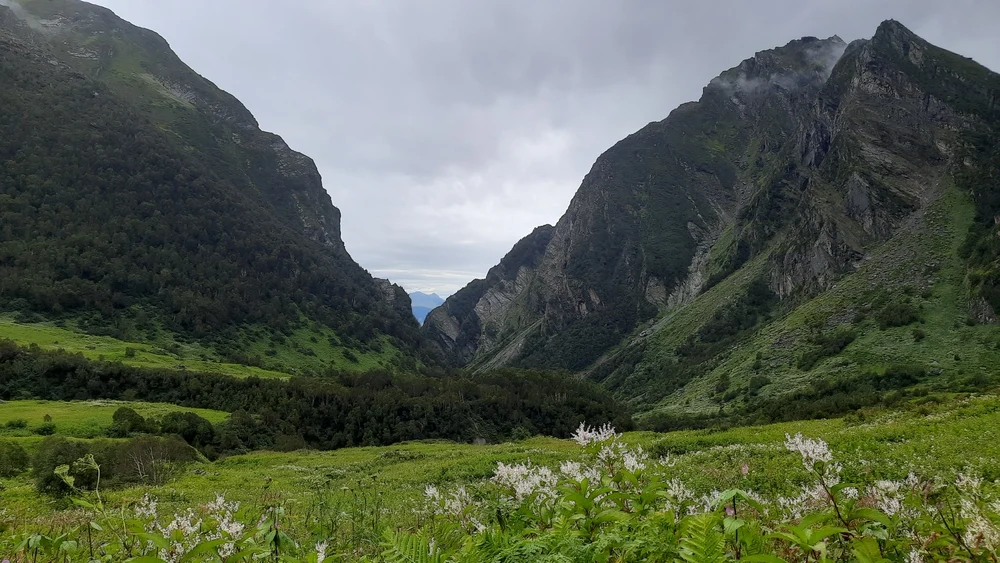
The park covers 630.33 sq km, entirely above 3,500 metres (11,500 ft) above mean sea level, making it one of the highest-altitude protected areas in the world. At its heart lies the Nanda Devi Sanctuary — a glacial basin of extraordinary geological and ecological significance, enclosed on all sides by a nearly continuous ring of Himalayan peaks rising between 6,000 and 7,500 metres, and drained westward through the legendary Rishi Ganga Gorge — one of the most formidable and near-impassable river gorges in the world. This natural fortress of peaks and gorge has been the primary reason for the sanctuary's pristine ecological condition, limiting human access for centuries and preserving an almost completely undisturbed high-altitude ecosystem.
The park lies within a biogeographical transition zone between the Western and Eastern Himalayas — a position that generates extraordinary biodiversity, with species characteristic of both Himalayan biogeographic realms coexisting in a shared high-altitude landscape. The park's remote location and stringent access controls (visitors must obtain special permits and move in small groups of maximum 5 persons) ensure that its ecological integrity remains intact, making Nanda Devi one of the last genuinely pristine mountain wildernesses accessible to humans.
The park carries a remarkable and somewhat sobering historical footnote: in 1965, a joint Indo-American CIA-sponsored expedition attempted to place a nuclear-powered satellite intelligence monitoring device on Nanda Devi's summit to spy on China's Lop Nur nuclear testing site. The device — containing plutonium fuel — was lost in a storm and has never been recovered. Concerns about potential plutonium contamination of the Ganga's headwater tributaries remain a subject of periodic government review.
Geography & Landscape
The park's geography is defined by its extraordinary glacial geology. The Nanda Devi Sanctuary is divided into Inner and Outer Sanctuary zones. The Inner Sanctuary occupies the eastern two-thirds of the total area, containing the Nanda Devi peak itself and the two major flanking glaciers — the Uttari (North) Rishi Glacier and the Dakshin (South) Rishi Glacier. The Outer Sanctuary occupies the western third and contains the famous Rishi Ganga Gorge — a steep, near-impenetrable defile through which the Rishi Ganga River drains the entire sanctuary westward.
The ring of peaks surrounding the park represents one of the most concentrated assemblages of high summits anywhere in the world. Key peaks visible from within the park include: Nanda Devi West (7,816 m — India's second highest), Nanda Devi East (7,434 m), Trishul (7,120 m), Changabang (6,864 m), Dunagiri (7,066 m), Bethartoli Himal (6,352 m), Rishi Pahar, Maiktoli, Kalanka, Mangraon, and others — a panorama of Himalayan giants without parallel in the subcontinent.
The park's altitude range — from the valley floor at approximately 3,500 m to the summit of Nanda Devi at 7,816 m — creates an altitudinal gradient encompassing sub-alpine meadows (bugyals), alpine scrub, high-altitude moraines, permanent snowfields, and glaciers — a complete transect of Himalayan high-altitude ecological zones within a single protected area.
Flora: Alpine Botanical Heritage
The flora of Nanda Devi National Park is exceptionally rich and diverse for a high-altitude Himalayan ecosystem. Over 312 species of flora have been documented, including 17 species of rhododendron — the iconic flowering shrubs of the Himalayan mid-zone that paint entire hillsides scarlet and pink during spring. Other notable plant communities include birch (Betula utilis) forests in the sub-alpine zone, juniper scrub on exposed ridges, and a rich alpine meadow flora dominated by sedges, grasses, and flowering herbs.
The park is particularly celebrated for its sacred and botanically iconic Brahma Kamal (Saussurea obvallata) — the state flower of Uttarakhand, used in Hindu religious offerings and considered extremely auspicious. Other notable species include the Himalayan Blue Poppy (Meconopsis aculeata), various orchid species, medicinal plants including Kutki (Picrorhiza kurroa), Aconitum species, Arnebia benthamii, and the threatened Himalayan Yew (Taxus wallichiana). The Forest Research Institute has recorded 600 species of angiosperms and 30 pteridophytes within the broader Nanda Devi Biosphere Reserve.
Wildlife: Fauna of Nanda Devi National Park
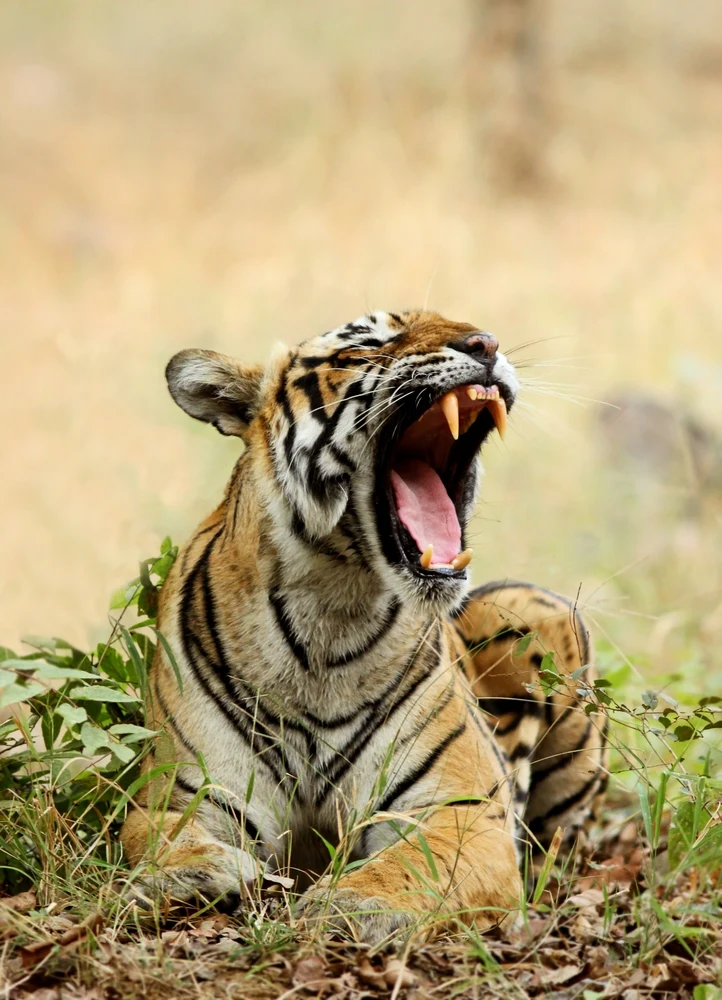
Snow Leopard — The Ghost of the Himalayas
The Snow Leopard (Panthera uncia) is the most celebrated and elusive resident of Nanda Devi National Park. Classified as Vulnerable by the IUCN, this supremely adapted high-altitude predator is perfectly suited to the park's rocky, glaciated terrain. Camera trap evidence and tracker sightings confirm a resident population in the park, and occasional visual encounters during treks remain among the most extraordinary wildlife experiences available anywhere in the Himalayas.
Complete Mammal Fauna
- Himalayan Musk Deer (Moschus chrysogaster) — Schedule I protected, hunted for its musk gland; the park is a critical refuge
- Bharal / Blue Sheep (Pseudois nayaur) — the primary prey of snow leopards; found in large herds on open rocky slopes
- Himalayan Tahr (Hemitragus jemlahicus) — a robust wild goat of the cliffs and steep terrain
- Himalayan Black Bear (Ursus thibetanus) — found in the sub-alpine forest zones
- Himalayan Brown Bear (Ursus arctos isabellinus) — Vulnerable; rarer than the black bear
- Serow (Capricornis thar) — a goat-antelope of forested rocky terrain
- Common Langur, Rhesus Macaque — found in lower forest zones
- Red Fox, Himalayan Wolf — important predators of the alpine zone
- Indian Pika, various species of Himalayan rodents
Avifauna
The park falls within the Western Himalayas Endemic Bird Area (EBA), supporting seven restricted-range bird species endemic to this region. Notable species include the Himalayan Monal Pheasant (Lophophorus impejanus — the state bird of Uttarakhand), Snow Partridge, Tibetan Snowcock, Snow Pigeon, Himalayan Griffon, Lammergeier (Bearded Vulture), and various high-altitude specialties including accentors, rosefinches, and redstarts.
Visitor Regulations & Permit System
Nanda Devi National Park has one of the most controlled visitor access regimes of any national park in India — a deliberate policy to protect its fragile high-altitude ecosystem from the damage experienced by many heavily visited Himalayan treks. The following regulations apply:
- Maximum group size: 5 visitors per group; not more than 2 groups per day; not more than 4 groups per week
- Minimum age for entry: 14 years
- One registered guide mandatory for every 5 visitors
- All visitors must comply with the Wildlife Protection Act 1972 within the park
- Permits must be obtained from the DFO (Divisional Forest Officer) in Joshimath before entry
- The park is open from 1 May to 31 October; completely inaccessible in winter due to snow
- Camping is permitted only at designated sites within the park with prior permission
These strict controls are central to preserving the park's ecological integrity. Visitors are strongly advised to plan their permit applications 3-6 months in advance and to work with registered trekking operators in Joshimath for logistics support.
How to Reach Nanda Devi National Park
By Air
Jolly Grant Airport, Dehradun (IATA: DED) is the nearest commercial airport, approximately 300 km from Joshimath (the gateway town) by road. Dehradun is connected to Delhi, Mumbai, Bengaluru, Kolkata, and Hyderabad. From Dehradun Airport, hire a private taxi to Joshimath (approximately 8–10 hours). Alternatively, fly to Hindon Airport (Ghaziabad, near Delhi) and drive.
By Rail
Haridwar Railway Station (approximately 270 km from Joshimath) and Rishikesh (260 km) are the most accessible railheads, both well-connected to the national rail network. From Rishikesh or Haridwar, hire a private taxi or take government/private buses via Devprayag, Rudraprayag, and Chamoli to Joshimath.
By Road
The road journey from Delhi to Joshimath covers approximately 490–500 km, typically taking 12–14 hours. The route passes through Haridwar, Rishikesh, Devprayag, Rudraprayag (confluence of Alaknanda and Mandakini), Karnaprayag, and Chamoli. From Joshimath, the trek to the park's entry point at Lata village (13 km, altitude gain from 2,000 m to 4,250 m at Dharansi Pass — the topmost entry point) requires a further 5 days of trekking. State transport buses (GMOU/GMVN) connect Rishikesh and Haridwar to Joshimath on a daily basis.
Best Time to Visit Nanda Devi National Park
May to June (Pre-Monsoon — Trekking Season)
Trails are clear of snow and accessible. Temperatures at altitude range from 5°C to 18°C. Rhododendrons bloom spectacularly in May. Good wildlife sighting opportunities as animals emerge post-winter. Some flowering species begin blooming in late May/June.
July to August (Monsoon — Flora Peak)
The alpine meadows are at maximum floral diversity during the monsoon season. Brahma Kamal blooms most prolifically in July–August. However, trails can be slippery and visibility is reduced. Risk of landslides on access roads is elevated.
September to October (Post-Monsoon — Best Overall)
This is arguably the finest overall visiting window. The sky is clear, visibility is excellent (Himalayan peaks fully visible), temperatures are comfortable, trails are dry, and wildlife activity is high. September-October is peak season for serious trekkers and photographers.
November to April (Closed — Snow Season)
The park is completely inaccessible due to heavy snowfall closing all access trails and roads. The Lata-to-Dharansi approach is buried under metres of snow.
Trekking Routes & Activities
Nanda Devi Base Camp Trek (via Lata–Dharansi)
The primary trek route starts from Lata village (2,000 m) — a short drive from Joshimath — and ascends steeply through dense forest, open ridge walks, and scree slopes to Dharansi Pass (4,250 m), the topmost entry point into the sanctuary. The circular route from Joshimath to Joshimath, classified as moderate-to-difficult, involves an altitude gain of more than 7,000 feet over five days and requires substantial trekking fitness and technical guidance. Key campsites include Bhojgara, Ramni, Deodi, and Dharansi.
Wildlife Viewing
Bharal/Blue Sheep and Himalayan Musk Deer are regularly sighted along the sanctuary's rocky slopes and meadows. Snow Leopard sightings, while rare, are reported with some frequency in the rocky terrain around Dharansi and within the Inner Sanctuary. Dawn and dusk observations are most productive.
Photography & Mountaineering
The park's extraordinary mountain panorama — featuring multiple 6,000–7,800 m peaks — makes it one of the finest landscape and wildlife photography destinations in the Indian Himalayas. Mountaineering expeditions to the peaks surrounding the sanctuary require separate permits from the Indian Mountaineering Foundation (IMF) and are not covered by the standard park entry permit.
Nearby Attractions
Valley of Flowers National Park (~25 km from Joshimath)
Nanda Devi's twin UNESCO Heritage Site and the second core zone of the Nanda Devi Biosphere Reserve. A moderate 3-4 day trek from Govindghat, offering arguably the world's most spectacular display of high-altitude flowering meadows (best: mid-July to mid-August).
Badrinath Dham (~40 km from Joshimath)
One of the four Char Dham pilgrimage sites of Hinduism, Badrinath Temple is a major cultural and spiritual destination at 3,133 m on the Alaknanda River, approximately 40 km from Joshimath.
Hemkund Sahib (~19 km from the Valley of Flowers trailhead)
A sacred Sikh pilgrimage lake at 4,632 m — one of the highest gurdwaras in the world — visited annually by hundreds of thousands of devotees. Located close to the Valley of Flowers trek route.
Auli Ski Resort (~16 km from Joshimath)
India's premier ski resort, offering Asia's second longest ropeway (4.15 km) with spectacular Himalayan views, winter ski slopes, and year-round Himalayan vistas.
Joshimath
The gateway town for Nanda Devi National Park, Joshimath (1,890 m) hosts several important ancient temples including Narsingh Temple, the Adi Shankaracharya Math, and Adi Badri. It serves as the primary base for acclimatisation, permit processing, and trekking logistics.
Accommodation Options
- Joshimath: GMVN Tourist Rest House; Hotel Kamet; Hotel Auli; Hotel Dronagiri; multiple guesthouses and dharamshalas across all budget levels.
- Auli (16 km from Joshimath): GMVN Ski Resort, Clifftop Club Auli — premium mountain resort with stunning Himalayan views.
- Lata Village (trek start point): Basic guesthouses and homestays provide simple accommodation with meals for trekkers overnighting before the trail.
- Within the Sanctuary: Camping at designated sites only. Trekkers must carry all camping equipment or hire registered operators who provide tents.
- Haridwar/Rishikesh (270 km): Wide range of premium to budget hotels for those spending a night at the Himalayan foothills gateway.
Travel Tips for Nanda Devi National Park
- Obtain permits well in advance (3-6 months) from the DFO office in Joshimath or through a registered trekking operator. The limited group size means permits are in high demand.
- Acclimatise in Joshimath for at least 1-2 days before beginning the trek. The rapid altitude gain to 4,250 m at Dharansi can cause Acute Mountain Sickness (AMS) in unacclimatised trekkers.
- Carry Diamox (acetazolamide) on prescription for AMS prevention; consult a doctor before the trek.
- Pack warm, layered clothing even in summer — temperatures at 4,000+ m can drop below freezing at night.
- Hire a local registered guide from Joshimath — the trails are unmarked in several sections and a guide is both mandatory and practically essential.
- Carry sufficient food and water purification supplies — facilities inside the park are non-existent.
- Plastic is strictly prohibited inside the park. Use reusable containers and carry all waste out.
- Trekking poles are strongly recommended for the steep sections of the Lata–Dharansi route.
Frequently Asked Questions (FAQ) - Nanda Devi National Park
Is Nanda Devi National Park a UNESCO World Heritage Site?
Yes. Nanda Devi National Park was inscribed as a UNESCO World Heritage Site in 1988. In 2005, the UNESCO designation was expanded to include both Nanda Devi and Valley of Flowers National Parks as a joint UNESCO WHS. In 2004, the entire Nanda Devi Biosphere Reserve was designated a UNESCO Man and Biosphere (MAB) Reserve.
What is the area of Nanda Devi National Park?
The park covers 630.33 sq km and is entirely situated above 3,500 metres above mean sea level. It is embedded within the larger 2,236.74 sq km Nanda Devi Biosphere Reserve, which is further surrounded by a 5,148.57 sq km buffer zone.
When is the best time to visit Nanda Devi National Park?
The park is open from 1 May to 31 October. September-October is the best overall window for clear skies, dry trails, and excellent wildlife sightings. May-June is best for trekking before the monsoon. Mid-July to August is peak for alpine flora blooms, including the Brahma Kamal.
How do I get a permit for Nanda Devi National Park?
Permits are issued by the Divisional Forest Officer (DFO) at Joshimath. Groups must not exceed 5 persons. Not more than 2 groups are permitted per day and 4 per week. A registered guide is mandatory for every group. Prior application (ideally 3-6 months in advance) through the DFO office or a registered trekking operator is strongly recommended.
Can I see a snow leopard in Nanda Devi National Park?
Snow Leopard sightings are rare but documented in Nanda Devi National Park. The species is resident in the park's rocky, high-altitude terrain. Camera trap records and occasional trekker sightings confirm its presence. Dharansi Pass and the Inner Sanctuary zones are the most productive areas.
How do I reach Nanda Devi National Park?
Fly to Jolly Grant Airport, Dehradun (~300 km) or take a train to Haridwar/Rishikesh (~270 km). Drive to Joshimath (the gateway town), then undertake a multi-day trek to the park's entry at Lata village and Dharansi Pass. The Lata-Dharansi-Inner Sanctuary trek is rated moderate-to-difficult.
What is the Rishi Ganga Gorge?
The Rishi Ganga Gorge is the sole drainage outlet of the Nanda Devi Sanctuary - a near-impassable defile through which the Rishi Ganga River exits the sanctuary westward. The gorge's steep cliffs and turbulent river created an almost impenetrable natural barrier that protected the Inner Sanctuary from human intrusion for centuries, preserving its ecological integrity.
What is the significance of Nanda Devi peak?
Nanda Devi (7,816 m) is India's second-highest mountain and the highest peak lying entirely within Indian territory. It is considered sacred in Hindu tradition as the home of Goddess Nanda (a form of Parvati), and the goddess is the kuladevi (clan deity) of several communities in the Garhwal and Kumaon regions of Uttarakhand. The park is named after this peak.
Is the Valley of Flowers National Park the same as Nanda Devi National Park?
No, but the two parks are closely related. Both are separate national parks and UNESCO World Heritage Sites, and together form the twin core zones of the Nanda Devi Biosphere Reserve. Nanda Devi covers 630 sq km, while Valley of Flowers covers 87.50 sq km. They share the same UNESCO WHS designation (expanded in 2005) but are geographically distinct areas.
Are there accommodation options inside Nanda Devi National Park?
There are no hotels or permanent lodges inside the park. Visitors camp at designated sites within the sanctuary. All accommodation logistics (tents, sleeping bags, cooking equipment) must be arranged before the trek begins in Joshimath. Most visitors use registered trekking operators who provide full camping equipment and logistical support.