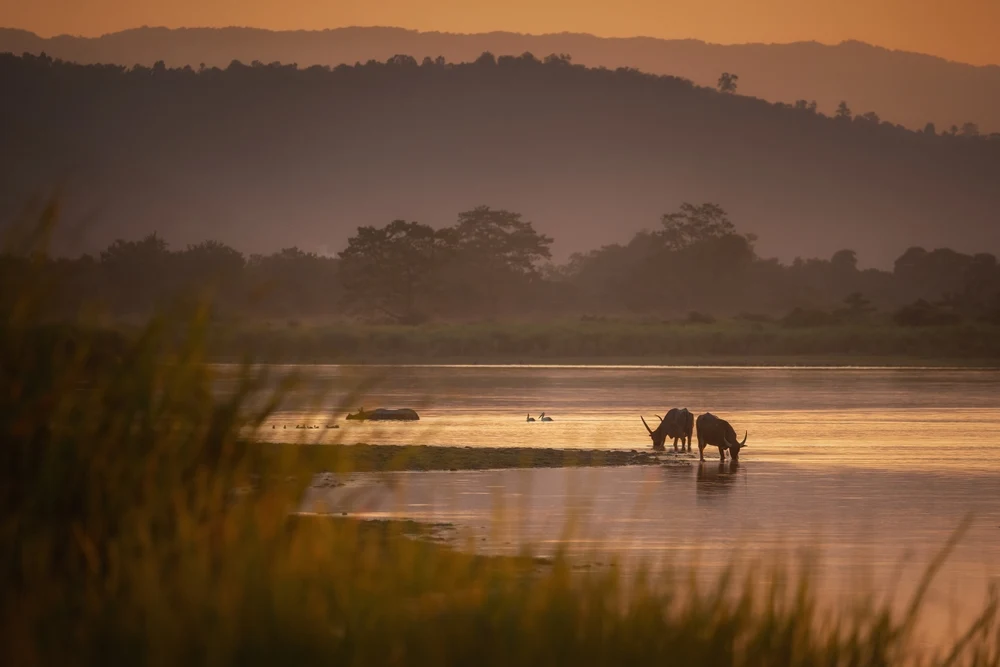
Overview of Nameri National Park
Nameri National Park is Assam's finest destination for serious birdwatchers, adventure seekers, and nature lovers who prefer their wildlife experiences intimate, unhurried, and immersive over the spectacle-driven safaris of the more famous northeastern parks. Located in the Sonitpur district of Assam at the foothills of the Eastern Himalayas, approximately 35 km from the historic town of Tezpur, Nameri covers 200 sq km of pristine forest and forms the core zone of the larger Nameri Tiger Reserve (464 sq km total with buffer areas). It was officially declared a National Park on 13 August 1998, and designated a Tiger Reserve under Project Tiger by the Government of Assam in March 2000.
What makes Nameri truly singular — and beloved by those who know it — is a combination of features found together at no other Indian protected area. First, it is the primary stronghold of the White-winged Wood Duck (Asarcornis scutulata) — the state bird of Assam, one of Asia's rarest and most beautiful ducks, Critically Endangered with fewer than 1,000 individuals remaining globally, roughly half of them in northeast India's forests. Nameri was initially established specifically to protect this species, and the three seasonal wetlands (beels) within the park — Borghuli Beel, Kurua Beel, and Magurmari Beel — are among the most important White-winged Wood Duck habitats remaining anywhere on Earth. Second, Nameri is among the very few Indian national parks where walking safaris are the primary and preferred mode of wildlife exploration — enabling visitors to experience the forest in intimate on-foot engagement with nature, guided by forest rangers, rather than from the back of a vehicle. Third, the crystal-clear Jia Bhoroli River — a major tributary of the Brahmaputra and the ecological lifeline of Nameri — offers one of Assam's finest river rafting experiences, floating through pristine riparian forest with wildlife visible on both banks and snow-capped Himalayan peaks visible on clear days.
Nameri sits at the ecological junction of Assam and Arunachal Pradesh, sharing its northeastern boundary directly with Pakke Tiger Reserve (also known as Pakhui Tiger Reserve) in Arunachal Pradesh — creating a vast, contiguous, transboundary forest corridor of semi-evergreen and tropical evergreen forests. This transboundary ecosystem — among the least-disturbed forest tracts in the Eastern Himalayan biodiversity hotspot — plays a vital role in maintaining the gene flow, territory establishment, and long-term viability of tigers, elephants, and other wide-ranging species across the India-Arunachal border. The Kameng Elephant Reserve of which Nameri is a part reflects the landscape-level importance of this corridor for elephant conservation.
The White-winged Wood Duck — Why Nameri Was Created
To understand Nameri National Park is to understand why the White-winged Wood Duck (Asarcornis scutulata) is so extraordinary, so threatened, and so deeply connected to this particular forest. The White-winged Wood Duck is a large, spectacular, and supremely specialised forest duck — adapted to nesting in hollows of tall forest trees (not in wetlands like most ducks), feeding in slow-moving forest streams and pools, and inhabiting a very specific type of tall, dense, riparian tropical forest that is itself under severe pressure across its range in northeast India, Bangladesh, Myanmar, Thailand, Sumatra, and Java.
With fewer than 1,000 individuals remaining globally — roughly 50% of them in northeast India — the White-winged Wood Duck is classified as Endangered on the IUCN Red List. Deforestation, wetland drainage, hunting, and forest disturbance have reduced the species to a fraction of its former range across Southeast Asia. It is the state bird of Assam, a designation that reflects the deep ecological and cultural significance of this species to northeastern India.
Nameri National Park was established with the explicit goal of protecting the White-winged Wood Duck and its habitat. The three seasonal wetlands within the park — Borghuli Beel (near Baitakata Camp), Kurua Beel (near Potasil Camp), and Magurmari Beel (near Oubari Camp) — form when dry parts of the Jia Bhoroli fill with water during the wet season. These beels provide the critical foraging, nesting, and roosting habitat that the wood duck requires. A captive breeding programme for the species operates from a centre near the Nameri Eco Camp — managed by EcoSystems India. The centre's campus has documented nearly 80 bird species and 147 butterfly species on its grounds alone, reflecting the extraordinary richness of even the park's fringe habitats. Visitors to Nameri are strongly encouraged to visit this breeding centre as part of their itinerary.
Geography, Topography & the Jia Bhoroli
Nameri National Park lies at the transition zone between the Indo-Gangetic Plain and the Eastern Himalayan foothills — a geomorphologically dynamic landscape of gently undulating hills, dense forest, bamboo thickets, open riverine grasslands, and the fast-flowing river channels that define the park's character. The park is crisscrossed by the Jia Bhoroli River (also known as the Kameng River in Arunachal Pradesh upstream) and its tributaries including the Bor Dikorai — streams that originate in the snow-capped Himalayan ranges visible on clear winter days from within the park.
The Jia Bhoroli River flows along the western boundary of the park before joining the Brahmaputra, and is both the park's primary ecological lifeline and its defining adventure attraction. The river's clear, rapid waters are an important habitat for the Golden Mahseer (Tor putitora) — one of the world's most prized sport fish, an Endangered species, and one of the primary attractions for the angling community. The river also supports populations of Smooth-coated Otter and a rich community of waterbirds including the extraordinary Ibisbill (Ibidorhyncha struthersii) — a stone-curlew relative of rocky Himalayan streams, rarely seen at this altitude — and the Black-and-Rufous Flycatcher.
Flora of Nameri National Park
The vegetation of Nameri National Park is classified as tropical semi-evergreen forest, east Himalayan moist deciduous forest, and riverine grassland — a highly diverse mosaic reflecting the park's position in the Eastern Himalayan foothills transition zone. The forest is dominated by large trees including Ficus species, Bischofia javanica, Premna latifolia (Amoora), Terminalia species, Castanopsis species, and a range of tall semi-evergreen emergents that create a multi-layered canopy of great structural complexity.
Over 600 floral species have been recorded in Nameri, including rare and endemic orchids of great scientific significance. The park is known for the Blue Vanda (Vanda coerulea) — one of the most spectacular and most sought-after orchids in Asia, endemic to the Eastern Himalayas and the Khasi Hills; the Foxtail Orchid (Rhynchostylis retusa) — the state flower of Assam; and the Lady's Slipper Orchid (Paphiopedilum species) — among the rarest and most prized of all orchids globally. These orchids, blooming in the park's moist, shaded forest understorey, add an extraordinary botanical dimension to Nameri's wildlife experience.
Bamboo (various species) forms dense thickets in transition zones and along stream margins. Cane (Calamus species) is common in the understorey. The riparian zones along the Jia Bhoroli and Bor Dikorai are characterised by river fig, Ficus, and various semi-deciduous species that create the structurally complex forest architecture that White-winged Wood Ducks require for nesting and roosting.
Wildlife: Fauna of Nameri National Park
The White-winged Wood Duck — Assam's State Bird
The White-winged Wood Duck (Asarcornis scutulata) is Nameri's most iconic, most celebrated, and most conservation-significant resident. Observation of this spectacularly patterned, large forest duck — with its white head spotted with dark-brown flecks, black body, green-glossed wings, and the distinctive white wing patches from which it takes its name — in the quiet dawn forest of Nameri, sitting on a tree branch above a forest stream or gliding silently over a beel surface, is one of the most memorable wildlife encounters available anywhere in northeast India. The three seasonal beels (Borghuli, Kurua, and Magurmari) are the primary observation sites; early morning (6:00–8:00 AM) is the best time.
Bengal Tiger & Elephant
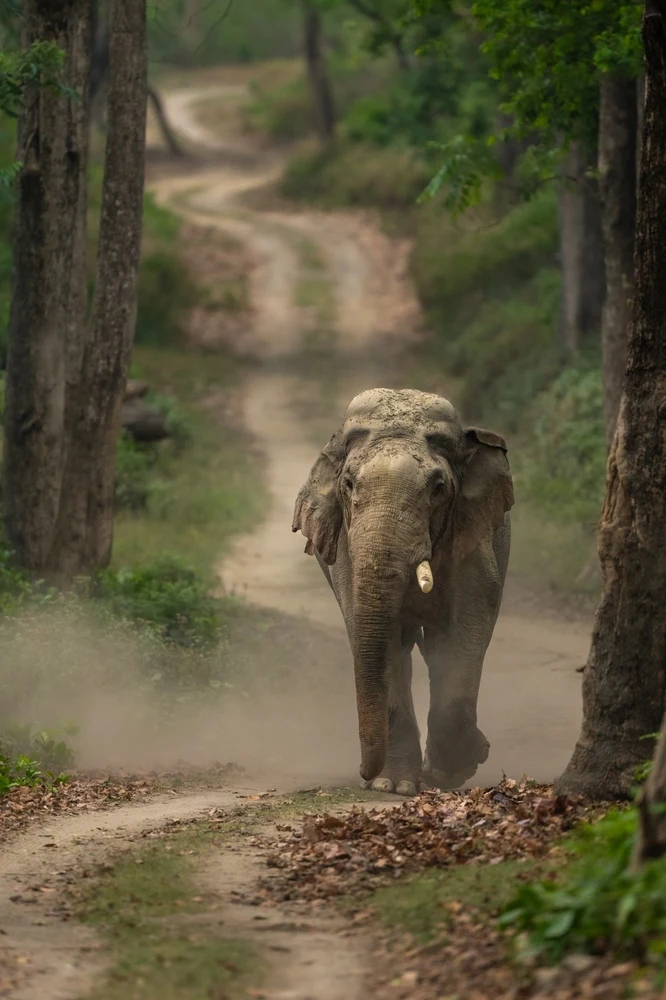
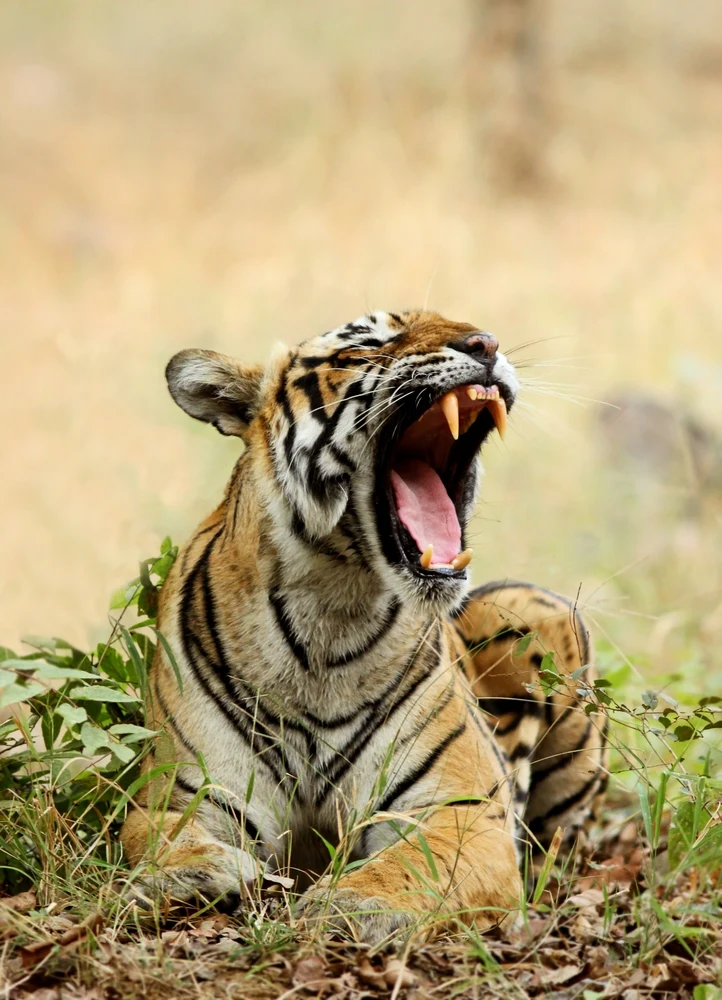
Bengal Tiger and Asian Elephant are both present throughout Nameri's forests — though sightings are less predictable than at the dedicated tiger reserves of western Assam, reflecting the denser forest cover. The tiger reserve designation reflects the ecological importance of Nameri's forest for maintaining tiger population connectivity between Assam and Arunachal Pradesh through the Pakke corridor. Elephant-human conflict in Nameri is reportedly one of the highest in the world — a reflection of the significant elephant population and the forest's position adjacent to human settlements and tea estates.
Rare Reptiles — Rediscoveries and Endemics
Nameri holds a remarkable herpetological heritage. The Assam Roofed Turtle (Pangshura sylhetensis) — an Endangered, Assam-endemic turtle once believed extinct — was rediscovered alive at Nameri in 1992, making this one of the most celebrated herpetological rediscoveries in Indian conservation history. The Khasi Hills Terrapin (Melanochelys tricarinata) — another critically rare freshwater turtle — is also found here. Among insects, the Atlas Moth (Attacus atlas) — the world's largest moth by wing area, with a wingspan of up to 25 cm (10 inches) — has been recorded at Nameri, adding to the park's remarkable invertebrate diversity.
Complete Mammal Roster — 55 Species
- Indian Leopard (Panthera pardus fusca), Clouded Leopard (Neofelis nebulosa)
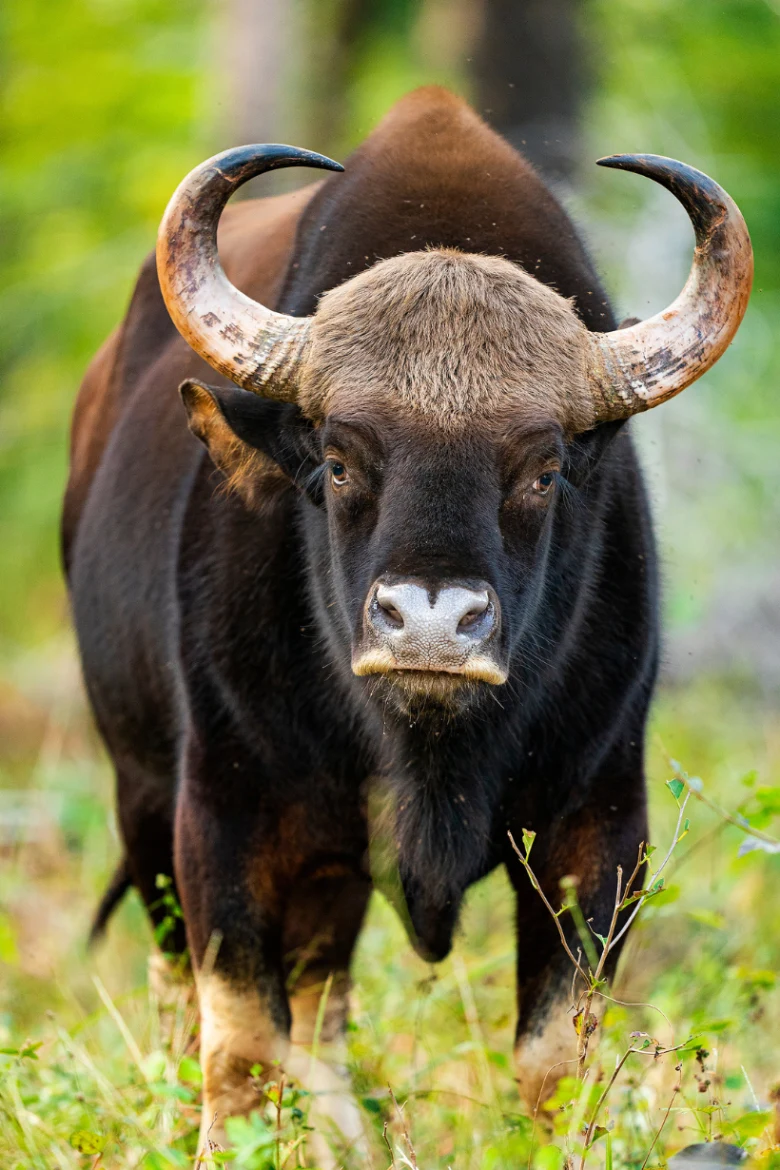
- Indian Gaur / Bison (Bos gaurus) — large herds; frequently sighted
- Himalayan Sloth Bear (Ursus thibetanus — Himalayan subspecies of Asian Black Bear)
- Dhole (Indian Wild Dog, Cuon alpinus)
- Smooth-coated Otter — common along the Jia Bhoroli riverbanks
- Hoolock Gibbon (Hoolock hoolock) — India's only ape
- Capped Langur (Trachypithecus pileatus), Assamese Macaque
- Sambar Deer, Barking Deer (Muntjac), Hog Deer
- Wild Boar, Indian Porcupine, Malayan Giant Squirrel
- Chinese Pangolin (Manis pentadactyla) — Critically Endangered
- King Cobra, Reticulated Python, Assam Roofed Turtle — key reptile species
Avifauna — 374 Species: India's Premier Hornbill Habitat
With 374 documented species, Nameri is an Important Bird Area of exceptional significance — one of the finest birdwatching destinations in northeast India. The park is particularly celebrated for its hornbill assemblage: Great Hornbill (Buceros bicornis), Wreathed Hornbill (Rhyticeros undulatus), Rufous-necked Hornbill (Aceros nipalensis), and Great Pied Hornbill — four species of these spectacular birds inhabit the tall semi-evergreen forest canopy, their loud calls a defining sound of the Nameri dawn. Other exceptional species include: Ibisbill (on the Jia Bhoroli riverbed — a globally rare bird at this latitude), Long-billed Plover, Black-bellied Tern (Endangered), Blue-eared Kingfisher, Ruddy Kingfisher, White-tailed Eagle, Greater Spotted Eagle, Yellow-bellied Flowerpecker, White-crowned Forktail, Slender-billed Oriole, and the Blue Vanda Orchid-associated flower-feeding species. The park has been described as possibly the finest hornbill observation site in northeastern India.
Activities at Nameri National Park
Walking Safari — The Defining Experience
Nameri's signature activity — and what makes it uniquely different from almost all other Indian national parks — is the guided walking safari (jungle walk). Unlike most tiger reserves where visitors observe from vehicles, Nameri encourages on-foot forest exploration with trained Forest Department rangers. Walking safaris cover approximately 8 km through the park interior over approximately 3 hours, traversing evergreen forest, semi-evergreen patches, bamboo groves, riverine sections, and dry riverbeds. The intimate forest proximity, the sound of bird calls, the smell of forest earth, and the possibility of encountering wildlife at ground level creates a qualitatively different — and for many visitors, more profound — wildlife experience than vehicle-based safari. Entry fee for nature trail: Rs. 70 (Indians), Rs. 520 (foreigners). Guard: Rs. 100.
River Rafting on the Jia Bhoroli
A 13 km river rafting trip on the Jia Bhoroli is one of Nameri's most celebrated and most joyful experiences — floating downstream from a starting point approximately 13 km upstream of the Forest Range Office, through a 3-hour journey of gentle rapids, crystal-clear shallows, forested riverbanks, and the occasional dramatic Himalayan vista. The rafting trip concludes at the Potasil Camp near the Forest Range Office. Unlike adrenaline-heavy white-water experiences, Nameri's Jia Bhoroli rafting is calm enough for all skill levels while providing outstanding river-based birdwatching — including Ibisbill, Long-billed Plover, and various kingfisher species on the rocky riverbed. Pre-booking is mandatory: Rs. 1,700 for 2 passengers (Indians); Rs. 2,100 for 2 (foreigners).
Mahseer Angling
The Jia Bhoroli River is internationally celebrated among angling enthusiasts for its population of Golden Mahseer (Tor putitora) — one of the world's most prized sport fish and an Endangered species. Catch-and-release angling is permitted with prior Forest Department permission, making this one of very few protected areas in India where ethical angling is facilitated. The experience of hooking and releasing a Golden Mahseer — a powerful, golden-scaled river fish that fights fiercely against the current — in the pristine waters of the Jia Bhoroli, with forest on both banks, is unmatched in northeast India.
Birdwatching
Dedicated birdwatching sessions — particularly at dawn along the forest trails, at the three seasonal beels, and along the Jia Bhoroli riverbanks — are the most productive activities for Nameri's extraordinary avifauna. The four hornbill species are best observed at dawn when they call and move through the forest canopy. The three beels (Borghuli, Kurua, Magurmari) provide the best White-winged Wood Duck sightings in the early morning. The Jia Bhoroli riverbed is best for Ibisbill and river-associated species.
Pygmy Hog Breeding Centre Visit
Located near the Nameri Eco Camp, the EcoSystems India Pygmy Hog Breeding Centre is an important conservation facility working to breed and reintroduce the world's smallest and most endangered wild pig. The centre's campus has recorded 80+ bird species and 147+ butterfly species in its immediate vicinity — an astonishing testimony to the biodiversity richness of even Nameri's fringe habitats. A visit provides both a conservation education experience and excellent incidental wildlife observation.
Eco-Camping & Overnight Stays
Eco-camping on the banks of the Jia Bhoroli River is available through the Nameri Eco Camp and associated operators — arguably the finest way to experience the park, allowing evening wildlife calls, dawn birdwatching, and unhurried forest walks across multiple days.
How to Reach Nameri National Park
By Air
Salonibari Airport, Tezpur (IATA: TEZ) — approximately 35–40 km from Nameri (approximately 1.5 hours). Connected to Kolkata and Guwahati by Air India. From Tezpur Airport, hire a taxi to the Nameri Eco Camp area near Chariduar village. Lokpriya Gopinath Bordoloi International Airport, Guwahati (IATA: GAU) — approximately 212 km (approximately 5 hours by road via NH-15/Tezpur road).
By Rail
Dekargaon Railway Station (near Tezpur) is the nearest railhead, approximately 40–50 km from the park. Guwahati Railway Station (212 km) provides broader national connectivity. From Dekargaon/Tezpur, hire a taxi to Nameri (approximately 35–40 km).
By Road
From Guwahati: Take NH-15 (Guwahati-Tezpur highway, former NH-37/52) toward Tezpur (approximately 180 km, 4.5 hours). From Tezpur, proceed approximately 35 km toward Balipara and Chariduar (the access village for Nameri). From the NH-15 junction at Balipara, the road to Nameri passes through tea estates and forest. Local directions: NH-15 → Balipara → Mission Chariali → Chariduar → Nameri Eco Camp.
From Kaziranga: Via Tezpur (approximately 80 km from Kohora to Tezpur, then 35 km to Nameri) — total approximately 115 km (3 hours).
Best Time to Visit
November to March (Best for Birdwatching & Walking Safaris)
The finest visiting period for the White-winged Wood Duck, hornbill activity, and all birdwatching. Temperatures are pleasant (12–24°C). The three beels are at optimal water level for wood duck concentration. Rafting conditions are excellent. Forest trails are dry and walkable.
April to May (Summer — Good for Mammals)
The forest heats up and mammals become more visible near water. Tiger and elephant sightings increase. The Jia Bhoroli drops in level, concentrating fish and waterbirds. Golden Mahseer angling conditions improve. Hot (28–36°C) — early morning activities are essential.
June to October (Monsoon — Closed)
The park closes during monsoon as river levels rise dramatically and forest tracks become impassable.
Entry Fees & Timings
- Nature trail (walking safari): Rs. 70 Indians; Rs. 520 foreigners
- Guard/guide fee: Rs. 100 per trip
- Photography: Rs. 50; Videography: Rs. 500
- River rafting: Rs. 1,700 for 2 pax (Indians); Rs. 2,100 (foreigners)
- Boat charges: Vary by nationality — confirm at park office
- Park open: November to May (closed June–October monsoon)
- Advance booking for rafting is mandatory — book through the park office or eco-camp
Accommodation Options
- Nameri Eco Camp (Lalimou Camp): The primary and most celebrated accommodation — 18 bamboo-and-thatch cottages on the west bank of the Jia Bhoroli River. Well-appointed with attached bathrooms, fans, lights, restaurant (local and continental cuisine), library (wildlife/nature books), and souvenir shop. Organises rafting, fishing, jungle walks, birdwatching, and cultural programmes. Tariff: approximately Rs. 2,500/night double cottage including breakfast. Tel: 03714-292644; Cell: 09854019932. Advance booking essential.
- Jia Bhoroli Wild Resort: 12 wood-and-concrete cottages with modern amenities; also organises river rafting, jungle trails, and tribal village visits. Cell: 08011159372.
- Wild Mahseer Bungalow (Addabarie Tea Estate, Balipara): A heritage bungalow stay in a working tea estate approximately 25 km from Nameri — a wonderfully atmospheric base combining wildlife with colonial tea estate heritage.
- Prashaanti Cottages (Bhalukpong, 21 km): Located at the Assam-Arunachal border on the Jia Bhoroli/Kameng riverbank — gateway to both Nameri and Arunachal Pradesh.
- Tezpur (35 km): Full range of hotels from business properties to budget options.
Nearby Attractions
Pakke (Pakhui) Tiger Reserve, Arunachal Pradesh (transboundary, north)
Directly contiguous with Nameri's northern boundary, Pakke Tiger Reserve in Arunachal Pradesh shares the same forest block and is a premier destination for wildlife enthusiasts seeking deeper Eastern Himalayan forest experiences. Hornbills are particularly spectacular at Pakke.
Bhalukpong (~21 km)
A scenic small town on the Assam-Arunachal Pradesh border at the Kameng River, offering stunning views of the foothills and access to Tipi Orchidarium (housing 2,600 cultivated orchids from 80 species), river angling, and the gateway to Arunachal Pradesh's interior.
Tezpur (~35 km)
Assam's "City of Blood and Romance" — ancient and historically rich. Key attractions: Agnigarh Hill, Da-Parbatia rock-cut sculptures (5th–6th century CE), Cole Park ruins, and Chitralekha Udyan.
Kaziranga National Park (~115 km via Tezpur)
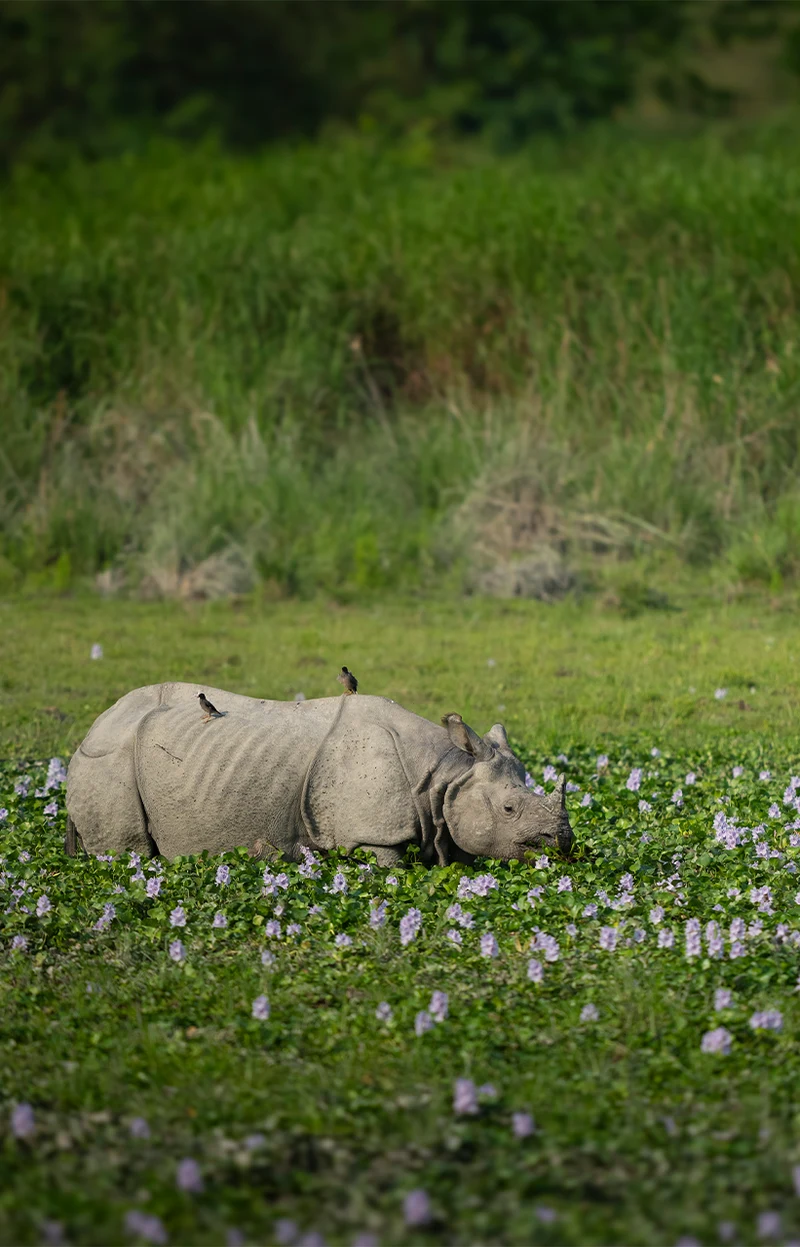
The world's finest rhino sanctuary and UNESCO World Heritage Site. The combination of Nameri (birdwatching, rafting, forest) + Kaziranga (rhino, elephant, tiger) forms one of India's finest dual-park itineraries.
Orang National Park (~100 km via Tezpur)
The "Mini Kaziranga" with India's claimed highest tiger density — a natural extension of the Nameri circuit for a comprehensive northern Assam wildlife experience.
Travel Tips for Nameri National Park
- Book rafting in advance — it fills up during peak season. Book via the Nameri Eco Camp or directly at the park office.
- Dawn (6:00–8:00 AM) is the most productive time for White-winged Wood Duck sightings at the beels and for all birdwatching. Plan your first morning at the beels.
- Request a forest guard experienced with the wood duck beels — knowing which beel is currently most active for wood ducks is essential for a successful sighting.
- Carry a 400mm+ camera lens for wildlife photography. The river rafting provides excellent opportunistic wildlife and bird photography in natural settings.
- For Golden Mahseer angling, obtain prior Forest Department permission well in advance. The strict catch-and-release policy must be observed.
- Wear neutral-coloured clothing for walking safaris. Avoid perfumes or strong scents that may disturb wildlife.
- Visit the Pygmy Hog Breeding Centre near the Eco Camp — it is a genuinely fascinating conservation facility and the incidental birdwatching on its campus is excellent.
- Nameri pairs perfectly with Pakke Tiger Reserve in Arunachal Pradesh (directly adjacent, north) for an extended Eastern Himalayan forest circuit.
Frequently Asked Questions (FAQ) - Nameri National Park
What is Nameri National Park famous for?
Nameri is primarily famous for being the stronghold of the White-winged Wood Duck (Asarcornis scutulata) - Assam's state bird and one of Asia's rarest ducks (fewer than 1,000 remaining globally). It is also celebrated for its 374+ bird species, four hornbill species, crystal-clear Jia Bhoroli River rafting, Golden Mahseer angling, walking safaris, and the transboundary forest corridor with Pakke Tiger Reserve in Arunachal Pradesh.
Why is Assam's state bird (White-winged Wood Duck) associated with Nameri?
The White-winged Wood Duck (Asarcornis scutulata) is Assam's state bird and Nameri National Park was specifically established to protect it and its riparian forest habitat. The three seasonal beels (wetlands) within Nameri - Borghuli Beel, Kurua Beel, and Magurmari Beel - provide critical foraging and nesting habitat for this Critically Endangered species. A captive breeding programme for the duck operates from a centre adjacent to the Nameri Eco Camp.
Can I do a walking safari at Nameri National Park?
Yes. Nameri is one of the very few Indian national parks where walking safaris are the primary and preferred visitor activity. Guided walking trails cover approximately 8 km over 3 hours through diverse forest types, riverine grasslands, and along the Jia Bhoroli riverbank. Entry fee: Rs. 70 (Indians), Rs. 520 (foreigners). A trained Forest Department guard accompanies all walking groups.
What is the Jia Bhoroli River rafting experience like?
The 13 km Jia Bhoroli River rafting trip is a calm, scenic, 3-hour float downstream through pristine forested riverbanks, with gentle rapids suitable for all skill levels. Participants begin approximately 13 km upstream and finish at Potasil Camp near the Forest Range Office. En route, birdwatching is exceptional (Ibisbill, Long-billed Plover, kingfishers) and larger wildlife sometimes approaches the riverbank. Pre-booking is mandatory.
What is the Golden Mahseer and why is it special at Nameri?
The Golden Mahseer (Tor putitora) is an Endangered freshwater fish of Himalayan rivers - one of the world's most prized sport fish, capable of reaching enormous sizes and fighting powerfully against the current. The Jia Bhoroli River at Nameri is considered one of Assam's finest Golden Mahseer habitats. Catch-and-release angling is permitted with prior Forest Department permission - making Nameri one of very few Indian protected areas where ethical sport angling is officially facilitated.
How many hornbill species are found at Nameri?
Nameri National Park hosts four hornbill species - Great Hornbill, Wreathed Hornbill, Rufous-necked Hornbill, and Great Pied Hornbill - making it one of the finest hornbill observation destinations in northeast India. All four species inhabit the tall semi-evergreen forest canopy and are most active (and most vocal) at dawn.
How do I reach Nameri National Park from Guwahati?
From Guwahati, Nameri is approximately 212 km (5 hours) via NH-15 toward Tezpur, then the Balipara-Chariduar road. Alternatively, fly from Guwahati to Tezpur (40 km from the park, 1.5 hours by taxi). From Guwahati by road: NH-15 → Baihatta Chariali → Mangaldai → Kharupatia → Rowta → Orang → Dhekiajuli → Mission Chariali → state road to Nameri.
What is the Assam Roofed Turtle and its significance at Nameri?
The Assam Roofed Turtle (Pangshura sylhetensis) is an Endangered freshwater turtle endemic to Assam - once believed extinct, it was rediscovered alive at Nameri in 1992. This remarkable rediscovery remains one of the most celebrated herpetological conservation events in India. Nameri is now recognised as one of the few remaining habitats for this species.
When is the best time to visit Nameri National Park?
November to March is the best overall period - excellent for the White-winged Wood Duck, hornbills, and all birdwatching; comfortable temperatures; good rafting conditions. April-May is better for mammal sightings. The park is closed during monsoon (June-October approximately). Advance booking for accommodation and rafting is essential during peak season (December-February).
What is the transboundary significance of Nameri with Pakke Tiger Reserve?
Nameri National Park shares its northeastern boundary with Pakke (Pakhui) Tiger Reserve in Arunachal Pradesh - creating a contiguous transboundary forest corridor of approximately 1,000+ sq km of semi-evergreen and tropical evergreen forest spanning the India-Arunachal border. This corridor is vital for the movement of tigers, elephants, and other wide-ranging species between Assam's lowland forests and Arunachal's Himalayan foothills, maintaining genetic connectivity across state boundaries. Nameri forms the core of the larger Kameng Elephant Reserve, reflecting this transboundary ecological function.