Indravati Tiger Reserve: The Complete Travel & Wildlife Guide
Deep in the heart of the Bastar region of Chhattisgarh, where the ancient forests of central India merge with the hilly landscapes of the Deccan Plateau, lies the Indravati Tiger Reserve — a wilderness of extraordinary ecological significance. Home to one of the last surviving populations of the endangered wild water buffalo, a healthy apex predator community, and vast stretches of tropical deciduous forest untouched by mass tourism, Indravati stands as one of India's most bio-diverse and least-visited tiger reserves. For the adventurous wildlife traveller seeking genuine wilderness, few destinations in India can match Indravati's raw and compelling nature.
Overview of Indravati Tiger Reserve
Indravati Tiger Reserve is located in the Bijapur district of Chhattisgarh and derives its name from the Indravati River, which flows from east to west and forms the northern and western boundary of the reserve — simultaneously marking the inter-state boundary between Chhattisgarh and Maharashtra. With a total area of approximately 2,799 square kilometres, including a core critical tiger habitat of 1,258.37 sq km and a buffer zone of 1,540.70 sq km, Indravati is one of the largest tiger reserves in central India.
The reserve was declared a national park in 1981 and elevated to Tiger Reserve status under Project Tiger in 1983, making it one of the country's earliest Project Tiger sites. The landscape's ecological significance is immense: Indravati shares habitat connectivity with Kawal Tiger Reserve in Telangana, Tadoba-Andhari Tiger Reserve in Maharashtra, and Kanha Tiger Reserve in Madhya Pradesh, forming a vital landscape corridor for the long-term survival of tigers and other wide-ranging species in peninsular India.
The reserve is characterised by undulating hilly terrain with altitudes ranging from 177 metres to 599 metres above sea level. Forest vegetation is predominantly tropical moist and dry deciduous with significant bamboo, Sarai (Terminalia tomentosa), and teak. Open grassland patches scattered throughout the forest provide critical grazing grounds for the reserve's remarkable herbivore assemblage.
| Feature | Details |
|---|---|
| Location | Bijapur District, Chhattisgarh |
| Total Area | ~2,799 sq. km |
| Core Tiger Habitat | 1,258.37 sq. km |
| Buffer Zone | 1,540.70 sq. km |
| National Park Status | 1981 |
| Tiger Reserve Status | 1983 (Project Tiger) |
| Named After | Indravati River |
| Nearest Town | Jagdalpur (~168 km from main entry) |
| Entry Point | Kutrue village (22.4 km north of Jagdalpur-Bhopalpattanam road) |
| Open Season | November to June (confirm with authorities) |
The Pride of Indravati: Wild Water Buffalo
The wild water buffalo (Bubalus arnee) is the most iconic and critically important species in Indravati Tiger Reserve, and the reason why the reserve commands special global conservation attention. The wild water buffalo — distinct from the domesticated Asian water buffalo — is classified as Endangered on the IUCN Red List, with fewer than 4,000 individuals believed to survive in the wild worldwide. Indravati, along with Udanti-Sitanadi Tiger Reserve in Chhattisgarh, harbours one of the last viable populations of this species in India.
The reserve's open grasslands and riverine habitats along the Indravati River provide ideal conditions for wild buffalo herds. Conservation efforts focus heavily on maintaining genetic purity of wild buffalo populations, preventing hybridisation with domestic cattle, and safeguarding their grazing habitats. Sightings of wild buffalo herds grazing in the reserve's meadows are among the most memorable wildlife encounters in central India.
Flora: Tropical Forests and Grassland Ecosystems
The vegetation of Indravati Tiger Reserve reflects the transitional character of the landscape between central Indian highlands and the Deccan Plateau. Tropical moist deciduous forests dominated by bamboo, Sarai, and teak occupy the well-watered valleys and lower hillsides, while tropical dry deciduous forests with Terminalia, Anogeissus, and mixed hardwoods characterise the drier upland areas. The reserve's floristic survey has recorded 102 tree species, 28 climber species, 46 shrub and herb species, 32 grass species, 2 bamboo species, and various ferns, bryophytes, and algae.
Open grassland patches, interspersed throughout the core area, are particularly significant as they sustain populations of wild buffalo, gaur, chital, nilgai, and other large herbivores. The grasslands are naturally maintained through elephant and herbivore grazing, and their preservation is a key management priority of the reserve. The Indravati River corridor supports dense riverine vegetation including fig trees, jamun, and seasonal flowering plants that attract a profusion of wildlife.
Wildlife: Tigers, Wild Buffalo & Forest Fauna
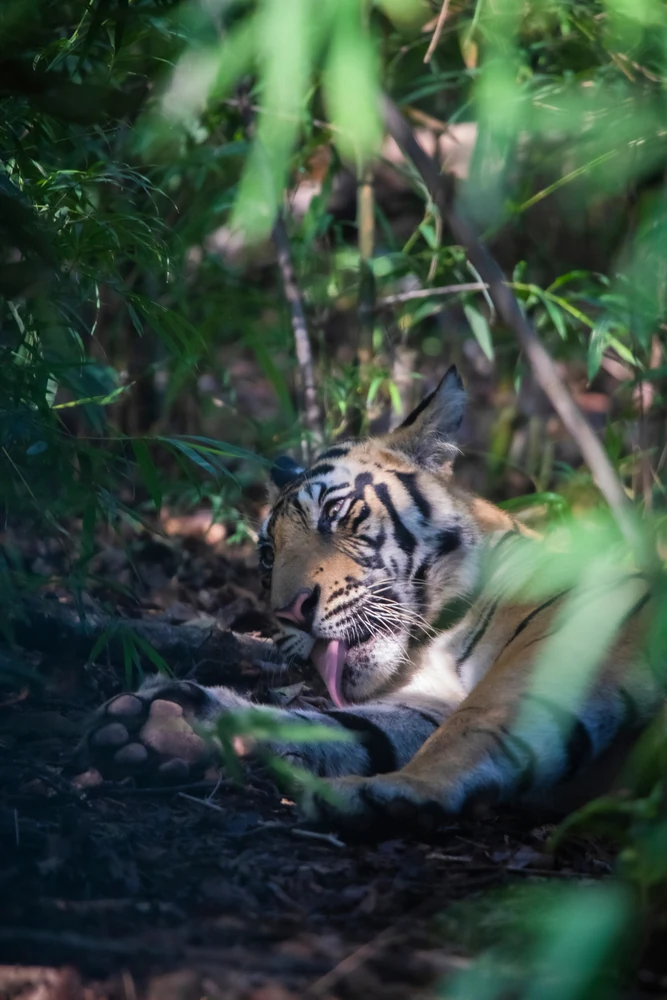
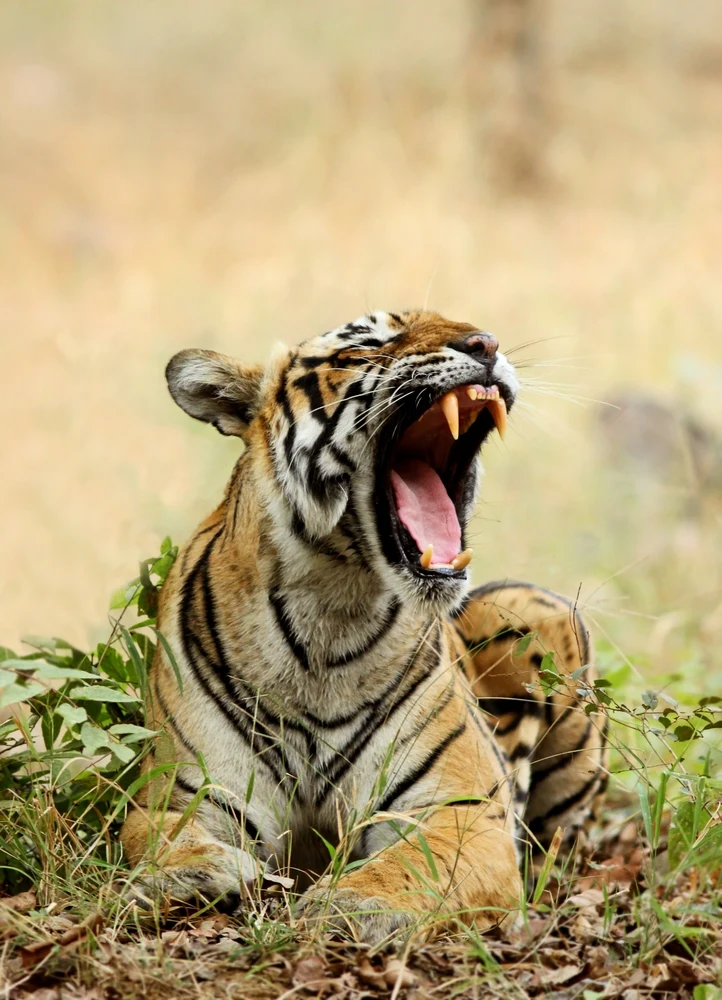
Indravati Tiger Reserve supports a rich and diverse faunal community. The Bengal tiger is the reserve's apex predator and flagship species, with a resident population sustained by the vast and prey-rich landscape. Other large predators include the Indian leopard, dhole (Indian wild dog), sloth bear, and striped hyena, all of which occupy different ecological niches within the reserve.
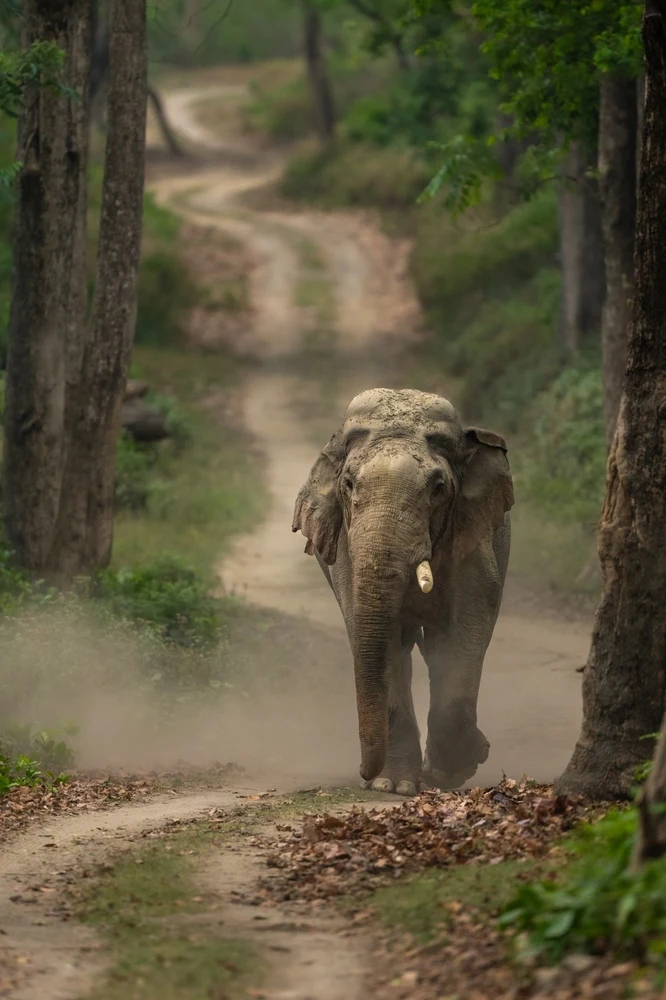
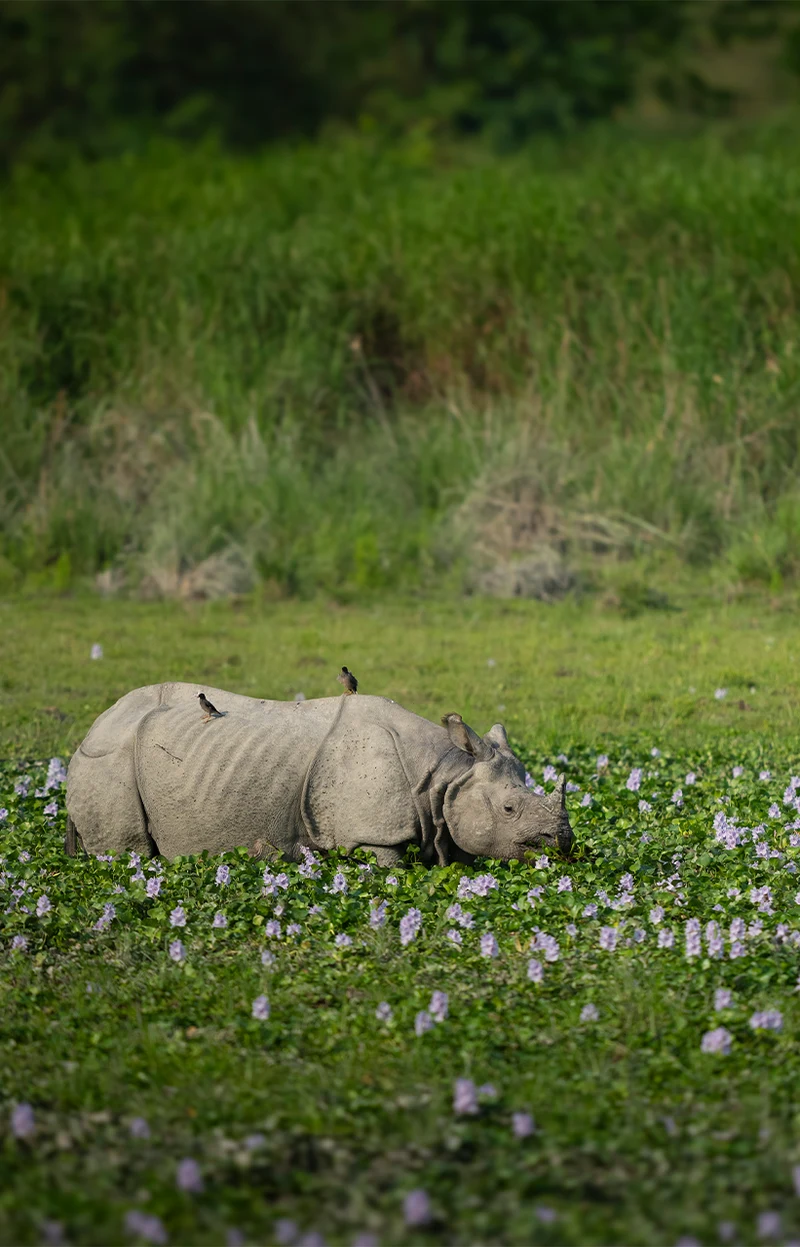
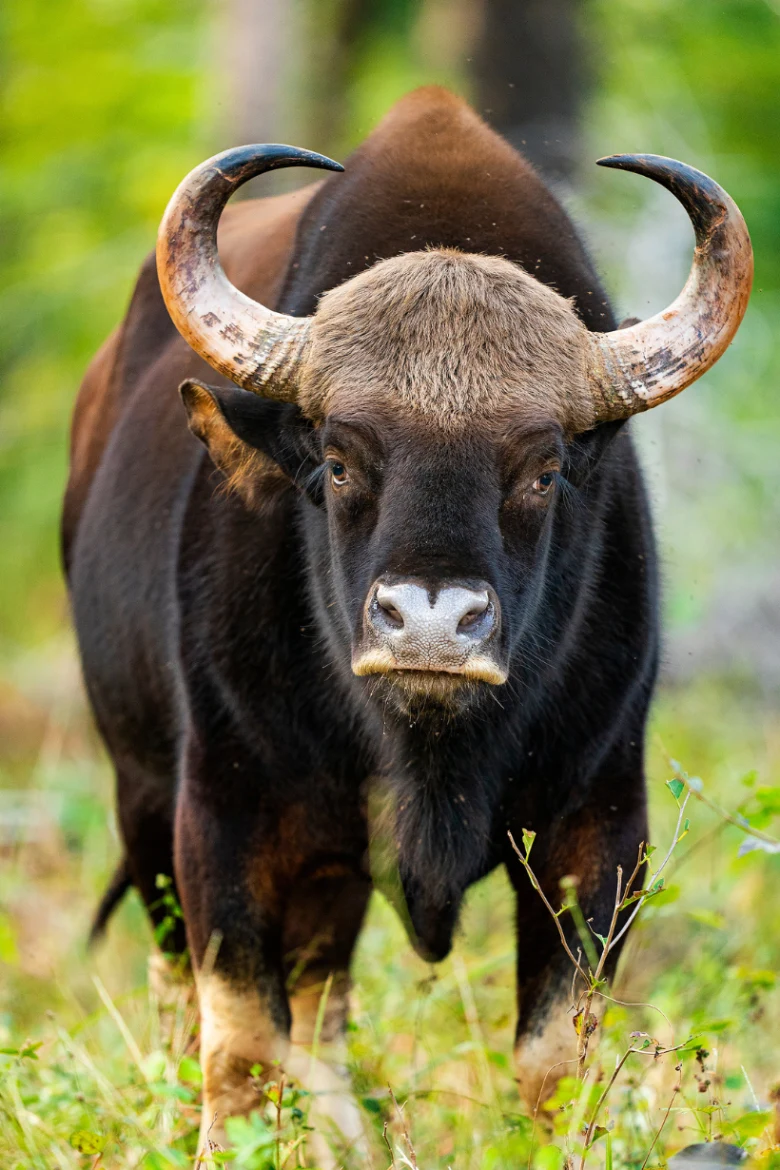
The ungulate community is one of the richest in any Indian tiger reserve, with documented species including gaur (Indian bison), nilgai, blackbuck, chausingha (four-horned antelope), sambar, chital (spotted deer), Indian muntjac (barking deer), Indian spotted chevrotain, and wild boar. The reserve is also home to Asian elephants that periodically move through the landscape. Smaller mammals include flying squirrels, porcupines, pangolins, rhesus macaques, and grey langurs.
Avian diversity is exceptional, with over 200 recorded bird species. Among the most celebrated is the Hill Myna (Gracula religiosa), a species of significant conservation concern. Other notable birds include crested serpent eagles, Indian rollers, drongos, hornbills, stork species along the Indravati River, and various birds of prey. Crocodiles are present in the Indravati River, offering additional wildlife watching opportunities along the riverbanks.
Safari & Activities at Indravati Tiger Reserve
Jeep Safari
Jeep safaris are the primary way to explore Indravati Tiger Reserve. Open-top vehicles with trained naturalist guides enter the core zone through designated entry points. Safari timings are typically from 8:00 AM to 6:00 PM. Given the vastness of the reserve and the dense vegetation, safaris require patience and quiet observation. The main entry point is at Kutrue village. Visitors are advised to carry water and food as amenities inside the reserve are minimal.
Birdwatching
Indravati is a birdwatcher's paradise, with grasslands, riverine forests, and deciduous woodlands each supporting distinct avian communities. Winter months attract migratory species from Central Asia and Siberia, supplementing the rich resident bird community. Guided birdwatching trails along the Indravati River are particularly productive.
Wildlife Photography
The open grasslands and riverside habitats offer exceptional photography opportunities for ungulate herds, wild buffalo, and raptors in flight. A telephoto lens of 400mm or above is recommended for bird photography, while a 100-400mm range lens is suitable for larger mammals.
Trekking & Nature Walks
Guided nature walks are available in the buffer zone areas, allowing visitors to experience the forest at ground level, observe smaller wildlife, identify medicinal plants used by local tribal communities, and immerse themselves in the sounds and scents of the jungle.
Cultural Experiences: The Bastar Tribes
Indravati Tiger Reserve lies in the heart of the Bastar region, home to some of India's most vibrant indigenous communities including the Gond, Maria Gond, Muria, Dhurwa, and Halba tribes. Local tribal markets, craft traditions, folk art (including the world-famous Bastar Dhokra metalwork), and festivals offer a profoundly enriching cultural dimension to any Indravati wildlife visit. An old Shiva temple near Pasewada village inside the reserve holds both spiritual and historical significance.
Best Time to Visit Indravati Tiger Reserve
November to February: Winter – Optimal Wildlife Viewing
The winter season from November through February is the ideal time to visit Indravati. Weather is pleasant and cool (15–25°C), wildlife concentrates around water sources, and migratory birds supplement the resident avian population. Visibility is excellent, and the grasslands are alive with herbivore herds. This period sees the highest visitor footfall, though the reserve remains far less crowded than better-known parks.
March to June: Summer – Best Tiger & Wild Buffalo Sightings
As the dry season intensifies from March onwards, water sources diminish and wildlife becomes increasingly concentrated. March to May is arguably the best time to sight tigers and wild buffalo herds as they are drawn to the few remaining permanent water bodies. Temperatures can reach 35-40°C by May-June, and visitors should take appropriate precautions.
July to October: Monsoon – Reserve Closed
The reserve closes during the monsoon season to protect the forest and allow wildlife to breed undisturbed. This is the time when the landscape transforms into lush, impenetrable jungle — breathtaking to observe from outside but inaccessible for safaris.
How to Reach Indravati Tiger Reserve
By Air
The nearest airport is Swami Vivekananda Airport, Raipur, approximately 486 kilometres from the reserve. From Raipur, onward travel to Bijapur and the reserve requires road transport, with taxis and state transport buses available. The drive from Raipur to the reserve takes approximately 10-12 hours.
By Train
Jagdalpur is the nearest railway station, approximately 168 kilometres from the main entry point at Kutrue. Jagdalpur is connected to Raipur and other major cities. From Jagdalpur, taxis, buses, and private vehicles are available for the journey to the reserve.
By Road
The reserve is accessible from Jagdalpur, the district headquarters of Bastar, via a well-maintained road. The entry point at Kutrue village is located approximately 22.4 kilometres north of the Jagdalpur-Bhopalpattanam road. State transport buses and private vehicle hire are available from Jagdalpur. Bijapur town, the district headquarters, is also a convenient base for visiting the reserve.
Nearby Attractions
Chitrakote Falls – The Niagara of India
Approximately 40 kilometres from Jagdalpur, Chitrakote Falls is one of India's most spectacular waterfalls, where the Indravati River cascades over a horseshoe-shaped cliff 29 metres high. It is often called the Niagara of India for its width and drama, especially during and just after the monsoon.
Bastar Palace & Jagdalpur
The historic Bastar Palace in Jagdalpur, dating to the era of the Bastar kings, is a significant architectural and cultural landmark. Jagdalpur itself hosts a vibrant tribal market and is the gateway city for exploring the entire Bastar region.
Tirathgarh Falls
A multi-tiered waterfall located approximately 35 kilometres from Jagdalpur within the Kanger Valley National Park. Set within dense forests, Tirathgarh is a scenic natural attraction popular with visitors exploring the Bastar circuit.
Kanger Valley National Park
Located adjacent to Jagdalpur, Kanger Valley National Park is famous for its magnificent stalactite and stalagmite cave formations — Kotumsar Cave and Kailash Cave — as well as its diverse wildlife and the rare Bastar Hill Myna.
Dantewada – The Danteshwari Temple
The Danteshwari Temple at Dantewada is one of the 52 shakti peethas (sacred goddess shrines) of India and a major pilgrimage destination. Located approximately 85 kilometres from Jagdalpur, it holds immense religious significance for the Bastar region.
Accommodation Options
Forest Rest Houses
Forest rest houses managed by the Chhattisgarh Forest Department are available at Pharsegarh, Sendra, Pengunda, Karkeli, and Kutru within and near the reserve. These basic government-run facilities offer clean accommodation in a forest setting and must be booked well in advance through forest department offices.
Hotels in Jagdalpur
Jagdalpur offers the widest range of accommodation options for Indravati visitors, from budget guesthouses to mid-range hotels. Most visitors use Jagdalpur as a base for day trips or overnight stays near the reserve, returning to the city for meals and comfortable lodging.
Hotels in Bijapur
Bijapur, the district headquarters closest to the reserve, has a limited selection of hotels and guesthouses suitable for basic accommodation. Facilities are improving with growing eco-tourism interest in the region.
Travel Tips for Indravati Tiger Reserve
- Indravati is remote — plan logistics carefully. Carry sufficient cash, food, and water as facilities inside the reserve are minimal.
- Given the security situation in the Bastar region, always check current travel advisories and coordinate with local authorities and registered tour operators before visiting.
- Book forest rest houses and safari permits well in advance through the Chhattisgarh Forest Department.
- Hire a local naturalist guide with knowledge of the Bastar landscape — this significantly enhances the wildlife experience and supports the local community.
- The best wildlife sighting areas are the open grasslands and water bodies of the core zone near Kutrue and Pharsegarh.
- Dress in neutral, earth-toned clothing and carry a hat, sunscreen, and insect repellent.
- Respect tribal communities and cultural norms when visiting the Bastar region. Always seek permission before photographing individuals.
- An extended itinerary of 4-5 days allows exploration of both the wildlife reserve and the rich cultural heritage of the Bastar region.
Conservation Status & Challenges
Despite its ecological richness, Indravati Tiger Reserve faces several significant conservation challenges. The region lies within the so-called "Red Corridor" associated with left-wing extremist activity, which has historically limited both conservation investments and wildlife tourism infrastructure. The reserve's management works under challenging conditions but has maintained its critical role in protecting wild buffalo, tigers, and the broader Bastar biodiversity.
The reserve's connectivity with Kawal (Telangana), Tadoba (Maharashtra), and Kanha (Madhya Pradesh) tiger reserves makes it an essential node in the central Indian tiger landscape. Protecting and restoring this connectivity remains a priority for long-term tiger conservation in the region. Conservation organisations and the National Tiger Conservation Authority (NTCA) continue to work with the state forest department to strengthen protection, monitoring, and community engagement.
Frequently Asked Questions (FAQs) – Indravati Tiger Reserve
What is Indravati Tiger Reserve famous for?
Indravati Tiger Reserve is famous for harbouring one of the last wild populations of the endangered wild water buffalo (Bubalus arnee), its rich tiger population, exceptional avian diversity including the Hill Myna, and its location within the biodiverse Bastar landscape of Chhattisgarh.
Where is Indravati Tiger Reserve located?
Indravati Tiger Reserve is located in the Bijapur district of Chhattisgarh state in central India. The Indravati River, after which the reserve is named, flows from east to west and forms the northern and western boundary of the reserve.
What is the best time to visit Indravati Tiger Reserve?
The best time is from November to May. November to February offers pleasant weather and excellent wildlife viewing. March to May is optimal for tiger and wild buffalo sightings as animals concentrate around water sources. The reserve closes during the monsoon from July to October.
How do I reach Indravati Tiger Reserve?
The nearest airport is Raipur (approximately 486 km). The nearest railway station is Jagdalpur (168 km from the main entry). From Jagdalpur, the reserve is accessible by road via Kutrue village. Visitors should plan for a full day's travel from Raipur.
What wildlife can be spotted in Indravati Tiger Reserve?
Wildlife includes Bengal tigers, Indian leopards, wild water buffalo, Asian elephants, gaur, sloth bears, dholes, striped hyenas, sambar, chital, blackbuck, four-horned antelope, Indian muntjac, flying squirrels, pangolins, and over 200 bird species including the endangered Hill Myna.
Is the wild buffalo the state animal of Chhattisgarh?
Yes, the wild water buffalo (Bubalus arnee) is the state animal of Chhattisgarh. Indravati Tiger Reserve is one of the last refuges for this critically endangered species in India, making its conservation mission of national importance.
What are the entry fees for Indravati Tiger Reserve?
Approximate entry fees are Rs. 50 per person for Indian nationals and Rs. 100 per person for foreign nationals, with additional charges for cameras and vehicles. Fees are subject to change and should be confirmed with the park authorities or the Chhattisgarh Forest Department before visiting.
Are there good hotels near Indravati Tiger Reserve?
Accommodation options near the reserve itself are limited to forest rest houses at locations like Pharsegarh, Sendra, Pengunda, Karkeli, and Kutru. Jagdalpur, 168 km away, offers the best range of hotels. Visitors should book accommodation well in advance.
What cultural experiences are available near Indravati Tiger Reserve?
The reserve lies within the Bastar region, home to some of India's most vibrant tribal cultures including the Gond and Maria tribes. Cultural experiences include tribal markets, Dhokra metalwork art, Bastar Dussehra celebrations, traditional music, and visits to ancient temples like the Danteshwari shrine.
What are the nearby tourist attractions from Indravati Tiger Reserve?
Nearby attractions include Chitrakote Falls (the Niagara of India), Kanger Valley National Park with its impressive limestone caves (Kotumsar and Kailash caves), the Bastar Palace in Jagdalpur, Tirathgarh Falls, and the sacred Danteshwari Temple at Dantewada.