Palamau Tiger Reserve: Jharkhand's Ancient Forest and Project Tiger Pioneer
Deep in the rugged terrain of the Chhotanagpur Plateau in western Jharkhand, where the Auranga, Burha, and Koel rivers carve their way through dense sal forests and open grasslands, lies one of India's most historically significant wildlife sanctuaries — the Palamau Tiger Reserve. As one of the original nine tiger reserves established under Project Tiger in 1973–74, Palamau carries a conservation legacy that predates most of India's protected area network. It is Jharkhand's only tiger reserve, and within its 1,129.93 sq km of core and buffer forests lies the Betla National Park — a name that is itself an acronym for the reserve's most iconic residents: Bison, Elephant, Tiger, Leopard, and Axis deer.
What makes Palamau unique among India's tiger reserves is not only its wildlife but its extraordinary layering of natural and cultural heritage. Within the reserve stand the ruins of two majestic forts — the Old Fort and New Fort of Palamau — built by the Chero kings between the 16th and 17th centuries. No other tiger reserve in India places the visitor simultaneously inside a wildlife sanctuary and within the walls of a medieval fortress. Add to this the distinction of hosting the world's first-ever tiger census by pugmarks (1932–34) and offering some of Jharkhand's most spectacular astrophotography skies, and Palamau emerges as a destination of rare depth and character.
Overview of Palamau Tiger Reserve
Key Facts at a Glance
- Full Name: Palamau Tiger Reserve (PTR); core area = Betla National Park
- Location: Palamu, Latehar, and Garhwa Districts, Jharkhand, India
- Total Area: 1,129.93 sq km (Core: 414.08 sq km; Buffer: 715.85 sq km)
- Betla National Park Area: 226.32 sq km (within the core)
- Established: Protected area — 1947; Wildlife Sanctuary — 1960; Tiger Reserve — 1973–74 (Project Tiger); National Park — 1986
- Distinction: One of the original nine Project Tiger reserves in India (1973); Only tiger reserve in Jharkhand
- Also Includes: Mahuadanr Wolf Sanctuary (within the buffer)
- Headquarters: Daltonganj (also known as Medininagar)
- Main Tourism Centre: Betla — approximately 25 km from Daltonganj
- Nearest Airport: Ranchi (Birsa Munda Airport) — approximately 161 km
- Nearest Railway: Daltonganj Railway Station — approximately 25 km from Betla
- Park Open: 1st October to 30th June (closed July–September)
The Name 'Betla' — An Ecological Acronym
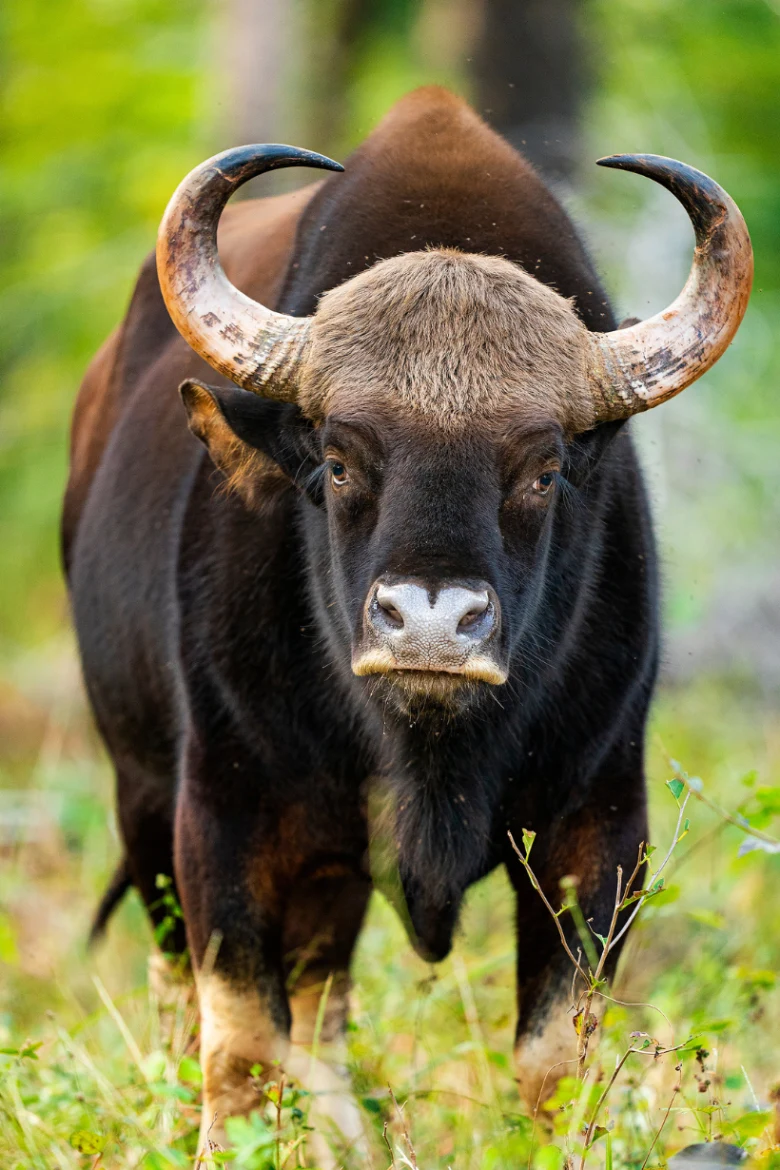
The name 'Betla' is a fascinating ecological acronym that captures the essence of the park's biodiversity in a single word: B — Bison (Indian Gaur), E — Elephant, T — Tiger, L — Leopard, A — Axis (Chital deer). This clever naming convention, which appears to have emerged organically from the reserve's conservation community, immediately communicates to visitors the star species they can hope to encounter within these forests.
Historical Background: The World's First Tiger Census
Palamau's conservation history is extraordinary. Scientific management of the forests here began as early as 1864 — well before most protected areas in India were formally constituted. The area in Palamu District was set aside as a protected area in 1947 under the Indian Forests Act, declared a Wildlife Sanctuary in 1960, and elevated to Tiger Reserve status in 1973–74 as one of Project Tiger's original nine sites.
Perhaps the most remarkable historical distinction belongs to Palamau as the site of the world's very first tiger census by pugmark count, conducted in 1932 under the supervision of J.W. Nicholson, the Palamu Divisional Forest Officer. In 1894–95 and 1896–97, D.M.E. Sundar conducted foundational wildlife counts in the region — among the earliest systematic wildlife surveys in India. In 1973, the reserve was estimated to hold 50 tigers. This heritage of scientific wildlife management gives Palamau a unique place in the global history of tiger conservation.
The reserve also contains Mahuadanr Wolf Sanctuary within its buffer zone — one of the few sanctuaries in India specifically created for the protection of the Indian wolf (Canis lupus pallipes), one of Asia's most endangered large carnivores.
Geography and Ecology
Landscape and Rivers
Palamau Tiger Reserve is situated on the western portion of the Chhotanagpur Plateau — one of India's most ancient geological formations. The terrain is characterised by undulating hills, steep ridges, open valleys, and river basins, with elevations ranging from 300 m to 900 m above sea level. The reserve is the watershed area for three important rivers: the Koel, Burha, and Auranga rivers — all of which flow through or around the reserve, providing critical water sources for wildlife and creating diverse riparian habitats.
The forest is bounded by the Netarhat Forest to the south, the Auranga River to the north, the Latehar Forest Division to the east, and the Garhwa Forest Division and Sarguja District of Chhattisgarh to the west, creating a relatively large contiguous forest landscape. The reserve is also connected to the Guru Ghasidas–Tamor Pingla Tiger Reserve to the west and Lawalong Wildlife Sanctuary to the east, forming part of a broader tiger landscape.
Flora: Sal Forests and Flame of the Forest
The vegetation of Palamau Tiger Reserve falls within the Indo-Malayan biogeographic realm and transitions between moist deciduous and dry deciduous forest types:
- Sal (Shorea robusta): The dominant species — forming dense, towering canopies across the reserve
- Bamboo (Bambusa species): Extensive bamboo brakes providing shelter and food for elephants and smaller mammals
- Palash / Flame of the Forest (Butea monosperma): Spectacular orange blossoms in spring
- Mahua (Madhuca longifolia): Ecologically and culturally important tree — used by tribal communities
- Teak (Tectona grandis): Present in mixed forest zones
- Kendu (Diospyros melanoxylon): Economically important for leaf collection
- Arjun (Terminalia arjuna): Common along riverbanks
- Western part: Dry deciduous forests; Eastern part: Moist mixed deciduous forests
- Grass meadows: Clearings and grasslands along rivers — critical wildlife habitat
Fauna: A Forest of Survivors
Palamau Tiger Reserve's wildlife, while facing pressures from historical poaching and Naxalite presence in certain areas, represents a remarkable diversity of species:
Tigers and Big Cats
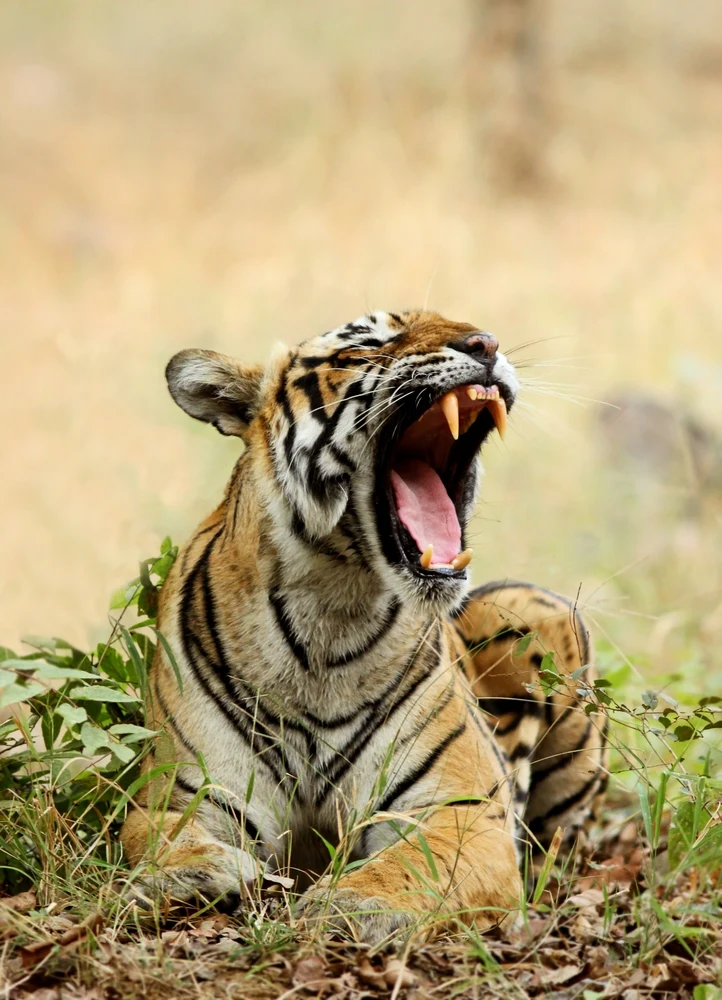
The tiger population at Palamau has seen dramatic fluctuations — from an estimated 50 individuals in 1973 to a low of just 6 in 2009 (based on DNA analysis), to zero recorded in the 2018 All India Tiger Count, and back to 6 confirmed tigers in January 2025. This recovery story, however fragile, is a testament to the ongoing conservation work in the reserve. As of the 2022 census, 51 leopards were recorded — a healthy population.
- Royal Bengal Tiger (Panthera tigris tigris): 6 confirmed individuals as of January 2025
- Indian Leopard (Panthera pardus fusca): 51 individuals (2022 census)
- Indian Wolf (Canis lupus pallipes): Protected in the adjacent Mahuadanr Wolf Sanctuary
- Wild Dog / Dhole (Cuon alpinus): Packs confirmed in forest areas
- Jungle Cat (Felis chaus): Smaller felid; regularly recorded
Elephants
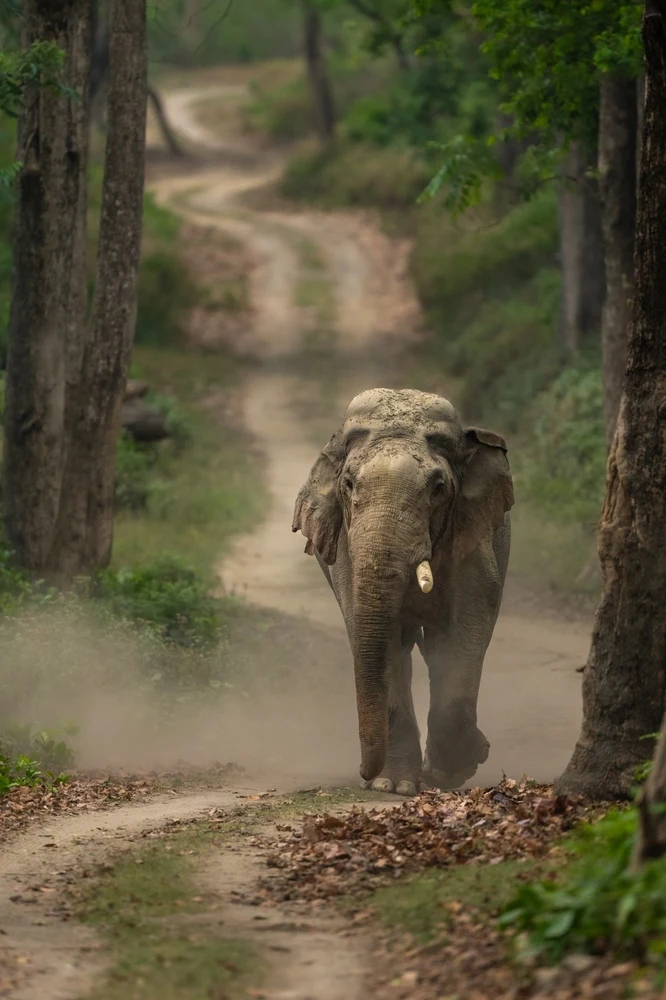
The elephant story at Palamau is one of nature's most dramatic examples of recovery and colonisation. Before 1920, there was no elephant population in Palamau. Approximately 20 elephants released by the Maharaja of Surguja subsequently went feral and established a wild population. By 1989, 65 Asian elephants were recorded; by the 2017 census, this had grown to 182 — a remarkable increase reflecting the health of the reserve's habitat.
- Asian Elephant (Elephas maximus): 182 individuals (2017 census); herds commonly sighted during safaris
- Herds from Singbhum district (now Jharkhand) have also periodically joined the Palamau population
Other Mammals
- Indian Gaur / Bison (Bos gaurus): Regularly seen in open meadows
- Sambar Deer (Rusa unicolor): Common throughout the reserve
- Chital / Spotted Deer (Axis axis): The most abundant ungulate — large herds frequently seen
- Barking Deer / Muntjac (Muntiacus muntjak): Shy but present throughout
- Nilgai / Blue Bull (Boselaphus tragocamelus): Open area species; frequently seen
- Mouse Deer (Moschiola indica): Small, elusive; in dense undergrowth
- Four-horned Antelope / Chowsingha (Tetracerus quadricornis): Rare and unique — endemic to India; one of only two four-horned bovids on Earth
- Sloth Bear (Melursus ursinus): Irregularly sighted; present in the forest
- Indian Pangolin (Manis crassicaudata): Nocturnal; recorded in the reserve
- Indian Ratel / Honey Badger (Mellivora capensis)
Birds: 140+ Species
Over 140 species of birds have been recorded in the reserve, making it an engaging birdwatching destination:
- Indian Peafowl (Pavo cristatus): Commonly seen on forest roads
- Red Junglefowl (Gallus gallus): The ancestor of domestic chickens; present throughout
- Grey Hornbill (Ocyceros birostris): Common canopy species
- Crested Hawk Eagle (Nisaetus cirrhatus): Impressive raptor
- Indian Pitta (Pitta brachyura): Colourful winter visitor
- Owls, partridges, babblers, bulbuls, bee-eaters, and numerous other species complete the bird list
Reptiles
- King Cobra (Ophiophagus hannah)
- Indian Rock Python (Python molurus)
- Monitor Lizard (Varanus bengalensis)
- Various viper and rat snake species
The Palamau Forts: Where Wildlife Meets History
Old Fort of Palamau
The ruins of the Old Fort of Palamau stand deep within the wildlife sanctuary — one of the most extraordinary combinations of medieval architecture and wilderness in India. Built by the Chero dynasty, which ruled over parts of present-day Jharkhand, the fort dates to the 16th century. The fort is set on a strategic rocky hillside, its ancient stone walls now partially reclaimed by the surrounding forest. Access is through the forest trails of the reserve, making the journey itself an immersive wildlife experience.
New Fort of Palamau
The New Fort — also built by the Chero rulers in the 17th century — stands closer to the forest edge and is more accessible to visitors. Its architecture reflects the fusion of military necessity and regional craft traditions. These structures were historically significant in the battles between the Chero kings and Mughal forces. Visiting both forts within a wildlife reserve creates an experience found nowhere else in India.
How to Reach Palamau Tiger Reserve
By Air
The nearest airport is Birsa Munda Airport in Ranchi, approximately 161 km from Daltonganj (the reserve headquarters). Ranchi is connected to Delhi, Kolkata, Mumbai, Patna, and other major cities. From Ranchi, hire a taxi or board a bus to Daltonganj (approximately 3.5–4 hours by road).
By Rail
Daltonganj Railway Station (also called Medininagar) is located approximately 25 km from Betla, the main tourist area. It is connected by rail to Ranchi, Patna, and through these to major cities including Delhi and Kolkata. The Hatia–Daltonganj Passenger, Rajya Rani Express, and other services connect the region.
By Road
From Ranchi, take NH75 towards Daltonganj (approximately 161 km; 3.5–4 hours). From Daltonganj, Betla is 25 km — approximately 30–40 minutes by road. Regular buses operate from Ranchi to Daltonganj. From Delhi, the distance is approximately 850 km via NH19 and NH75 (15–16 hours by road; best covered in stages via Ranchi). From Patna, approximately 300 km via NH139 to Daltonganj.
💡 Tip: Book your jeep safari and accommodation at Betla in advance through the Palamau Tiger Reserve's official eco-tourism portal or the Jharkhand Tourism office in Ranchi. Peak season (November–February) safari slots fill quickly.
Best Time to Visit Palamau Tiger Reserve
October to March: Peak Season
The best time to visit is from October to March. Post-monsoon (October–November), the forest is lush and green, water sources are full, and wildlife is active throughout. December to February brings cool, comfortable temperatures — ideal for morning safaris and jungle walks. This is the single best window for spotting tigers and leopards.
March to June: Good for Wildlife Near Waterholes
As summer progresses, deciduous trees shed their leaves, improving visibility considerably. Wildlife concentrates near the limited water sources — rivers and waterholes — making this an excellent period for watchtower-based wildlife watching. Summer temperatures can reach 40°C+, so early morning safaris are essential.
July to September: Closed Season
The park is officially closed to tourists from 1st July to 30th September due to heavy monsoon rainfall, which makes roads impassable and wildlife spotting extremely difficult.
Safari and Activities at Palamau Tiger Reserve
Jeep Safari
Jungle jeep safaris through Betla National Park are the primary wildlife experience at Palamau. The reserve has well-maintained internal roads covering approximately 111 km — one of the most extensive internal road networks in India's tiger reserves. This extensive road network means that vast sections of the reserve can be explored by vehicle, increasing the chances of wildlife encounters. Morning safaris (departing around 6 AM) and evening safaris (3 PM) are the two daily sessions. Official jeep safari booking is available through the PTR eco-tourism portal and the Betla Forest Rest House.
Elephant Safari
Elephant-back safaris are available in Betla National Park — a magical way to glide silently through the sal forest at the height of a wild elephant's back, providing elevated views across the forest canopy and riverbed habitats. This form of safari is particularly effective for approaching wildlife without disturbance.
Watchtower Wildlife Watching
Strategically positioned watchtowers overlooking natural waterholes are one of Palamau's most effective wildlife watching tools. In the dry season especially, animals including tigers, leopards, elephants, sloth bears, gaur, sambar, and chital converge at these waterholes. Spending a few hours on a watchtower in the early morning or late afternoon is one of the most productive ways to observe wildlife at Palamau.
Historical Fort Visits
Guided walks to the Old and New Forts of Palamau within the reserve are a unique historical experience. The forest trail leading to the Old Fort passes through excellent wildlife habitat — elephants are frequently encountered en route. The forts themselves provide atmospheric viewpoints over the surrounding forest landscape.
Nature Walks and Trekking
Guided nature walks through designated trails allow visitors to experience the forest at a slower pace, discover tracks and signs of wildlife, and observe the smaller inhabitants of the forest — insects, birds, and reptiles — that are missed on vehicle safaris.
Astrophotography
One of Palamau's most distinctive and underrated offerings is its extraordinarily dark night skies. The reserve is far from major light pollution sources, and the official PTR portal specifically promotes astrophotography as an activity. The pollution-free skies reveal stars, planets, and the Milky Way with stunning clarity. Overnight visitors at Betla rest houses have privileged access to some of the darkest skies in Jharkhand.
Birdwatching
With 140+ recorded species, dawn birdwatching walks around the Betla area and along the Burha and Koel riverbanks are rewarding. Peafowl and Red Junglefowl are commonly seen on forest roads, while the Indian Pitta delights winter visitors.
Entry Fees and Timings
- Safari booking: Official PTR eco-tourism portal (www.palamautigerreserve.in) or Betla Forest Rest House
- Entry fee: Per person + vehicle charges (confirm current rates on official portal)
- Safari timings: Morning session (~6 AM–9 AM); Evening session (~3 PM–6 PM)
- Park open: 1 October to 30 June annually
- Photography: Additional charges for professional/video cameras
Nearby Attractions
Mahuadanr Wolf Sanctuary
Located within the Palamau Tiger Reserve buffer zone, Mahuadanr Wolf Sanctuary is one of India's few areas specifically protected for the Indian wolf. The sanctuary is among the last strongholds of this endangered predator in Jharkhand.
Netarhat Hill Station (~90 km)
Known as the 'Queen of Chhotanagpur,' Netarhat is a scenic plateau at 3,700 feet elevation, famous for its spectacular sunrise and sunset views, pine forests, and the Netarhat residential school. A beautiful complement to a wildlife visit.
Betla Fort Ruins (within the reserve)
The Palamau Forts — Old and New — are described above as in-reserve attractions, making any visit to Betla a dual natural-cultural experience.
Daltonganj (Medininagar)
The reserve headquarters and nearest major town offers accommodation, markets, and onward transport connections. The town is developing as a base for eco-tourism in the Palamau region.
Ranchi (~161 km)
Jharkhand's capital city offers the Ranchi Hill, Tagore Hill, Hundru Falls, Jonha Falls, and Pahari Mandir temple — excellent for a day or two's exploration before or after the tiger reserve visit.
Accommodation Options
Inside the Reserve
- Betla Forest Rest Houses: Managed by the Jharkhand Forest Department; the most atmospheric option — book through PTR official portal
- Rajderwah Forest Guest House: Located inside the reserve; basic but comfortable; offers canteen and dormitory facilities
- Tourist Lodge at Betla: Government-managed; comfortable rooms with meals; excellent base for morning safaris
In Daltonganj (~25 km)
Multiple hotels ranging from budget guesthouses to modest business hotels. Options include Hotel Sunderban, Hotel Aryan, and various mid-range lodges. Better connectivity and facilities than inside the reserve but farther from the early morning safari departure point.
Essential Travel Tips
- Book safari slots at least 2–4 weeks in advance during October–February peak season
- Stay inside the reserve at Betla to maximise early morning safari access
- Carry binoculars — they dramatically enhance wildlife encounters, especially at watchtowers
- Wear earth-toned clothing (khaki, olive, grey) — avoid white or bright colours
- Maintain absolute silence during jeep safaris — noise is the single biggest barrier to tiger sightings
- Carry sufficient cash — ATM access is limited near the reserve; available in Daltonganj
- The forest has no mobile connectivity in many areas — download offline maps before departure
- Take afternoon summer safaris with extra water — temperatures can exceed 40°C in May–June
- Visit both forts — the combination of wildlife and medieval ruins is unique to Palamau among all Indian tiger reserves
- For astrophotography, plan your stay around new moon nights for the darkest skies
Frequently Asked Questions - Palamau Tiger Reserve
What is Palamau Tiger Reserve famous for?
Palamau Tiger Reserve is famous for being one of India's original nine Project Tiger reserves (1973), the only tiger reserve in Jharkhand, and the site of the world's first-ever tiger census by pugmark count (1932). It is home to Betla National Park, where the remarkable Palamau Forts (medieval Chero dynasty ruins) stand within the wildlife sanctuary. The reserve supports over 180 elephants, leopards, gaur, chital, four-horned antelope, and the rare Indian wolf in the adjacent Mahuadanr Wolf Sanctuary.
What does 'Betla' stand for?
Betla is an acronym representing the reserve's five most iconic wildlife species: B - Bison (Indian Gaur), E - Elephant, T - Tiger, L - Leopard, A - Axis deer (Chital). This clever naming perfectly captures the biodiversity of Betla National Park, which forms the core area of Palamau Tiger Reserve.
Are there tigers in Palamau Tiger Reserve?
Yes. After a difficult period - when the 2018 All India Tiger Count recorded no tigers in the reserve - conservation efforts have resulted in a confirmed population of 6 tigers as of January 2025. The reserve continues to receive active support from the National Tiger Conservation Authority. With 51 leopards also confirmed, the reserve's larger cat population is growing.
When is the best time to visit Palamau Tiger Reserve?
October to March is the recommended period, with November to February being the single best window. The park is officially closed from 1 July to 30 September. Summer months (March-June) offer good wildlife visibility near waterholes but with high temperatures. Morning safaris are essential in summer.
How do I book a safari at Palamau Tiger Reserve?
Safari booking is available through the official PTR eco-tourism portal at www.palamautigerreserve.in, at the Betla Forest Rest House reception, or through the Jharkhand Tourism office in Ranchi. Advance booking is strongly recommended during the October-February peak season.
What are the Palamau Forts and can I visit them?
The Old Fort and New Fort of Palamau are medieval ruins built by the Chero dynasty - a tribal dynasty that ruled parts of present-day Jharkhand in the 16th and 17th centuries. Both forts are located within the wildlife reserve and can be visited on guided excursions from Betla. The forest trail to the Old Fort passes through excellent wildlife habitat. No other tiger reserve in India offers this combination of medieval heritage and wilderness.
How far is Palamau Tiger Reserve from Ranchi?
Palamau Tiger Reserve (specifically Betla, the main tourism centre) is approximately 161 km from Ranchi, roughly a 3.5-4 hour drive via NH75. Daltonganj (Medininagar), the reserve headquarters, is approximately the same distance. Regular buses and taxis connect Ranchi to Daltonganj.
What is the Mahuadanr Wolf Sanctuary?
The Mahuadanr Wolf Sanctuary is a protected area within the buffer zone of Palamau Tiger Reserve, specifically designated for the conservation of the Indian wolf (Canis lupus pallipes) - one of India's most endangered large carnivores. It is one of the few areas in India where the Indian wolf has formal protected status.
What is the elephant population at Palamau Tiger Reserve?
The 2017 census recorded 182 Asian elephants in Palamau Tiger Reserve - a significant increase from 65 recorded in 1989. Remarkably, before 1920 there were no elephants in Palamau at all. The current population descended from approximately 20 elephants released by the Maharaja of Surguja that subsequently went feral and established a wild breeding population.
Can I do astrophotography at Palamau Tiger Reserve?
Yes - Palamau Tiger Reserve actively promotes astrophotography as an activity. The reserve is far from major light pollution sources, offering some of the darkest, most unpolluted skies in Jharkhand. Overnight guests at Betla rest houses have access to extraordinary star-gazing conditions. Plan your visit around new moon periods for optimal results.