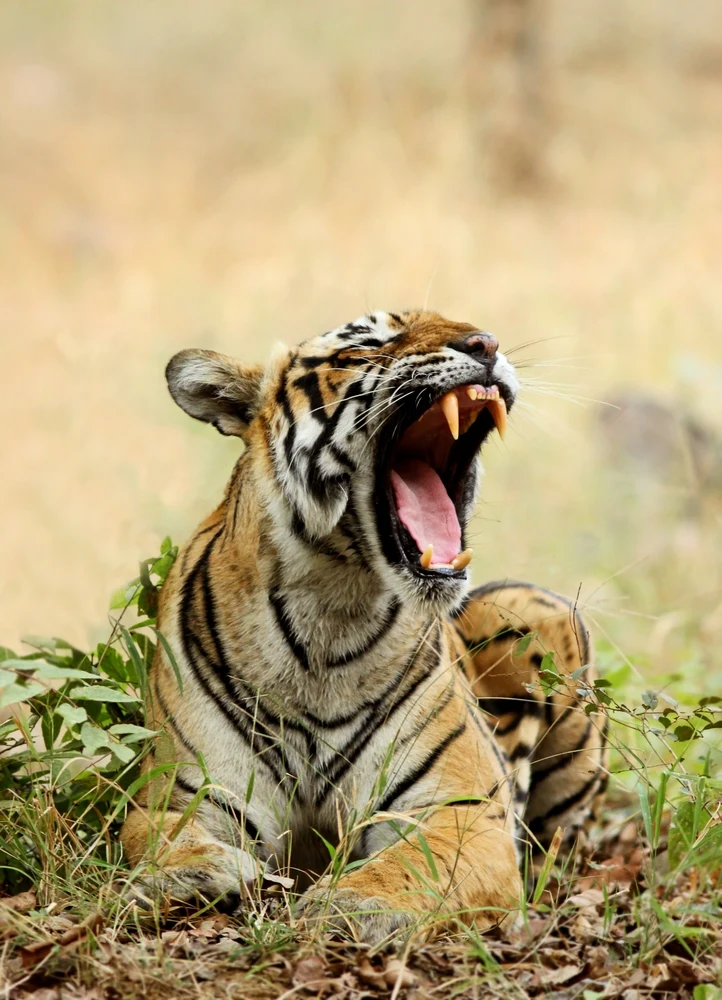
Namdapha Tiger Reserve: The World's Only Four-Big-Cat Park
In the far eastern reaches of Arunachal Pradesh, where India's territory narrows to a geopolitically charged triangle between Myanmar and China, and where the Mishmi Hills descend dramatically from alpine heights to tropical river valleys, lies a protected area of breathtaking ecological uniqueness. Namdapha Tiger Reserve — simultaneously a National Park, a Tiger Reserve, and one of the world's last true wilderness frontiers — is the only protected area on the planet confirmed to harbour all four species of big cats in the genus Panthera and Neofelis: the Bengal tiger, Indian leopard, snow leopard, and clouded leopard.
Covering 1,985.23 sq km of India's easternmost forest, Namdapha is the fourth largest national park in India by area and the largest protected area in the Eastern Himalayan Biodiversity Hotspot. With over 1,000 floral species and approximately 1,400 faunal species documented, and with an extraordinary altitude range from 200 m to 4,571 m above sea level — one of the widest in any single protected area in the world — Namdapha is not merely a wildlife sanctuary. It is a complete ecosystem, a vertical transect through every major biome from tropical rainforest to alpine tundra, and one of Earth's most irreplaceable repositories of biodiversity.
Overview of Namdapha Tiger Reserve
Key Facts at a Glance
- Full Name: Namdapha National Park and Tiger Reserve
- Location: Changlang District, Arunachal Pradesh, India (near Myanmar border; tri-junction with China nearby)
- Area: 1,985.23 sq km (Core: 1,808 sq km; Buffer: 177 sq km)
- Rank: Fourth largest national park in India by area
- Established: Wildlife Sanctuary — 1972; National Park — 1983; Tiger Reserve — 1983 (15th Project Tiger reserve)
- Eco-Sensitive Zone: Declared 2024
- Altitude Range: 200 m to 4,571 m above sea level (one of the widest ranges in any Indian protected area)
- Unique Global Distinction: Only park in the world with all four big cat species — Tiger, Leopard, Snow Leopard, and Clouded Leopard
- Biodiversity: 1,000+ flora species; 1,400+ fauna species; 425 bird species; 6 hornbill species
- Gateway Town: Miao (~27 km from Deban, the main forest camp)
- Nearest Airport: Dibrugarh (Mohanbari Airport, Assam) — approximately 160 km
- Nearest Railway: Tinsukia Junction (Assam) — approximately 150 km from Miao
- ILP Requirement: Yes — Inner Line Permit mandatory for all non-Arunachal residents
The Name 'Namdapha' and Its Origin
The name Namdapha combines two Singpho words: 'nam' meaning water, and 'dapha' meaning origin — translating to 'origin of water' or 'source of the river.' The Namdapha River, a tributary of the Noa-Dihing River (itself a tributary of the Brahmaputra), flows right across the park in a north-south direction, giving the park its name. The word 'Dapha' is also said to refer to 'Daphabum' — the peak from which the Namdapha River originates. The Noa-Dihing River (meaning 'new river' in Singpho — noa: new, Dihing: river) flows from east to west across the reserve, originating at the Chaukan Pass on the Indo-Myanmar border.
Historical and Conservation Background
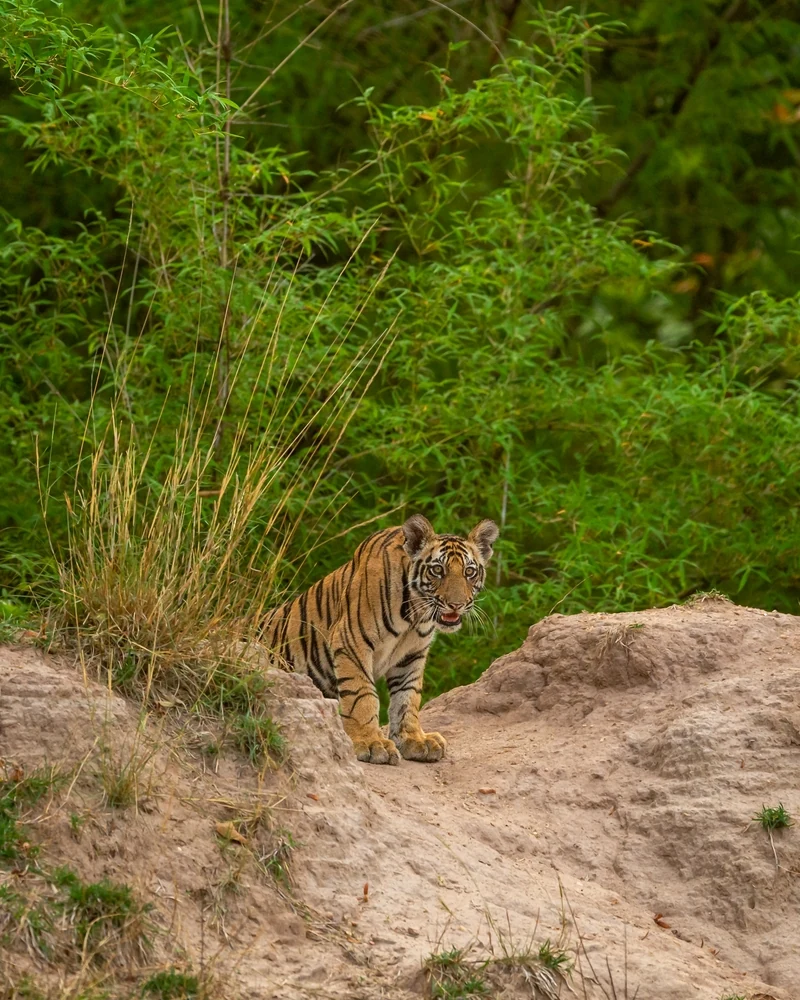
The Namdapha area was formally designated as a Wildlife Sanctuary in 1972 under the Wildlife (Protection) Act. The following year — 1973 — it was elevated to National Park status, and in 1983 it simultaneously became India's 15th Project Tiger Reserve. In 2024, an Eco-Sensitive Zone was declared around the park's boundaries, providing an additional layer of landscape protection. In early 2023, a camera trap finally photographed a Royal Bengal Tiger near the Deban Forest Inspection Bungalow — the first confirmed tiger sighting after an eight-year lapse since 2015, ending years of concern that Namdapha had lost its tigers. Genetic analysis of scat samples has also confirmed the presence of at least two individual male tigers in the reserve.
Geography: A World in Vertical Layers
Extraordinary Altitude Range
The most ecologically remarkable feature of Namdapha is its extraordinary altitude range: from approximately 200 m in the lowland Noa-Dihing valley to 4,571 m at the Dapha Bum peak in the north. This 4,300 m elevation gradient — compressed within a single contiguous protected area — creates a complete vertical sequence of ecosystems that would otherwise require travelling hundreds of kilometres:
- 200–800 m: Northern tropical evergreen forest (harbouring the northernmost lowland evergreen rainforests in the world at 27°N latitude)
- 800–1,800 m: Subtropical and moist deciduous forests with extensive dipterocarp stands
- 1,800–2,800 m: East Himalayan moist temperate broadleaf forests
- 2,800–3,500 m: Sub-alpine forests (coniferous — Pinus merkusii and Abies delavayi — species exclusive to the park)
- 3,500–4,571 m: Alpine scrub and meadows with seasonal snow (December–March above 2,700 m)
Rivers and Hydrology
The park is drained by two major river systems: the Namdapha River (flowing north-south through the park interior) and the Noa-Dihing River (crossing east-west from the Chaukan Pass). Both rivers are fast-flowing mountain rivers of extraordinary scenic beauty, their banks lined with towering forest and rich wildlife. Deban — the main forest camp and tourist base — sits on the bank of the Noa-Dihing, and the forest inspection bungalow there is surrounded by evergreen forest overlooking the turbulent river.
Flora: A Botanist's Dream
Namdapha's flora is described as a 'botanist's dream' — a statement that is not hyperbole. The park likely contains more plant species than have yet been formally documented; researchers estimate a comprehensive botanical survey could take 50 years to complete. Documented so far:
- 73 species of lichens
- 59 species of bryophytes (mosses and liverworts)
- 112 species of pteridophytes (ferns and fern allies)
- 5 species of gymnosperms — including Pinus merkusii and Abies delavayi, exclusive to the park
- 801 species of angiosperms (flowering plants)
- 150+ timber tree species
- Blue Vanda (Vanda coerulea): Rare and endangered orchid found in the park
- Sapria himalayana and Balanophora: Root parasites related to the famous Rafflesia
- Mishmi Teeta (Coptis teeta): Rare medicinal plant used by local tribes; controlled access for traditional use
- Extensive dipterocarp forests — representing the northwestern portion of the Mizoram-Manipur-Kachin rainforests ecoregion
Fauna: The World's Only Four-Big-Cat Park
The Four Big Cats — A Global Distinction
Namdapha's most extraordinary and globally unique wildlife distinction is the confirmed presence of all four Pantherine / large felid species within a single protected area — an achievement attributable to the park's unique altitude gradient:
- Royal Bengal Tiger (Panthera tigris tigris): Confirmed in tropical and subtropical forest zones; camera-trapped in 2023 near Deban after eight-year gap
- Indian Leopard (Panthera pardus fusca): Present throughout forested zones; camera-trapped regularly
- Snow Leopard (Panthera uncia): In high-altitude alpine zones (above 2,700 m); one of the world's easternmost snow leopard populations
- Clouded Leopard (Neofelis nebulosa): In subtropical and moist temperate forest zones; one of the most camera-trapped species in the reserve
These four species occupy different altitudinal and ecological niches within the same protected area — a direct consequence of the park's extraordinary elevation range. No other place on Earth supports this precise combination of four Pantherine big cat species.
Other Major Mammals
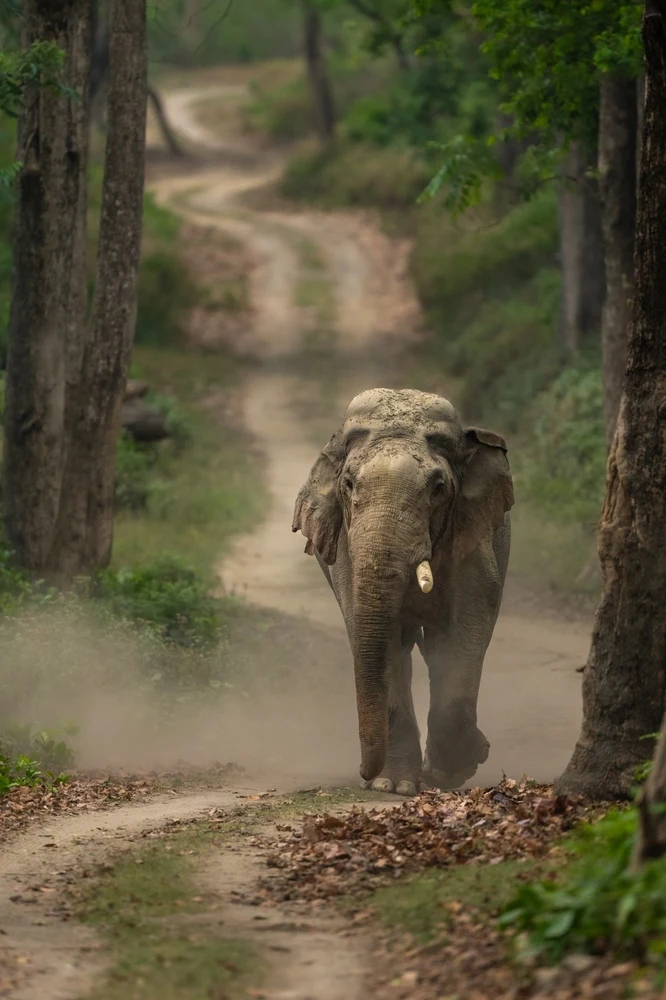
- Asian Elephant (Elephas maximus): Herds confirmed; camera-trapped
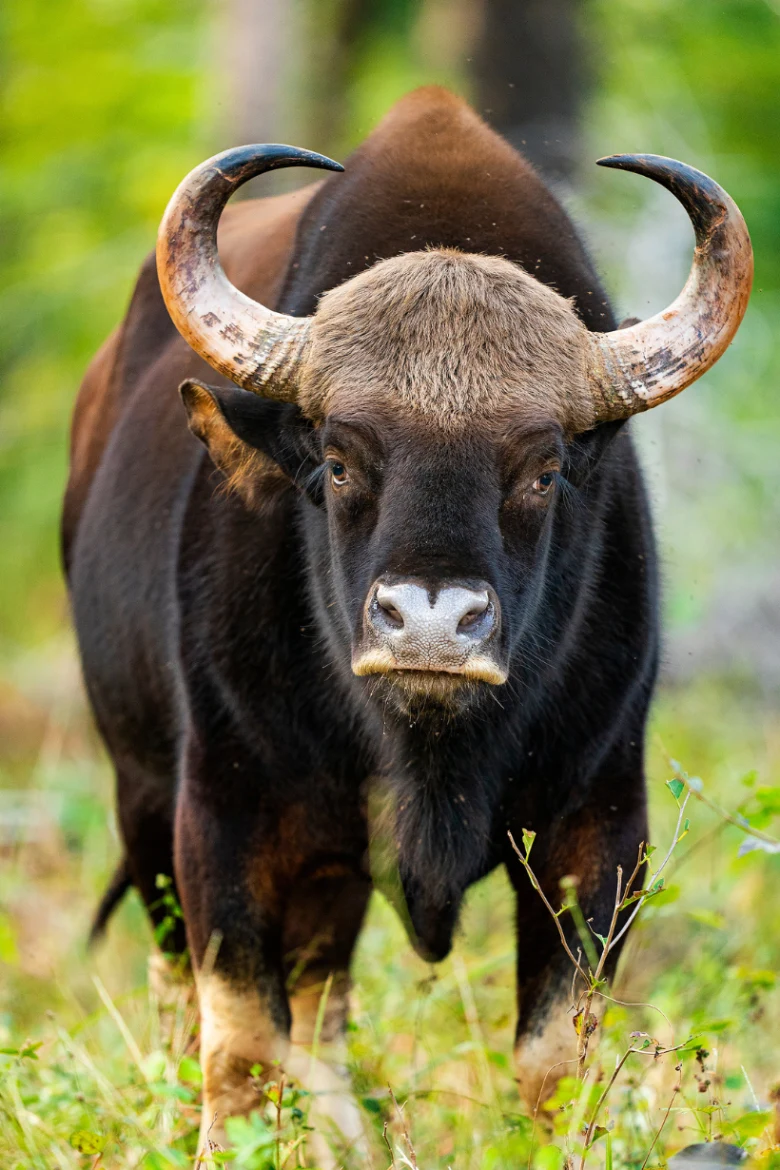
- Gaur / Indian Bison (Bos gaurus): Present
- Himalayan Black Bear (Ursus thibetanus)
- Malayan Sun Bear (Helarctos malayanus): Critically endangered
- Hoolock Gibbon (Hoolock hoolock): India's only ape; found in subtropical forest zones
- Slow Loris (Nycticebus bengalensis): Nocturnal primate
- Assamese Macaque, Pig-tailed Macaque, Stump-tailed Macaque, Capped Langur
- Red Panda (Ailurus fulgens): Present at appropriate elevations
- Himalayan Serow (Capricornis thar), Goral (Naemorhedus goral)
- Dhole / Wild Dog (Cuon alpinus), Indian Wolf
- Yellow-throated Marten, Eurasian Otter, Oriental Small-clawed Otter
- Namdapha Flying Squirrel (Biswamoyopterus biswasi): Critically endangered; endemic to a single valley in the park; last recorded in 1981
- Binturong (Arctictis binturong), Spotted Linsang, Marbled Cat, Fishing Cat, Golden Cat, Leopard Cat
Birds: 425 Species and Six Hornbills
Namdapha is one of India's premier birding destinations with 425 documented bird species and more expected from higher elevations yet to be fully surveyed:
- White-winged Wood Duck (Asarcornis scutulata): Critically endangered; flagship species — one of its last strongholds in India
- White-bellied Heron (Ardea insignis): Critically endangered; first recorded at Namdapha in the 1994 mid-winter waterfowl census
- Six hornbill species including the Great Pied Hornbill and Rufous-necked Hornbill
- Snowythroated Babbler (Spelaeornis badeigularis): Range-restricted to Patkai and Mishmi Hills areas; found in Namdapha
- Ward's Trogon, Beautiful Nuthatch, Green Cochoa, Purple Cochoa: Rare and sought-after species
- Pied Falconet (Microhierax melanoleucos): Spectacular small falcon
- White-tailed Fish Eagle, Eurasian Hobby: Raptor highlights
- Rufous-throated Hill Partridge, White-cheeked Hill Partridge: Shy ground birds
- Amur Falcon (Falco amurensis): Seasonal migrant; spectacular flocks possible
- Pheasants: Multiple species including Blyth's and other high-altitude species
Newly Discovered Species
- Leaf Deer (Muntiacus putaoensis): One of the world's smallest deer species — its presence in the park
- Black Barking Deer (Muntiacus crinifrons): Rare; discovered in the park
- Short-wing (Brachypteryx cryptica): New bird species recorded
- 7 new species documented in recent research surveys; comprehensive species inventory still ongoing
How to Reach Namdapha Tiger Reserve
By Air
The nearest airport is Dibrugarh (Mohanbari) Airport in Assam, approximately 160 km from Miao (the gateway town to Namdapha). Dibrugarh is connected to Kolkata, Guwahati, and Delhi. Tezu Airport in Arunachal Pradesh is approximately 40 km from Miao — check current flight schedules for Tezu. From Dibrugarh, hire a taxi to Miao (~4 hours) and then continue to Deban (~27 km further).
By Rail
Tinsukia Junction in Assam is the nearest major railway station, approximately 150 km from Miao. Trains connect Tinsukia to Guwahati, Dibrugarh, and onward to major cities. From Tinsukia, take a taxi or shared vehicle to Miao.
By Road
From Tinsukia, take the road through Digboi and Margherita towards Miao (approximately 4–5 hours). From Miao, the road continues 27 km to Deban — the main base camp for Namdapha. From Guwahati, the journey is approximately 500 km and takes 12–14 hours. The Ledo–Miao road passes through spectacular Assam–Arunachal borderlands. A 4WD vehicle is recommended for the Miao–Deban stretch.
💡 Tip: The road from Miao to Deban passes through spectacular landscapes and excellent wildlife habitat. Travel slowly and scan the roadside vegetation — this stretch frequently yields sightings of hornbills, primates, and deer.
Inner Line Permit (ILP)
All visitors to Arunachal Pradesh who are not permanent residents of the state require an Inner Line Permit (ILP). This includes Indian nationals from all other states. ILPs can be obtained online through the Arunachal Pradesh government portal, from designated ILP counters in Guwahati, Tinsukia, Dibrugarh, Kolkata, New Delhi, and other major cities, or at Tezu Airport upon arrival in some cases.
Best Time to Visit Namdapha Tiger Reserve
October to April: Recommended Season
October to April is the optimal visiting period. The post-monsoon window (October–November) is particularly dramatic — the forest is lush from the rains but temperatures are falling comfortably. November to February offers excellent wildlife activity in the lower zones. December–March sees seasonal snow on Dapha Bum above 2,700 m, creating spectacular views from the valley below.
November to February: Peak Wildlife Season
The dry, cool months of November to February are the single best period for wildlife watching in Namdapha's lower forest zones. Hoolock gibbons are vocal at dawn, clouded leopards are active in the subtropical forest belt, and the Noa-Dihing riverbanks see extraordinary birdlife including the white-winged wood duck.
Monsoon (June–September): Not Recommended
Namdapha receives very heavy monsoon rainfall — the high precipitation is what creates the extraordinary biodiversity, but it makes visitor access extremely challenging. Roads to Deban may be blocked by landslides, forest trails become impassable, and wildlife retreats into dense vegetation. Visiting during June–September is strongly inadvisable for all but the most experienced and self-sufficient wilderness travellers.
Activities at Namdapha Tiger Reserve
Nature Trekking — The Heart of the Namdapha Experience
Unlike most tiger reserves where vehicle safaris are the primary experience, Namdapha is fundamentally a trekking destination. The park's interior beyond Deban is accessible only on foot — meaning that the deeper you go into this wilderness, the fewer humans have preceded you. Trekking routes from Deban include:
- Deban to Hornbill Camp (~25 km from Deban): The classic lower-forest route through excellent wildlife habitat; camp on the river bank
- Hornbill Camp to Firm Base: Deeper into the forest; excellent for wildlife photography and bird observation
- Firm Base to Gibbon Land: Named for its reliable hoolock gibbon sightings
- Gibbonland to High Camp: Ascending into the temperate zone
- Advanced routes toward Dapha Bum Base Camp: Multi-day expeditions for experienced trekkers; seasonal snow conditions
💡 Tip: All trekking in Namdapha requires advance permission from the Forest Department and must be conducted with registered forest guides. Equipment (tents, sleeping bags, cooking gear) is available for rental from the Forest Department at Deban.
Wildlife Safaris and Nature Walks
Guided wildlife safaris and nature walks within the buffer zone near Deban allow visitors to observe the forest habitat without multi-day trekking commitment. The forest surrounding the Deban Forest Inspection Bungalow is particularly rich in bird species, and the Noa-Dihing riverbank is an outstanding location for early morning wildlife observation.
Birdwatching
With 425 documented species and more expected, Namdapha is one of India's great birding destinations. The white-winged wood duck — critically endangered and found in very few locations in India — is the star species. The six hornbill species, diverse pheasants, rare babblers, and trogons make every morning walk potentially remarkable. Guided birdwatching with expert naturalists dramatically increases the encounter rate.
Angling
The Noa-Dihing and Namdapha rivers support populations of mahseer and other sport fish. Fishing with appropriate licences from the forest department is possible at Deban and at the Firm Base camp further upstream — a relaxing activity that also positions anglers in excellent wildlife watching territory.
The Deban Forest Inspection Bungalow
The Forest Inspection Bungalow at Deban is one of northeast India's most atmospheric wildlife accommodation options — a classic forest bungalow set in the heart of tropical rainforest on the Noa-Dihing riverbank, where wildlife regularly visits the camp boundary at night. Staying here is a wildlife experience in itself.
Entry, Permits and Regulations
- ILP: Mandatory for all non-Arunachal Pradesh residents (Indian and foreign nationals alike)
- Forest Department permit: Required before entering the park; obtainable from the Range Officer at Miao
- Wildlife permit: Additional permit for photography of certain species
- Guides: Mandatory — local guides from Miao or Deban must accompany all visitors
- Camping equipment: Available for rent at Deban Forest Department store (tents, sleeping bags, cooking equipment for Rs. 3,000–5,000 per day approximately)
- Firearms strictly prohibited
- No collection of flora or fauna
- No littering — carry all waste out of the park
Nearby Attractions
Miao Town (~27 km from Deban)
The gateway town to Namdapha and the last significant settlement before the forest. Miao has basic accommodation, a market, and the Namdapha Tiger Reserve administration office where permits are processed. The Namdapha Tiger Reserve official website (namdaphatigerreserve.org) has current booking and permit information.
Namdapha River and Noa-Dihing River
Both rivers are spectacular in their own right — the Namdapha cutting through the park interior in a north-south corridor, and the Noa-Dihing flowing east to west along the park's southern edge. Fishing, photography, and riverbank wildlife watching are excellent activities on both rivers.
Vijaynagar (India's Remotest Village)
Approximately 120 km from Deban into the park's interior, Vijaynagar is India's remotest inhabited village — the last village before the Myanmar border. Inhabited by the Lisu (Yobin) tribe, it sits at the tri-junction of India, Myanmar, and China. Access requires a multi-day trek and special permission. It is one of the ultimate wilderness destinations in all of India.
Stillwell Road / Ledo Road (~50 km from Miao)
The historic Stilwell Road (Ledo Road) was built by Allied forces in World War II as a supply route from India to China. Parts of the road pass through or near Changlang district — an extraordinary historical and engineering heritage accessible from the Namdapha gateway area.
Kamlang Tiger Reserve (~50 km north of Miao)
India's 50th tiger reserve, adjacent to Namdapha's northern boundary, shares many ecological characteristics and several species with Namdapha. The two reserves together form one of the most important tiger conservation landscapes in Arunachal Pradesh.
Accommodation Options
Deban (Inside the Park)
- Forest Inspection Bungalow, Deban: The most recommended stay — atmospheric, riverside, surrounded by wildlife; book through the Namdapha Tiger Reserve office at Miao
- Hornbill Camp: Camping site 25 km inside the park on the Noa-Dihing riverbank — tent and equipment rental available from Forest Department
- Firm Base Camp: Camping site 50 km from Deban; forest-encased aquifers and grazing areas attract wildlife
In Miao (~27 km)
Basic rest houses, circuit houses, and limited private guesthouses are available in Miao town. Advance booking through the divisional administration is advisable.
In Margherita or Tinsukia (Assam) (~150 km)
For visitors who prefer more comfortable accommodation while exploring Namdapha, the Assamese towns of Margherita and Tinsukia offer better-serviced hotels and guesthouses. These make viable bases for a day visit to Deban.
Essential Travel Tips
- Obtain ILP well before travel — the process can take 2–7 days via the official portal
- Get your forest permit from the Range Officer in Miao before proceeding to Deban
- Book the Deban Forest Inspection Bungalow at least 2–4 weeks in advance through Namdapha Tiger Reserve office
- For trekking beyond Deban, engage a registered local guide — navigation in this wilderness is genuinely hazardous without expert guidance
- Carry full self-sufficiency for trekking: food, water purification, first aid kit, warm layers, rain gear
- Mobile connectivity is absent beyond Miao — download offline maps and emergency contacts
- Carry sufficient cash for all expenses — no ATM services in Miao; limited in Margherita
- The forest is active with wildlife at the Deban camp perimeter at night — keep tent zipped and food securely stored
- Leech socks and insect repellent are essential throughout the visiting season
- Respect the Singpho, Lisu, and Chakma tribal communities in and around the park; traditional ecological knowledge is invaluable
Frequently Asked Questions - Namdapha Tiger Reserve
What makes Namdapha Tiger Reserve unique in the world?
Namdapha Tiger Reserve is the world's only protected area confirmed to harbour all four Pantherine big cat species - the Bengal tiger, Indian leopard, snow leopard, and clouded leopard - in a single park. This extraordinary distinction is made possible by the park's unprecedented altitude range from 200 m to 4,571 m, which creates distinct ecological niches for each species. With 1,000+ plant species and 1,400+ animal species, it is also one of the world's most biodiverse protected areas.
How large is Namdapha Tiger Reserve?
Namdapha Tiger Reserve covers 1,985.23 sq km - with a core area of 1,808 sq km and a buffer of 177 sq km. It is the fourth largest national park in India by area and the largest protected ecological area in the Eastern Himalayan Biodiversity Hotspot.
What is the Namdapha Flying Squirrel?
The Namdapha Flying Squirrel (Biswamoyopterus biswasi) is a critically endangered species endemic to a single valley within Namdapha National Park. It was first collected in the park and described scientifically. It has not been reliably recorded since 1981 - making it one of India's most threatened mammals and the subject of intensive conservation concern.
Are there tigers currently in Namdapha?
Yes. In early 2023, a Royal Bengal Tiger was photographed by a camera trap near the Deban Forest Inspection Bungalow - the first confirmed tiger sighting in eight years since 2015. Genetic analysis of scat samples has confirmed the presence of at least two individual male tigers in the reserve. The population remains very small, but the confirmed recent presence is encouraging.
What is the White-winged Wood Duck and why is it important?
The White-winged Wood Duck (Asarcornis scutulata) is a critically endangered waterbird and one of India's rarest birds. Namdapha is one of its last strongholds in the country. It inhabits the slow-flowing, forested rivers of the park's lowland tropical zone. A sighting of this extraordinary duck - with its spotted black-and-white plumage - is among the most coveted birding experiences in northeast India.
How do I get to Namdapha Tiger Reserve?
Fly to Dibrugarh (Mohanbari) Airport in Assam (~160 km from Miao) or check Tezu Airport (~40 km from Miao). From Dibrugarh, taxi to Miao (~4 hours). From Miao, 27 km to Deban. The nearest railway station is Tinsukia Junction (~150 km from Miao). All non-Arunachal residents require an ILP before entering Arunachal Pradesh.
Can I visit Vijaynagar village from Namdapha?
Yes, but Vijaynagar - India's remotest inhabited village - requires a multi-day trek (~120 km from Deban) through the park interior and special permission from the Arunachal Pradesh government. It is the homeland of the Lisu (Yobin) tribe and sits at the India-Myanmar-China tri-junction. It is one of the ultimate wilderness travel experiences in India.
What is the Inner Line Permit for Arunachal Pradesh?
An Inner Line Permit (ILP) is a travel document required by all visitors to Arunachal Pradesh who are not permanent residents of the state - including Indian nationals from other states and all foreign nationals. It can be obtained online through the Arunachal Pradesh government's official ILP portal, from designated offices in Guwahati, Tinsukia, Dibrugarh, Kolkata, New Delhi, and several other cities.
How many bird species are in Namdapha?
Approximately 425 bird species have been formally documented in Namdapha Tiger Reserve - and researchers believe many more remain unrecorded, particularly from the higher elevation areas. The park hosts six hornbill species, the critically endangered white-winged wood duck and white-bellied heron, and numerous range-restricted species of babblers, pheasants, and warblers.
What is the best time to visit Namdapha Tiger Reserve?
October to April is the recommended window, with November to February being the peak season for wildlife activity in the lowland forest zones. The park receives very heavy monsoon rainfall and visiting June-September is strongly inadvisable. Seasonal snow on Dapha Bum (above 2,700 m) occurs December-March, creating spectacular high-altitude conditions for experienced trekkers.