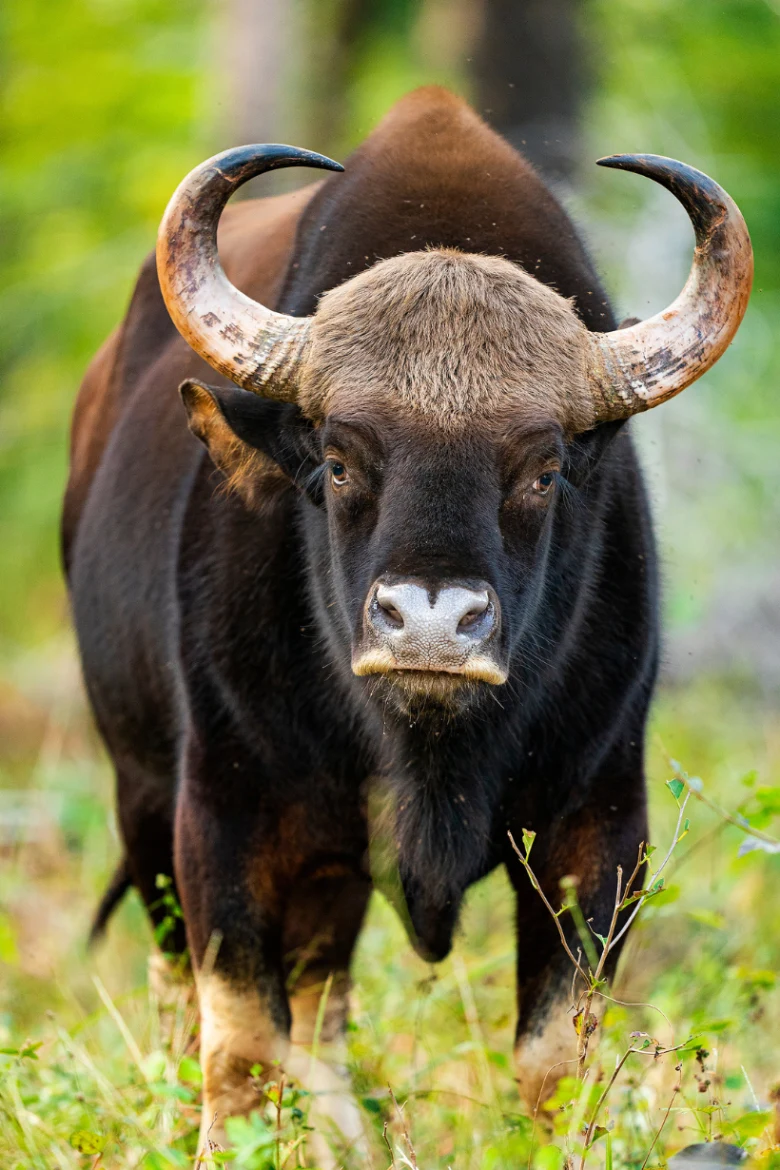
Overview of Kalesar National Park
Kalesar National Park is Haryana's largest and most ecologically significant national park — the state's only national park with a substantial, natural forest ecosystem and a genuinely wild, diverse biodiversity. Located in the Yamunanagar district of eastern Haryana, approximately 43–46 km from Yamunanagar city and 122 km from Chandigarh, the park occupies 4,682.32 hectares (11,570 acres / 46.82 sq km) of forested Shivalik foothill terrain, directly adjacent to the Kalesar Wildlife Sanctuary (53.45 sq km / 13,209 acres), which was separately notified in December 1996.
The park was officially declared a National Park on 8 December 2003, making it one of Haryana's most recent national park designations. It derives its name from the Kalesar Mahadev Temple — an ancient Shiva temple located within the park's protected zone, believed by local tradition to date from the Mahabharata era, attracting devotees particularly during Shivratri. Named after the Kalesar forest — Haryana's only natural reserve forest of this scale — the park occupies both sides of the Yamunanagar–Paonta Sahib Road and is bounded by the Yamuna River to the east (forming a natural boundary with Uttar Pradesh), Rajaji National Park (Uttarakhand) to the northeast, Simbalbara National Park (Himachal Pradesh) to the north, and Morni Hills and agricultural areas to the west and south.
This exceptional multi-state boundary position gives Kalesar National Park a conservation significance far exceeding its modest size: it forms a critical wildlife corridor linking the Shivalik ecosystem of Haryana to Rajaji Tiger Reserve and Simbalbara National Park, enabling the seasonal movement of leopards, elephants, and other large mammals across state boundaries. The 2016 camera trap survey conducted in collaboration with the Wildlife Institute of India documented 42 Indian Leopards in the entire protected area complex — a remarkable density for a forest of this size — along with 19 other mammal species, confirming Kalesar's status as one of the finest leopard habitats in the Shivalik foothills.
The park is of particular historical significance as the last refuge of the Red Junglefowl (Gallus gallus) — the wild ancestor of the domestic chicken — in Haryana, and was specifically created to protect this species, which faces serious local extinction pressure from hybridisation with domestic poultry and habitat fragmentation.
Geography & Topography
Kalesar National Park lies within the Upper Shivalik ecological zone — the outermost foothills of the Himalayan range, composed of tertiary-period sedimentary rock (sandstone, clay, and conglomerate) that creates a characteristically hilly, erosion-prone landscape with narrow valleys (doons) between parallel ridges. Elevation within the park ranges from approximately 600 to 1,100 metres (2,000–3,500 ft) above sea level. The terrain features dry rivulets (khads/nalahs) that flow only seasonally — active during the monsoon — and are otherwise dry, rocky beds. These flash-flood channels are both a challenge (causing erosion and flooding in the plains below during monsoon) and an ecological asset (creating diverse microhabitats along their courses).
The forest composition is 53% dense forest, 38% open forest, and 9% scrub, giving a total forest cover of approximately 71% of the park area. The park contains approximately 6,000 species of medicinal herbs and plants, reflecting the extraordinary botanical richness of the Shivalik foothill habitat. The Yamuna River forms the eastern boundary, approximately 8 km from Hathnikund Barrage — an important local landmark and wildlife observation point during the migratory bird season.
Flora of Kalesar National Park
The vegetation of Kalesar National Park is a Moist Deciduous Forest typical of the Upper Shivalik ecological zone, dominated by Sal (Shorea robusta) — the keystone tree species of the Himalayan foothills ecosystem. The sal forest forms the primary forest matrix, supplemented by Khair (Acacia catechu), Shisham (Dalbergia sissoo), Tun (Toona ciliata), Sain (Terminalia tomentosa), Amla (Phyllanthus emblica), Bahera (Terminalia bellirica), Harra (Terminalia chebula), and Semul (Bombax ceiba) trees. Extensive Bamboo (Dendrocalamus strictus) groves occur in the moister valley areas and provide critical habitat for a range of wildlife species including barking deer, wild boar, and numerous bird species.
The park's remarkable medicinal plant wealth — approximately 6,000 documented species — reflects the ethnobotanical richness of the Shivalik foothill ecosystem and is an important resource for traditional healthcare in surrounding communities. The protection of this botanical heritage is a key mandate of the park's management.
Wildlife: Fauna of Kalesar National Park
Indian Leopard — The Flagship Predator
The Indian Leopard (Panthera pardus fusca) is the most ecologically significant and most-sighted large predator of Kalesar National Park, with the 2016 camera trap survey documenting 42 individuals across the entire protected area complex. Unlike many wildlife reserves where leopard sightings are rare, Kalesar's compact forest and relatively high leopard density make sightings on morning and evening safaris a realistic expectation for patient visitors. The leopard population is continuous with the leopard meta-population of Rajaji Tiger Reserve and Simbalbara National Park, enabling genetic exchange through the forest corridor.
Asian Elephant — The Corridor Traveller
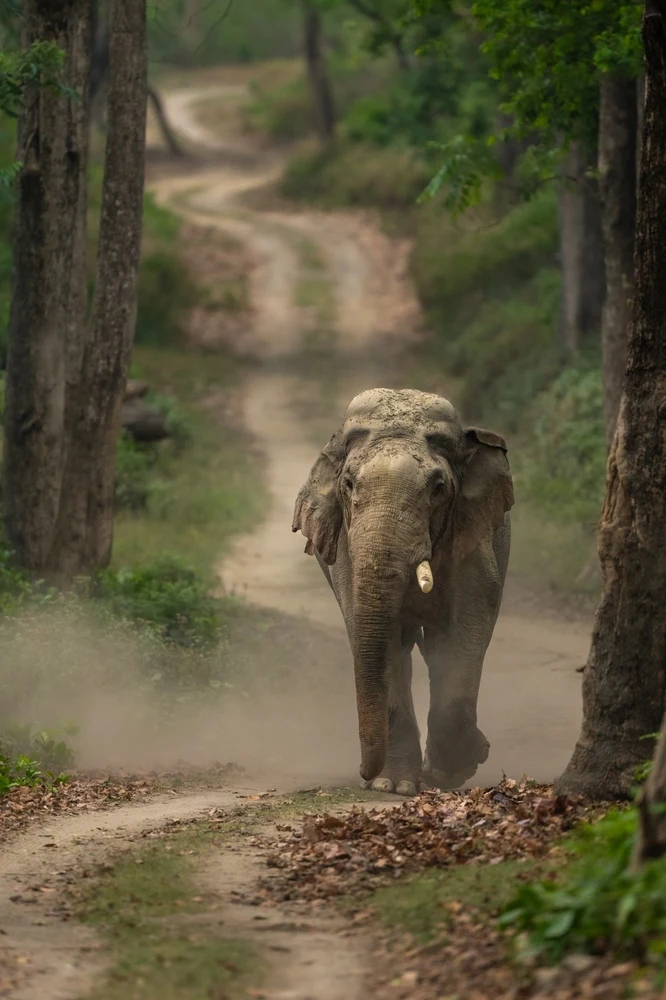
The Asian Elephant (Elephas maximus) is an iconic occasional visitor to Kalesar National Park — typically residing in Rajaji National Park (Uttarakhand) and the Simbalbara forests (Himachal Pradesh) but making seasonal forays into Kalesar during the monsoon and early post-monsoon period. A semi-permanent elephant population of 2–3 individuals has been recorded staying in the protected area for several weeks at a time. The Kalesar Wildlife Sanctuary also hosts the Ch. Surinder Singh Elephant Rehabilitation Centre (ERC) at Ban Santoor — established by the Haryana Forest Department in association with Wildlife SOS with Government of India funding under Project Elephant. The ERC provides shelter, veterinary care, fodder service, exercise trails, and elephant husbandry for rescued, abused, and exploited elephants.
Tiger — The Potential Resident
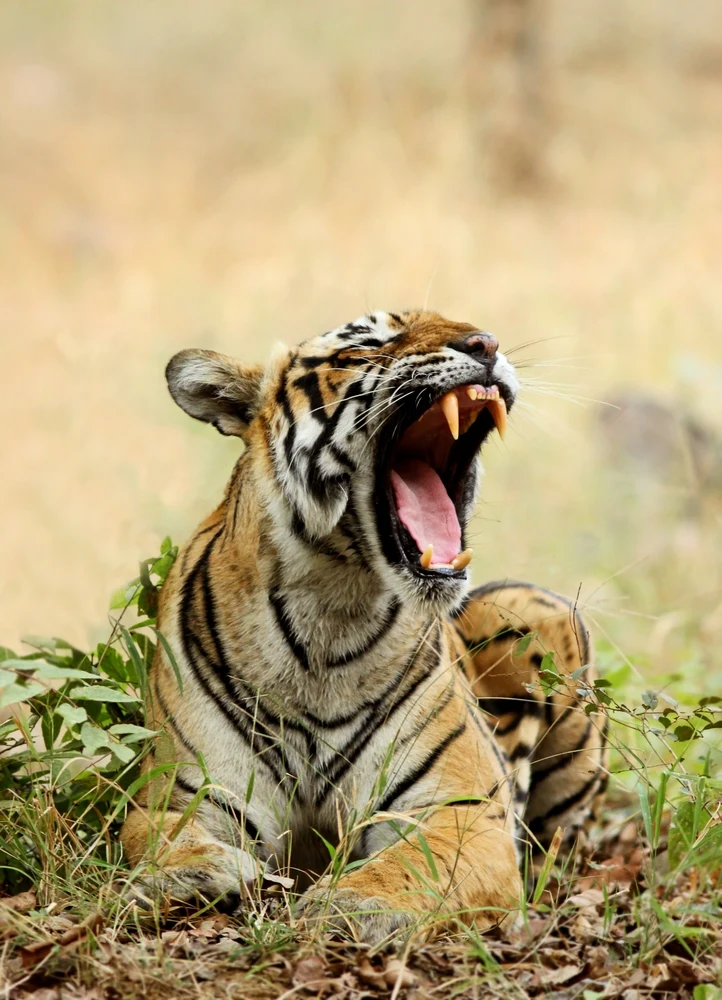
The Bengal Tiger (Panthera tigris tigris) is an occasional visitor to Kalesar National Park from the adjoining Rajaji Tiger Reserve. Forest Department records confirm that individual tigers have entered and stayed in Kalesar for several days before returning to Rajaji. Officials believe that with improved habitat management and increased prey base, tigers could become permanent residents — making Kalesar a potential future tiger reserve of significant importance.
Complete Wildlife Roster
- Goral (Naemorhedus goral) — found in the rocky slopes at the tops of Shivalik ridges
- Sambar Deer (Cervus unicolor) — common in densely forested areas
- Chital (Spotted Deer) — found in open grassy patches and fire lines
- Barking Deer (Indian Muntjac) — abundant in forest areas with ground cover
- Nilgai (Blue Bull) — in more open areas bordering the Yamuna plain
- Wild Boar (Sus scrofa) — common, frequently seen on safari
- Grey Langur, Rhesus Macaque
- Indian Pangolin, Indian Porcupine, Indian Hare
- Leopard Cat (Prionailurus bengalensis), Rusty-spotted Cat, Jungle Cat
- Small Indian Civet, Common Palm Civet
- Indian Grey Mongoose, Indian Jackal
Avifauna — 150+ Species
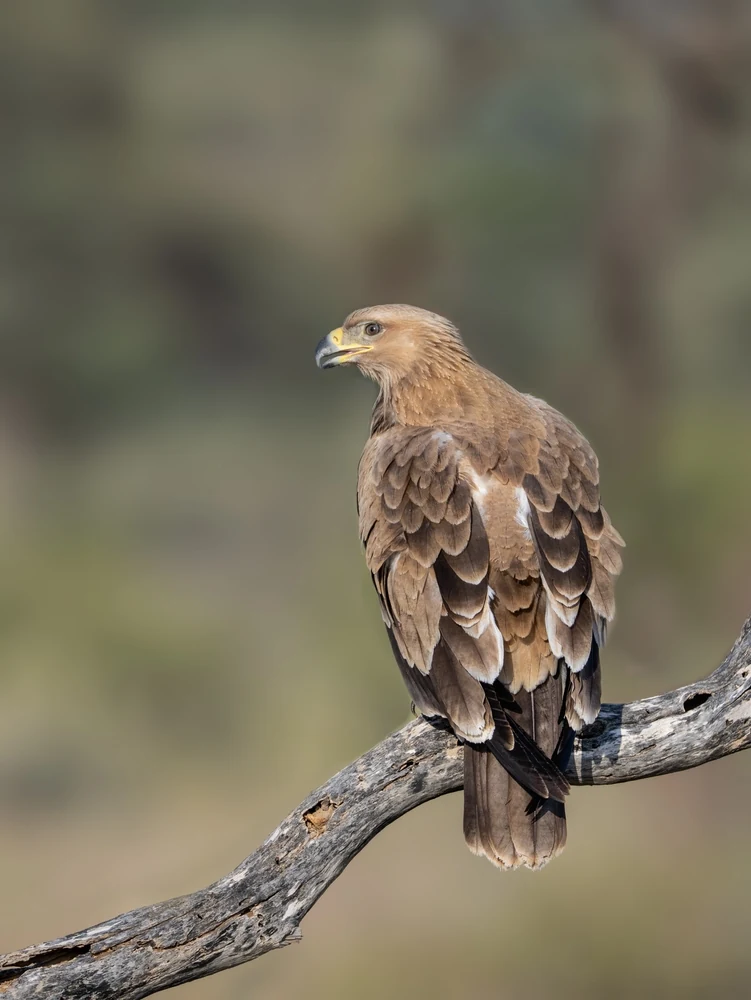
The forest and riparian habitats of Kalesar support over 150 documented bird species. The Red Junglefowl (Gallus gallus) — the park's primary conservation focus species — is resident and can be heard calling at dawn from the forest. Indian Peafowl, Grey Partridge, various hornbill species, woodpeckers, raptors (eagles, kites, hawks), and a range of forest passerines make Kalesar a productive birdwatching destination in the Shivalik foothills context. During winter, the Hathnikund Barrage area attracts migratory waterfowl.
Jeep Safari — Three Routes
Wildlife jeep safaris are the primary visitor activity at Kalesar National Park. Three motorable safari routes have been delineated within the park, each offering different forest character:
- Route 1: 7 km, 20 feet wide — the narrowest and most intimate route through dense sal forest.
- Route 2: 6.5 km, 60 feet wide — a wider track offering better visibility for wildlife spotting.
- Route 3: 6 km, 60 feet wide — another wide-track route through varying forest types.
Total motorable safari distance: approximately 19.5 km across all three routes. Only registered private jeeps with wildlife department permission are allowed on these tracks. Safari bookings can be arranged through the Wildlife Inspector stationed at Kalesar National Park or through registered local jeep owners. Safari hours: 6:00–10:00 AM and 4:00–7:00 PM (summer) / 7:00–11:00 AM and 3:30–6:00 PM (winter). The park is closed from July to September (monsoon) and on Tuesdays.
Key Heritage Attractions
Kalesar Mahadev Temple
The ancient Shiva temple located within the park's protected zone, believed by local tradition to predate written history and associated by legend with the Mahabharata period, is both a religious landmark and a cultural heritage site of significance. The temple attracts thousands of devotees during Maha Shivaratri, creating a remarkable confluence of religious pilgrimage and wildlife sanctuary — a juxtaposition found at very few protected areas in India.
Mughal-Era Heritage: Bridge, Hunting Lodge, and Fort
The Kalesar forests retain several structures from the Mughal and colonial British eras. A Mughal-era bridge (believed to date to the reign of Aurangzeb) and associated pathways wind through the forest landscape. The Kalesar Fort — built atop a hill with panoramic forest views — is attributed to the Mughal period. The colonial-era Kalesar Dak Bungalow (used during British hunting expeditions, as the forests were used as royal hunting grounds) is now repurposed as a Forest Rest House for eco-tourism. Historical records document that tiger hunting in the Kalesar forests was a major activity under both Mughal and British rulers, with the last local tiger shot around 1892 before hunting was banned in the early 20th century.
How to Reach Kalesar National Park
By Air
Chandigarh International Airport (IATA: IXC) — approximately 122 km from Kalesar (2.5–3 hours). Hire a taxi or pre-book a cab to Kalesar/Hathnikund. Dehradun's Jolly Grant Airport (approximately 55 km from the park) is a closer option with Uttarakhand-based access.
By Rail
Yamunanagar-Jagadhri Railway Station (approximately 43–46 km) is the nearest major railhead. Chandigarh Railway Station (122 km via NH-7) is more conveniently connected nationally. From Yamunanagar, hire a taxi to Kalesar.
By Road
Kalesar is accessible by road on both sides of the Yamuna Nagar–Paonta Sahib Road. Key distances: Yamunanagar — 43–46 km (1 hour); Hathnikund Barrage — approximately 8 km from the park boundary; Chandigarh — 119–122 km (2.5–3 hours via bitumen-paved Bilaspur road through forest, or 122 km via NH-7); Dehradun — approximately 55 km (1.5 hours); Delhi — approximately 200–220 km (4–5 hours). Regular Haryana Roadways buses connect Chandigarh and Yamunanagar.
Best Time to Visit Kalesar National Park
October to June (Open Season)
The park is open October to June. The monsoon months (July to September) see the park closed for visitor access. The best visiting months are November to February for pleasant weather (8–22°C) and maximum wildlife sightings. October–November immediately post-monsoon offers the freshest, most verdant forest scenery with active wildlife. March to June offers good leopard sightings as forests thin and water becomes concentrated.
July to September (Closed — Monsoon Season)
The park closes during monsoon due to safety considerations — flash floods in the khads, landslides on the Shivalik slopes, and extremely difficult trail conditions.
Accommodation Options
- Kalesar Woodland Rest House (Forest Department): Managed by the Haryana Forest and Wildlife Department. Contact for booking: Ph. 0171-2444237. This is the most atmospheric option — a forest rest house inside the park complex.
- Hathni-Kund Irrigation Rest House (Irrigation Department): Located near Hathnikund Barrage. Basic government accommodation with scenic riverside views.
- Tajewala Irrigation Rest House (Irrigation Department): Another government accommodation option near the Tajewala headworks on the Yamuna.
- Yamunanagar city (43–46 km): Multiple budget and mid-range hotels available.
- Chandigarh (122 km): Wide range of premium to budget hotels for those preferring a major city base.
Nearby Attractions
Hathnikund Barrage (~8 km from park boundary)
A major barrages on the Yamuna River and the starting point of the Western Yamuna Canal system, Hathnikund Barrage is an important local landmark and a productive birdwatching site during the winter migratory season, particularly for waterbirds and waders along the Yamuna.
Rajaji National Park & Tiger Reserve (~25–30 km via forest)
Immediately contiguous to Kalesar across the Uttarakhand state border, Rajaji Tiger Reserve is the much larger, better-known wildlife destination in the Shivalik-Himalayan foothills ecosystem. The same wildlife — leopards, elephants, sambar — moves freely between the two parks.
Simbalbara National Park, Himachal Pradesh (~15–20 km north)
Directly contiguous to Kalesar's northern boundary in the Shivalik Hills of Himachal Pradesh, Simbalbara harbours similar wildlife and forms part of the same ecological corridor.
Paonta Sahib Gurudwara (~15 km)
An important Sikh pilgrimage site in Himachal Pradesh on the banks of the Yamuna, associated with Guru Gobind Singh Ji. The Gurudwara complex and the scenic riverside setting make it a worthwhile cultural complement to the wildlife park visit.
Chaneti Buddhist Stupa, Yamunanagar (~46 km)
A significant early Buddhist stupa near Yamunanagar, indicating the region's role in ancient Buddhist scholarship and trade routes.
Travel Tips for Kalesar National Park
- Book safari jeeps through the Wildlife Inspector at Kalesar National Park — only registered private jeeps with wildlife department permission are allowed inside the park.
- The park is closed on Tuesdays (for maintenance) and during the monsoon (July–September). Plan accordingly.
- Dawn safaris (6:00–7:00 AM start in summer) offer the highest probability of leopard, sambar, and goral sightings as animals are most active at dawn.
- The Kalesar Mahadev Temple visit can be combined with the wildlife safari — the temple is accessible from the main road and devotees are regular visitors even within the park zone.
- Visit the Elephant Rehabilitation Centre at Ban Santoor (in the Kalesar Wildlife Sanctuary section) for a close encounter with rescued elephants and to understand their care and rehabilitation.
- The Hathnikund Barrage nearby is worth a visit for birdwatching along the Yamuna and for photographing the barrage structure.
Frequently Asked Questions (FAQ) - Kalesar National Park
What is the largest national park in Haryana?
Kalesar National Park, covering 4,682.32 hectares (46.82 sq km) in Yamunanagar district, is the largest national park in Haryana. Adjacent to it is the Kalesar Wildlife Sanctuary (53.45 sq km), making the combined protected area complex over 100 sq km.
What wildlife can I see at Kalesar National Park?
Key wildlife includes 42 Indian Leopards (documented by 2016 camera trap survey), visiting Asian Elephants (seasonal from Rajaji), Goral, Sambar Deer, Chital, Barking Deer, Wild Boar, Nilgai, Red Junglefowl (the conservation flagship species), Grey Langur, Rhesus Macaque, Indian Pangolin, and various small carnivores and birds.
Is there a tiger in Kalesar National Park?
Tigers occasionally visit Kalesar National Park from the adjacent Rajaji Tiger Reserve (Uttarakhand), staying for a few days before returning. Officials believe that with improved prey base management, tigers could become permanent residents. A tiger sighting at Kalesar, while rare, is possible.
When should I visit Kalesar National Park?
The park is open October to June. November to February offers the best weather (8-22°C) and maximum wildlife sightings. The park is closed July to September (monsoon). Safaris are available in morning and evening slots during open season. The park is closed on Tuesdays.
What is the Elephant Rehabilitation Centre at Kalesar?
The Ch. Surinder Singh Elephant Rehabilitation Centre (ERC) at Ban Santoor in the Kalesar Wildlife Sanctuary is a facility for rescuing, rehabilitating, and caring for abused, exploited, and sick elephants. Established by the Haryana Forest Department in association with Wildlife SOS with Government of India (Project Elephant) funding, it provides elephant shelters, veterinary services, fodder service, and exercise trails.
How do I reach Kalesar National Park from Chandigarh?
From Chandigarh, Kalesar is approximately 119-122 km via two routes: the bitumen-paved Bilaspur road through forest (119 km, approximately 2.5 hours) or via NH-7 (122 km, approximately 2.5-3 hours). Alternatively, from Dehradun it is approximately 55 km (1.5 hours).
What is the significance of the Red Junglefowl at Kalesar?
The Red Junglefowl (Gallus gallus) is the wild ancestor of all domestic chickens worldwide. Kalesar National Park was specifically created in part to protect this species in Haryana, where it faces extinction from habitat loss and hybridisation with domestic poultry. The park is one of the few remaining Red Junglefowl habitats in the state.
What heritage sites are inside Kalesar National Park?
Key heritage sites include the ancient Kalesar Mahadev Temple (believed to date from the Mahabharata era), a Mughal-era bridge and fort (attributed to the period of Aurangzeb), and the colonial-era Kalesar Dak Bungalow (used during British hunting expeditions, now a Forest Rest House).
Are there three safari tracks at Kalesar National Park?
Yes. Three motorable safari routes traverse the park: Route 1 (7 km, 20 feet wide), Route 2 (6.5 km, 60 feet wide), and Route 3 (6 km, 60 feet wide). Only registered private jeeps with Wildlife Department permission may use these tracks. Safaris operate in morning and evening slots during the open season.
What states border Kalesar National Park?
Kalesar National Park is bordered by three Indian states and a Union Territory - Uttarakhand (northeast, where Rajaji Tiger Reserve lies), Himachal Pradesh (north, where Simbalbara National Park lies), Uttar Pradesh (east, across the Yamuna River), and Haryana (the home state). This multi-state position makes Kalesar a vital wildlife corridor node.