Dampa Wildlife Sanctuary (Tiger Reserve): Mizoram's Largest Wilderness
In the wild, mist-shrouded hills of western Mizoram, where the land touches Bangladesh and the forests have barely been tamed, lies one of northeast India's most significant yet least-visited wildlife refuges — the Dampa Wildlife Sanctuary, officially designated as Dampa Tiger Reserve. Sprawling across approximately 500 square kilometres of steep ridges, deep valleys, and pristine tropical forest, Dampa is Mizoram's largest protected area and arguably its most biodiverse.
What makes Dampa exceptional is not just the charismatic wildlife within — tigers, elephants, the elusive clouded leopard, and one of South and Southeast Asia's highest clouded leopard densities — but the sheer wildness of the experience. Unlike popular tiger reserves where jeep traffic is constant, Dampa remains beautifully raw and remote. Visiting here is not convenient, but for those who make the journey, it is an encounter with one of India's last true frontiers.
Overview of Dampa Wildlife Sanctuary
Key Facts at a Glance
- Full Name: Dampa Tiger Reserve (also called Dampa Wildlife Sanctuary)
- Location: Mamit District, western Mizoram (also partially in Kolasib district per some sources)
- Area: Approximately 500 sq km (sanctuary area); initially 680 sq km when established
- Established: Wildlife Sanctuary in 1985; Tiger Reserve in 1994 under Project Tiger
- International Border: Shares border with Bangladesh to the west
- Distance from Aizawl: Approximately 125–130 km
- Altitude: 49 m to 1,095 m above sea level
- Forest Type: Tropical evergreen, moist deciduous, bamboo thickets, grasslands, wetlands
- Governing Body: Mizoram Forest Department; National Tiger Conservation Authority
- Key Species: Tiger, Clouded Leopard, Asian Elephant, Hoolock Gibbon, Gaur
The Name 'Dampa'
The word 'Dampa' carries a poignant local meaning: in Mizo, 'Dam Pa' translates to 'lonely men.' The name references a tragic local narrative about a village called Dampa where a large proportion of the female population died, leaving many lonely bachelors behind. This cultural memory is woven into the identity of the landscape.
Historical Background
The Dampa area was first officially protected as a Wildlife Sanctuary in 1985. Just nine years later, in 1994, recognising the critical importance of the habitat for Bengal tigers and the broader biodiversity of the Indo-Myanmar biodiversity hotspot, the Government of India designated Dampa as a Tiger Reserve under the prestigious Project Tiger programme — making it one of the easternmost Project Tiger reserves in the country.
Dampa Tiger Reserve is further distinguished by the discovery of rare flora within its boundaries, including two rare ginger species — Globba spathulata and Hemiorchis pantlingii — adding botanical significance to its already impressive ecological credentials.
Geography and Ecology
Landscape
Dampa Tiger Reserve presents a challenging and spectacular landscape. Steep precipitous hills drop into deep valleys carved by jungle streams and ripping rivulets. Natural salt licks are scattered through the interior, attracting wildlife in remarkable concentrations. The reserve's topography means that, unlike most tiger reserves in India, motorised vehicle access within the forest is severely limited — Dampa is best explored on foot, which contributes to its wild, authentic character.
Elevations range from approximately 49 m in valley floors to around 1,095 m at higher ridge tops. This altitudinal range creates multiple distinct vegetation zones within a relatively compact area: tropical evergreen forests dominate moist valleys, moist deciduous forests characterise steeper slopes, and clumps of different bamboo species (including the spectacular Melocanna baccifera — 'muli' bamboo) dot the landscape. Higher elevations support evergreen and semi-evergreen forests with natural grasslands.
Flora
Dampa's forests are rich in botanical diversity, reflecting the character of the Indo-Burma Biodiversity Hotspot:
- Dipterocarpus turbinatus and Dipterocarpus macrocarpus: Tall tropical forest giants
- Terminalia myriocarpa, Michelia champaca (champak), Artocarpus chaplasha
- Sterculia villosa, Pterospermum personatum, Toona ciliata (Indian mahogany)
- Chukrasia tabularis, Syzygium cumini (jamun)
- Bamboo species: Melocanna baccifera, Bambusa spp. — forming dense stands
- Cane / Rattan: Multiple species
- Orchids: Various species throughout the forest canopy and floor
- Rare gingers: Globba spathulata and Hemiorchis pantlingii
Fauna
Mammals — A Remarkable Assembly
Dampa Tiger Reserve hosts one of the most diverse mammal communities in northeast India:
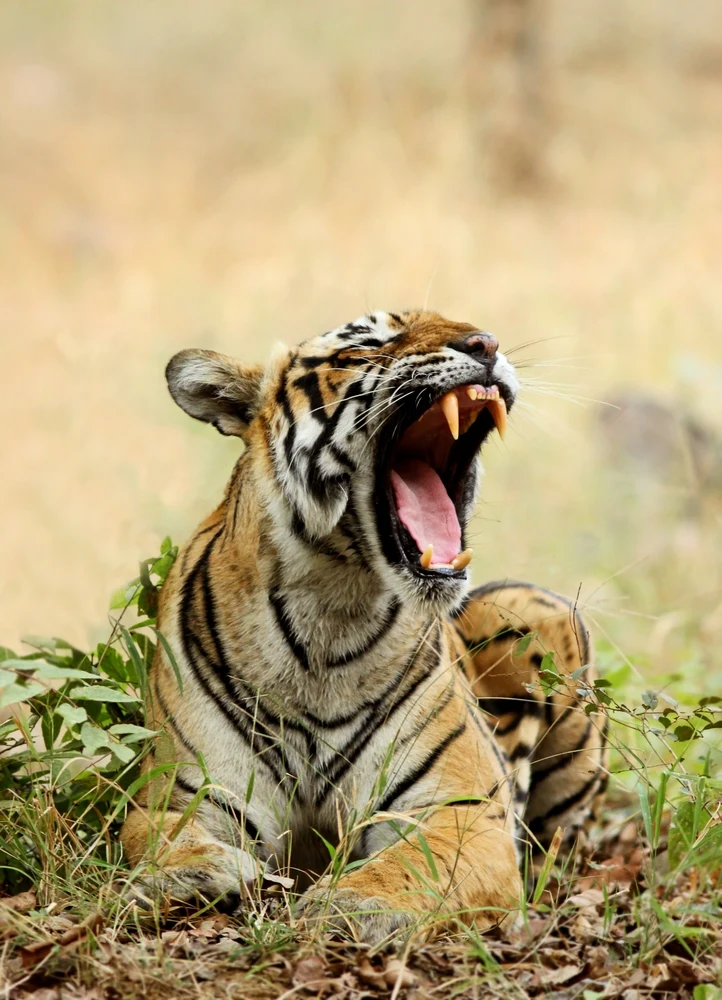
- Bengal Tiger (Panthera tigris tigris): Confirmed presence; four tigers recorded in 1994. Tiger populations have fluctuated and remain elusive.
- Clouded Leopard (Neofelis nebulosa): Dampa has one of the highest clouded leopard densities in South and Southeast Asia — a major conservation highlight
- Indian Leopard (Panthera pardus fusca): Present in forested zones
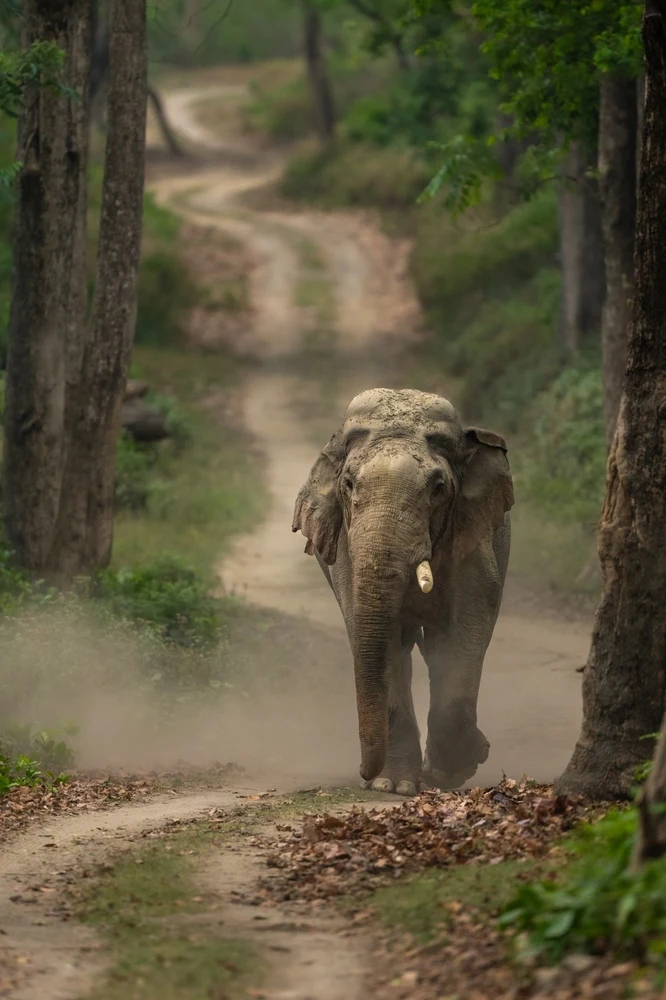
- Asian Elephant (Elephas maximus): Herds move through the reserve
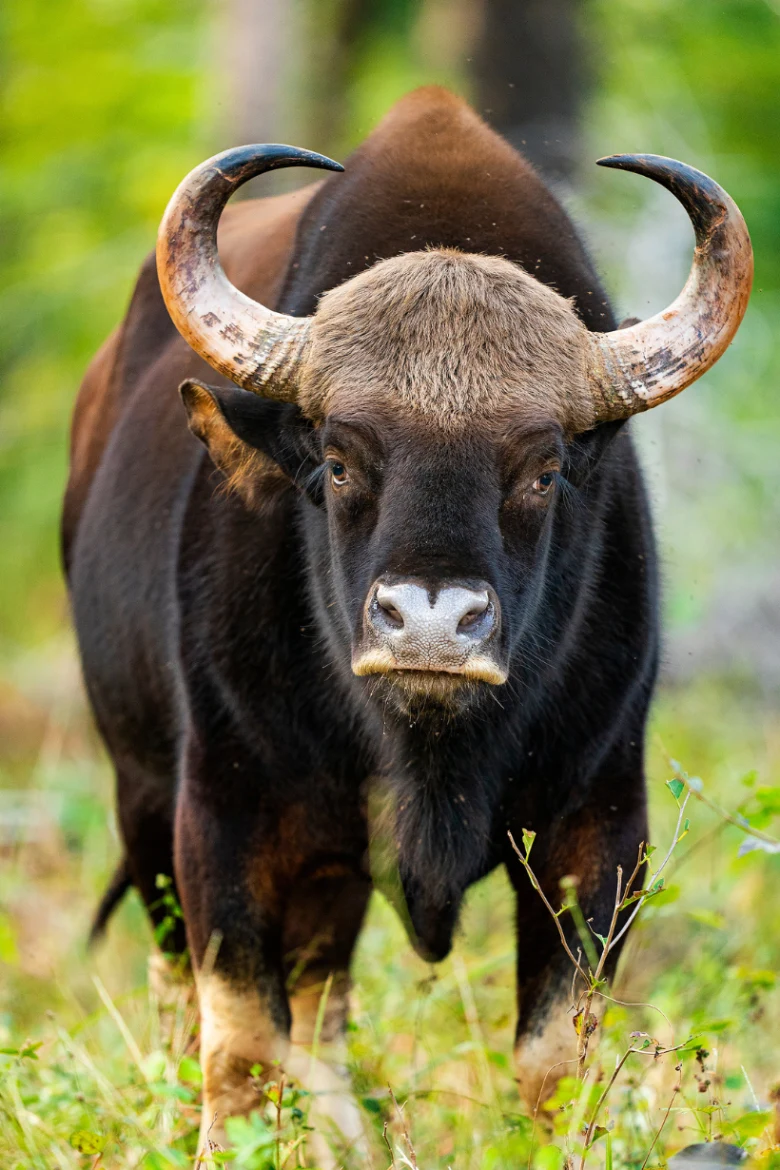
- Indian Gaur / Bison (Bos gaurus): Large herds found in grasslands
- Sloth Bear (Melursus ursinus): Regularly recorded
- Hoolock Gibbon (Hoolock hoolock): India's only ape species
- Phayre's Leaf Monkey (Trachypithecus phayrei): Globally endangered primate
- Rhesus Macaque, Assamese Macaque, Pigtail Macaque, Stumptail Macaque
- Barking Deer (Muntiacus muntjak), Sambar (Rusa unicolor), Serow
- Wild Boar, Porcupine, Python, King Cobra, Monitor Lizard, Hill Tortoise
- Malayan Giant Squirrel, Slow Loris
- Amphibians and Reptiles: Exceptional diversity, including MacClelland's coral snake, Indian wolf snake, Assam hills frog
Birds
Over 300 species of birds have been recorded in Dampa Tiger Reserve — an extraordinary figure reflecting its ecological richness:
- Great Hornbill (Buceros bicornis): Flagship avian species
- Oriental Pied Hornbill (Anthracoceros albirostris)
- Grey Peacock Pheasant (Polyplectron bicalcaratum): Spectacular ground bird
- Red Junglefowl (Gallus gallus)
- Crested Serpent Eagle (Spilornis cheela)
- Emerald Dove (Chalcophaps indica)
- Hill Myna (Gracula religiosa)
- Multiple species of eagles, falcons, owls, partridges, and 25+ identified species, including two near-threatened and one critically at-risk
How to Reach Dampa Wildlife Sanctuary
By Air
The nearest airport is Lengpui Airport (AJL) at Aizawl, connected to Guwahati, Silchar, and Kolkata. From Aizawl, Dampa Tiger Reserve is approximately 125–130 km by road.
By Rail
Silchar is the nearest railhead, accessible from Guwahati via the Barak Valley Express, Cachar Express, or Tripura Passenger trains. From Silchar, travel by road to Aizawl and then onward to Dampa. An Inner Line Permit (ILP) is required for entry into Mizoram.
By Road
From Aizawl, take the road towards Mamit district (approximately 3–4 hours). The reserve has three main access points: Teirei, Phuldungsei, and Damparengpui. The Teirei forest lodge is a popular base for visitors. The roads are serviceable but can be challenging in monsoon. A private vehicle (preferably 4WD) is strongly recommended as public transport options to the reserve entrances are limited.
💡 Tip: Book accommodation at the Teirei forest lodge or travellers' inn well in advance through the Mizoram Forest Department, as these are the primary options within or near the reserve.
Inner Line Permit (ILP)
All visitors to Mizoram — including Indian nationals from outside the state — require an Inner Line Permit (ILP). This is obtainable online through the Mizoram government portal, at ILP counters in Guwahati, Silchar, Shillong, Kolkata, New Delhi, and at the Lengpui Airport upon arrival.
Best Time to Visit Dampa Wildlife Sanctuary
November to April: Optimal Season
The best time to visit Dampa Tiger Reserve is between November and April. The weather is dry and pleasant, trails are accessible, and wildlife is most active. This period also coincides with peak birdwatching conditions, with migratory species augmenting the impressive resident avifauna.
Winter (December–February)
Winter is particularly rewarding: temperatures are comfortable during the day (15–22°C), nights are cool, leeches are absent, and the forest canopy is more open, improving visibility. Wildlife activity concentrates near water sources and salt licks, increasing sighting opportunities.
Monsoon (June–October): Not Recommended
Dampa receives heavy rainfall during monsoon, making trails impassable, forest tracks waterlogged, and wildlife sightings extremely difficult. The Bangladesh border security situation can also restrict access to certain areas. Leeches are particularly bad during this period. Visiting between June and October is strongly discouraged for most travellers.
Safari and Activities at Dampa Tiger Reserve
Jungle Safari
Unlike most Indian tiger reserves where jeep safaris are the norm, Dampa Tiger Reserve is primarily explored on foot. Given the terrain — steep hills, deep valleys, and dense undergrowth — motorised access is limited to certain tracks. Guided foot safaris led by experienced forest staff allow visitors to enter the forest's interior, following wildlife trails and creek beds where animal activity is highest. This immersive approach delivers an experience of wilderness that is increasingly rare in India.
💡 Tip: Book your jungle safari through the Forest Department offices at Teirei, Damparengpui, or Phuldungsei. Entry fee is approximately Rs. 20 per person and Rs. 100 per vehicle (subject to revision).
Birdwatching
With 300+ bird species recorded, Dampa is one of northeast India's premier birdwatching destinations. Early morning walks along forest trails and creek edges yield the greatest diversity. Hornbills — particularly the Great Hornbill and Oriental Pied Hornbill — are reliably encountered, while the Grey Peacock Pheasant rewards patient observers in denser forest sections.
Wildlife Photography
The opportunity to photograph the clouded leopard — one of the most elusive and beautiful of all wild cats — makes Dampa a dream destination for wildlife photographers. Camera trap data has confirmed the reserve's significant clouded leopard population. Guided photography walks with experienced naturalists maximise chances of meaningful sightings, though patience over several days is typically required.
Nature Walks and Trekking
Dampa's terrain invites multi-day trekking through diverse forest types. Trekking from valley floors through moist evergreen forests and into higher grasslands and semi-evergreen zones offers a complete cross-section of the reserve's biodiversity. Watchtowers are positioned at strategic points offering panoramic views of the valley ecosystems.
Village and Cultural Exploration
The villages surrounding Dampa Tiger Reserve — including Teirei village — offer insights into the Mizo way of life and the community's relationship with the forest. Interactions with local communities reveal traditional ecological knowledge and ongoing tensions and collaborations around forest conservation.
Entry Fees and Permits
- Entry fee: Approximately Rs. 20 per person (subject to revision)
- Vehicle charge: Rs. 100 per vehicle
- Safari fee: Rs. 500 per person (guided forest walk)
- Permits obtainable from: Forest Department offices at Teirei, Damparengpui, or Phuldungsei; also from Mizoram Tourism office in Aizawl
- ILP: Required for all visitors to Mizoram (see above)
Conservation Status and Challenges
Dampa Tiger Reserve faces a unique and complex set of conservation challenges:
- Tiger population fluctuation: Four Bengal tigers were recorded in 1994 but none were confirmed in 2018–2019 surveys, raising conservation concerns
- Shifting cultivation (jhum): Practiced by communities at the buffer zone boundaries, contributing to forest fragmentation
- Bangladesh border fence: A 62-km fence along the Bangladesh boundary restricts the free movement of wildlife, including tigers, between habitats
- Oil palm plantations: Established in buffer areas, reducing habitat connectivity
- Insurgency and security: The reserve's position near the Bangladesh border has historically created security challenges affecting patrol effectiveness
- Despite these challenges, Dampa remains ecologically significant and is classified as one of the last safe havens for tigers and numerous other species in this part of South Asia
Nearby Attractions
Aizawl (~125–130 km)
Mizoram's capital is a bustling, architecturally distinctive hill city dramatically perched on ridges. Key attractions include Solomon's Temple (a remarkable non-denominational church), the Mizoram State Museum, Millennium Centre, and vibrant local markets offering bamboo crafts, traditional Mizo textiles, and local cuisine.
Vantawng Falls (~100 km from Aizawl)
The tallest waterfall in Mizoram at approximately 229 metres, Vantawng Falls cascade through lush greenery and are one of the state's most spectacular natural attractions.
Champhai
Known as the 'fruit bowl of Mizoram,' Champhai is a scenic border town on the Myanmar border famous for its orchards, traditional Mizo villages, and panoramic views of the Myanmar plains.
Murlen National Park
Located in eastern Mizoram, Murlen National Park is another important protected area offering exceptional birdwatching and wildlife spotting in a remote highland setting.
Accommodation Options
Inside the Reserve
- Teirei Forest Lodge: The most recommended base; managed by Mizoram Forest Department — advance booking essential
- Travellers' Inn at Damparengpui or Phuldungsei: Basic accommodation at additional access points
In Aizawl
Aizawl offers a wide range of hotels from budget guesthouses to mid-range business hotels. While not luxurious by international standards, they provide good modern facilities and comfortable bases for planning a day trip or multi-day excursion to Dampa.
- Mid-range options: Hotel Essar, Regency Hotel Aizawl, Aizawl City Hotel
- Budget options: Multiple guesthouses near Bara Bazar and Dawrpui areas
Essential Travel Tips
- Obtain an Inner Line Permit (ILP) before entering Mizoram — this is mandatory for all visitors
- Book forest accommodation at Teirei or Phuldungsei well in advance through the Mizoram Forest Department
- Hire a certified guide — foot safaris without a guide are not permitted in the core zone
- Wear appropriate jungle attire: khaki, olive green, and brown — avoid bright colours
- Carry sufficient water, a personal first-aid kit, insect repellent, and leech socks
- Do not bring alcohol, firecrackers, or weapons into the reserve
- Do not feed wildlife — this disrupts natural behaviour and can be dangerous
- Maintain strict silence in the forest — sound carries far in these valleys
- Carry cash — ATM facilities are limited in Mamit district
- Respect the local Mizo communities and their relationship with the forest
Frequently Asked Questions (FAQ) - Dampa Wildlife Sanctuary
What is Dampa Wildlife Sanctuary famous for?
Dampa Wildlife Sanctuary (Dampa Tiger Reserve) is famous as Mizoram's largest protected area and a critical habitat within the Indo-Burma Biodiversity Hotspot. It is particularly renowned for hosting one of the highest densities of clouded leopards in South and Southeast Asia, as well as the Bengal tiger, Asian elephant, Phayre's leaf monkey, hoolock gibbon, and over 300 bird species including the Great Hornbill and Grey Peacock Pheasant.
Is Dampa a Tiger Reserve?
Yes. Dampa was initially established as a Wildlife Sanctuary in 1985 and was declared a Tiger Reserve in 1994 under India's Project Tiger programme - one of the most successful wildlife conservation initiatives in Asia. It is managed jointly by the Mizoram Forest Department and the National Tiger Conservation Authority (NTCA).
How do I get to Dampa Tiger Reserve from Aizawl?
Dampa Tiger Reserve is approximately 125-130 km from Aizawl. Drive west from Aizawl towards Mamit district; the journey takes approximately 3-4 hours by road. A private vehicle (4WD recommended) is the most practical option. The main access points are Teirei, Phuldungsei, and Damparengpui.
Are tigers still found in Dampa Tiger Reserve?
Tiger presence in Dampa has been confirmed through camera traps and scat analysis (in 2012), though the 2018-2019 tiger monitoring survey recorded no tigers directly. The reserve is considered one of the last potential tiger habitats in Mizoram. Conservation challenges including habitat fragmentation and border fence disruptions affect tiger movement.
What is the best time to visit Dampa Wildlife Sanctuary?
November to April is the best time, with December to February being the peak season. Conditions are dry, wildlife is active, and birdwatching is at its finest. Avoid June to October (monsoon season) when trails are impassable and conditions are hazardous.
Do I need an ILP to visit Dampa Tiger Reserve?
Yes. All visitors to Mizoram - including Indian nationals from outside the state - require an Inner Line Permit (ILP). This can be obtained online through the Mizoram government portal or from ILP counters at Guwahati, Silchar, Shillong, Kolkata, New Delhi, and Lengpui Airport.
Can I do a jeep safari in Dampa Tiger Reserve?
Jeep safaris are limited in Dampa due to the terrain. The reserve is primarily explored on foot with certified guides. Walking safaris into the forest core are the signature experience at Dampa and are far more immersive than conventional vehicle-based safaris.
What makes the clouded leopard of Dampa special?
The clouded leopard (Neofelis nebulosa) of Dampa Tiger Reserve is special because the reserve supports one of the highest known densities of this elusive, beautifully patterned wild cat in all of South and Southeast Asia. Camera trap studies have documented remarkable clouded leopard activity within the reserve, making it one of the best places in the world for researchers studying this species.
What accommodation is available near Dampa Tiger Reserve?
The Teirei Forest Lodge and Travellers' Inn at Damparengpui or Phuldungsei are the main accommodation options inside or near the reserve (managed by the Mizoram Forest Department). Aizawl offers a wider range of hotel options for those making a day trip from the capital.
Why is Dampa Tiger Reserve important for conservation?
Dampa Tiger Reserve is critically important as one of the last low to mid-elevation forests in western Mizoram and a key corridor within the Indo-Burma Biodiversity Hotspot. It protects Bengal tigers, one of the globally endangered big cats; Asian elephants; and multiple threatened primate species. It also supports exceptional amphibian, reptile, and bird diversity, making it a comprehensive biodiversity sanctuary with irreplaceable ecological value.