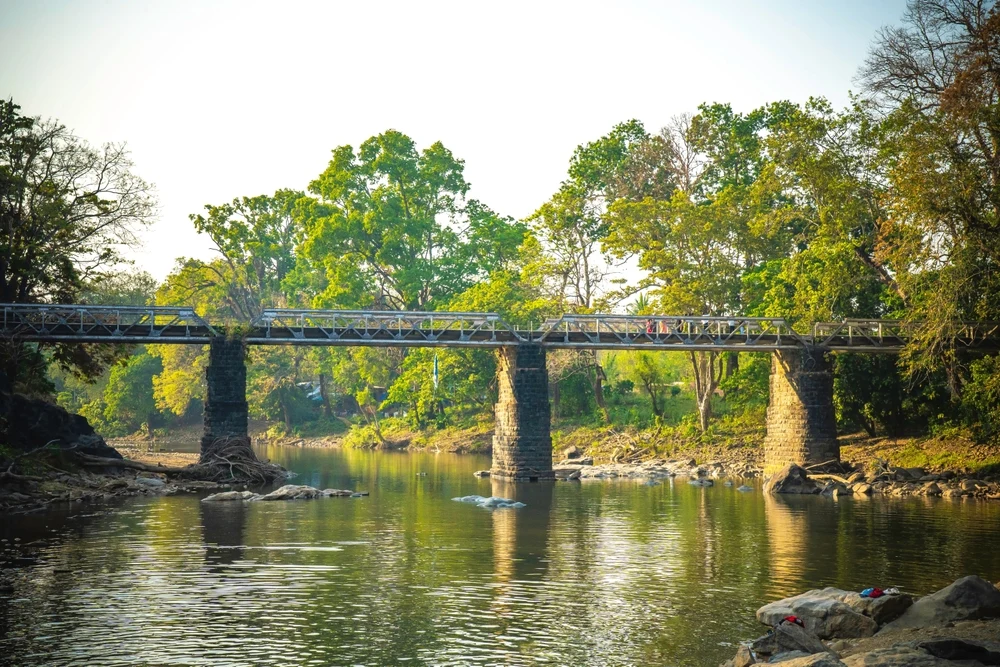
Overview of Bhimbandh Wildlife Sanctuary
Bhimbandh Wildlife Sanctuary is one of Bihar's most enchanting and multi-layered protected areas — a place where dense Kharagpur Hills forest, rich wildlife, extraordinary geothermal hot springs, Mahabharata-era mythology, 7th-century Chinese traveller accounts, and ancient Buddhist heritage converge in an unforgettable destination. Situated in the south-west of Munger district in eastern Bihar, the sanctuary covers 681.99 sq km of hilly, forested terrain on the Kharagpur Hills range — the northernmost extension of the Chota Nagpur Plateau.
Established formally as a wildlife sanctuary in 1976, Bhimbandh derives its name directly from a legendary act described in the Mahabharata: when the Pandavas were living in forest exile after being defeated by the Kauravas in the game of dice, the mighty Bhima — strongest of the five brothers — is said to have constructed a bandh (dam) across a fast-flowing stream in this forest to help the surrounding villagers. The great stone slabs that Bhima arranged to dam the stream are still visible near the geothermal spring area today, representing one of India's most evocative mythological landscape features.
The sanctuary's extraordinary geothermal hot springs — which maintain a near-constant temperature of 52°C to 65°C throughout the entire year, regardless of season — are among its most captivating attractions, drawing visitors seeking both the therapeutic properties of mineral-rich thermal water and the profound spiritual significance associated with sacred kunds (ritual bathing pools). The springs represent one of the highest-temperature natural hot spring systems in Bihar and are considered a significant site for the exploration of geothermal energy potential.
The sanctuary received an additional layer of historical validation when the Chinese monk and traveller Xuanzang (Hiuen Tsang), who journeyed through India in the 7th century CE (approximately 629–645 CE), documented this location in his travel diary as a 'green forest' — one of the earliest recorded descriptions of the Kharagpur Hills forest. This ancient documentation confirms the forest's longevity and the depth of its cultural heritage.
Geographically, Bhimbandh occupies a compelling position: south of the Ganges River, at the northern edge of the Chota Nagpur Plateau, west of the Santhal Pargana region of Jharkhand, and approximately 7 km south of the Ganga. The sanctuary's forested hills sit between the Kharagpur Hills of Munger and the hills of Jamui district, creating a connecting ridge of forest that is ecologically important for wildlife movement across this landscape.
Geography & Topography
The terrain of Bhimbandh Wildlife Sanctuary is characterised by rolling, undulating hills of the Kharagpur range interspersed with narrow valleys, seasonal streams, and forest-covered ridges. The Kharagpur Hills represent the southernmost outlier of the Rajmahal Plateau system and the northernmost projection of the Chota Nagpur Plateau — a geological transition zone that creates the ecological richness and habitat diversity that defines Bhimbandh's biodiversity.
The sanctuary sits at an average altitude of approximately 260 feet (approximately 80 metres) above sea level, though the Kharagpur Hills rise considerably above the surrounding plains. The valleys between the hills contain the geothermal springs, seasonal waterfalls, and the remnant stone structures associated with the legendary Bhima's dam.
The sanctuary is approximately 56 km from the southern border of Munger district, 7 km from the Ganges River to the north, 20 km from Jamui Railway Station to the south, and 45 km from the Bariarpur railway station. It is surrounded on all sides by densely inhabited non-forestry areas — a characteristic that creates significant management challenges but also makes the sanctuary an island of biological richness within a humanised landscape.
Flora: Vegetation of Bhimbandh Wildlife Sanctuary
The vegetation of Bhimbandh Wildlife Sanctuary is dominated by tropical dry and moist deciduous forest, with Sal (Shorea robusta) forming the primary canopy species across the hills. The Sal forest is punctuated by bamboo groves, extensive grasslands in the lower valleys, and numerous patches of mixed deciduous forest on the hill slopes. The overall forest structure is characterised by a multi-layered canopy — tall emergent Sal and Asan trees forming the top tier, a dense mid-storey of various species, and a diverse ground layer of grasses, shrubs, and herbs.
The principal canopy species include Sal (Shorea robusta), Kendu (Diospyros melanoxylon / Tendu), Salai (Boswellia serrata), Asan (Terminalia tomentosa), Bahera (Terminalia bellirica), Arjun (Terminalia arjuna) — particularly abundant along watercourses — and Paisar (Pterocarpus marsupium / Indian Kino Tree). The understorey is rich in shrubby species, medicinal herbs, and climbers that form the dietary base for the sanctuary's rich frugivorous fauna.
The juxtaposition of sal forest, bamboo forest, open grassland, and the unique microhabitat of the geothermal spring areas — where thermal warmth and mineral-rich water create unique micro-ecosystems — together support the sanctuary's remarkable avifaunal richness. The Arjun trees along the seasonal streams are particularly significant, as they serve as critical food sources for birds, butterflies, and insects.
Wildlife: Fauna of Bhimbandh Wildlife Sanctuary
Mammals
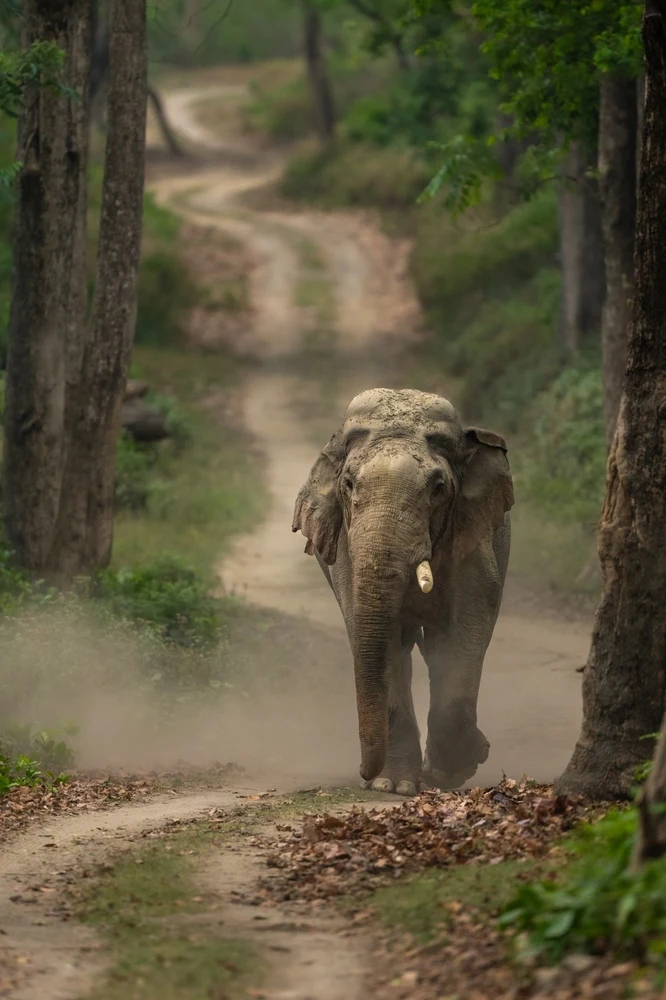
Bhimbandh Wildlife Sanctuary supports a diverse mammalian community, though the sanctuary is more celebrated for its avifaunal richness than its large mammal populations. Key mammal species documented within the sanctuary include:
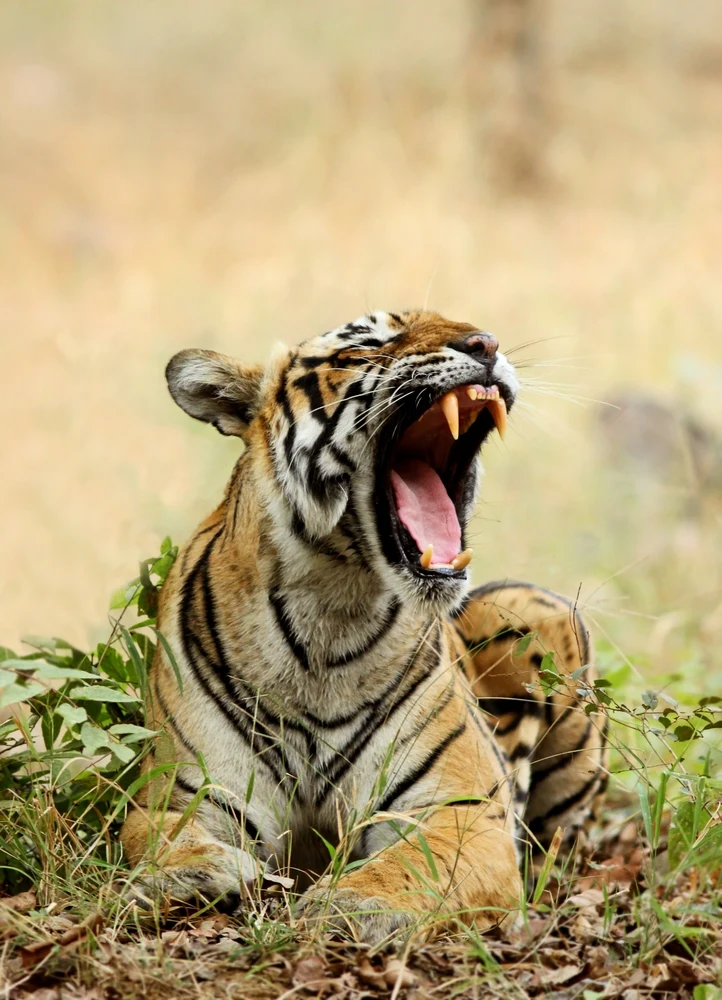
- Bengal Tiger (Panthera tigris tigris) — approximately 8 individuals documented in the most recent surveys
- Indian Leopard (Panthera pardus fusca) — approximately 36 individuals, the most frequently sighted big cat
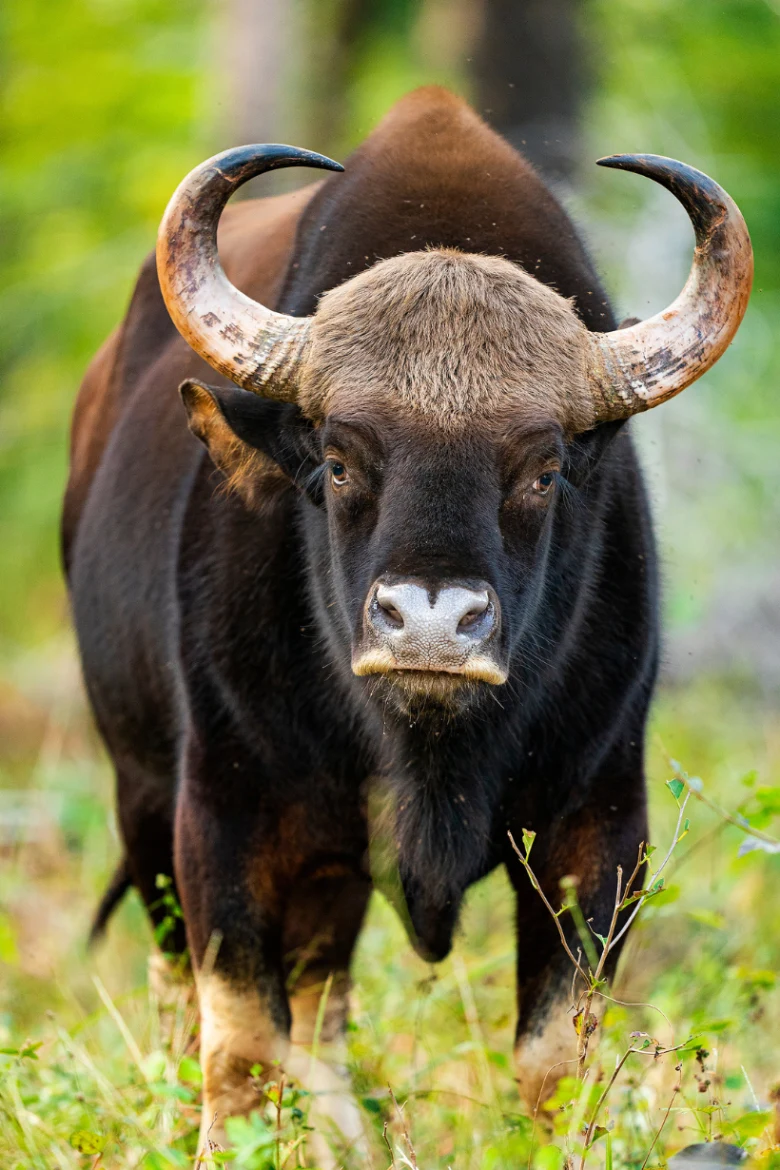
- Gaur (Indian Bison) — approximately 39 individuals; significant population for this hill forest
- Sloth Bear (Melursus ursinus) — approximately 96 individuals; relatively abundant
- Wild Boar (Sus scrofa) — approximately 1,063 individuals; the most abundant large mammal
- Sambar Deer — the primary prey base
- Indian Muntjac (Barking Deer) — approximately 559 individuals
- Chital (Spotted Deer) — approximately 187 individuals
- Nilgai (Blue Bull) — approximately 255 individuals
- Four-Horned Antelope (Chausingha) — endemic to the Indian subcontinent
- Indian Pangolin — a Critically Endangered species
- Striped Hyena (Hyaena hyaena) — approximately 36 individuals
- Indian Python (Python molurus) — approximately 39 individuals
- Langur (Grey Langur) — approximately 3,388; the most numerous primate
- Rhesus Macaque — approximately 1,612 individuals
- Indian Hare, Porcupine
Avifauna — Bhimbandh's Greatest Wildlife Treasure
Bhimbandh Wildlife Sanctuary is particularly celebrated for its exceptional avifauna. The sanctuary supports more than 100 species of year-round resident birds — a remarkable figure for a sanctuary of its size in the Bihar plains. The diversity of habitat types (sal forest canopy, bamboo groves, grassland, rocky outcrops, seasonal streams, and the geothermal spring micro-habitats) creates a rich mosaic of ecological niches that attracts a wide spectrum of bird species. During the winter season, a significant influx of migratory birds from Central Asia further augments the resident avifauna.
Notable bird species documented at Bhimbandh include Indian Peafowl, Grey Junglefowl (Forest Cock), Indian Pitta (one of India's most colourful forest birds), various species of hornbills (Oriental Pied Hornbill and possibly others), Parakeets (various species), Bulbuls (multiple species), Black Bulbul, Rufous Treepie, Racket-tailed Drongo, Eagles (Crested Serpent Eagle and others), Kites, Hoopoe, multiple Kingfisher species, Herons, Egrets, Owls and Nightjars, and a range of migratory waterfowl that visit the nearby Kharagpur Lake and the sanctuary's seasonal pools.
Reptiles & Amphibians
The sanctuary's warm, humid valleys — particularly the geothermal spring areas with their year-round warmth — support a rich herpetofauna. Documented reptiles include Indian Python, Monitor Lizard (Bengal Monitor), King Cobra, Russell's Viper, Common Krait, and various species of skinks, geckos, and freshwater turtles. Amphibian diversity is considerable in the seasonal watercourses and monsoon pools.
The Famous Hot Springs of Bhimbandh
The natural geothermal hot springs are unquestionably the most distinctive and famous feature of Bhimbandh Wildlife Sanctuary — drawing visitors ranging from spiritual pilgrims and Ayurvedic health-seekers to curious scientists and intrepid travellers. The sanctuary's valley portions contain several hot spring clusters, the most important of which are:
Bhimbandh Springs (The Hottest — 52°C to 65°C)
The Bhimbandh springs are the hottest natural thermal springs in the sanctuary, maintaining a remarkable temperature of 52°C to 65°C throughout the year with minimal seasonal variation. The springs have the highest discharge rate (0.84–1.12 cubic metres per second) and represent the finest geothermal energy exploration opportunity within the sanctuary. The springs are located near the legendary stone slabs associated with Bhima's dam — creating a unique convergence of natural geological wonder and Mahabharata mythology. The radioactive mineral content in the spring water, combined with its consistent high temperature, is believed to account for the therapeutic properties attributed to the waters by local communities and pilgrims.
Sita Kund
One of the most sacred hot spring sites at Bhimbandh, Sita Kund is a revered pilgrimage destination for Hindu devotees. According to local tradition, the kund is associated with Sita — the consort of Lord Rama — who is believed to have bathed here during the Ramayana-era forest exile. The spring is particularly crowded with pilgrims during Hindu festivals such as Maha Shivaratri, Navratri, and Chhath Puja. The water of Sita Kund maintains a consistently warm temperature and is considered spiritually purifying and medicinally beneficial.
Rishi Kund
Rishi Kund is another significant sacred hot spring within the sanctuary, associated with the sage (rishi) traditions of ancient Indian forest culture. The kund's setting — surrounded by dense sal forest and accessed via a forest trail — creates an atmosphere of deep serenity and spiritual contemplation.
Ha-Ha Punch Kumari
A uniquely named spring site with spiritual traditions associated with five young maidens (Kumaris) of local legend. The site is a minor pilgrimage destination for community members from surrounding villages.
Rameshwar Kund
A Shiva-associated sacred spring, Rameshwar Kund is the destination of a popular trekking route through the forest that is favoured by pilgrims and nature walkers alike.
How to Reach Bhimbandh Wildlife Sanctuary
By Air
The nearest major airport is Lok Nayak Jayaprakash Airport, Patna (IATA: PAT), located approximately 180–200 km north-west of the sanctuary. Patna is well connected to Delhi, Mumbai, Kolkata, Bengaluru, Hyderabad, Ranchi, and other major cities. From Patna Airport, hire a taxi directly to Bhimbandh (approximately 3.5–4 hours) or travel to Munger/Jamui by rail and then by road.
Alternatively, Deoghar Airport in Jharkhand (if operationally connected at time of travel) is approximately 130–140 km south-east of the sanctuary.
By Rail
Jamui Railway Station is the closest railway station, located approximately 20 km south of the sanctuary. Jamui lies on the Patna–Gaya–Jhajha line and is connected to Patna, Jhajha, and Kiul Junction. Bariarpur Railway Station (on the Grand Chord Line) is approximately 45 km away and provides broader national rail connectivity. Munger does not have a direct railway station — the nearest station is Jamalpur Junction (approximately 12 km from Munger city), which is a major railway town on the Patna–Bhagalpur line. From Jamalpur/Munger, hire a taxi to Bhimbandh (approximately 55 km, 1.5–2 hours).
By Road
The sanctuary is accessible via a well-known road route: Bariarpur – Shampur – Kharagpur – Gangta – Bhimbandh – Jamui. Key distances: from Munger city – approximately 55 km (1.5–2 hours); from Jamui – approximately 20 km (30–45 minutes); from Patna – approximately 200 km (4–4.5 hours); from Bhagalpur – approximately 120 km (2.5–3 hours). Regular bus services and shared autos connect Munger and Jamui to Kharagpur town and the sanctuary area.
Best Time to Visit Bhimbandh Wildlife Sanctuary
November to March (Best Season — Highly Recommended)
Winter is the ideal visiting season for Bhimbandh Wildlife Sanctuary. Temperatures in Munger district range between 8°C and 25°C — cool, clear, and perfect for wildlife safaris, trekking, and outdoor hot spring bathing. Wildlife sightings are at their best as the thinning foliage improves visibility. The hot springs are most enjoyable during winter when the contrast between the cold air and the warm spring water is at its maximum. This is also the peak migratory bird season, when Central Asian visitors augment the resident avifauna. The trekking path to Rameshwar Kund is most pleasant in January–February.
March to May (Summer)
Summer temperatures in the Munger region rise to 40–44°C, making midday activities uncomfortable. However, early morning wildlife observation (6:00–9:00 AM) remains productive, with wildlife active near water sources. The Bhimbandh and Sita Kund springs are accessible year-round, and the mild geothermal warmth of the kunds provides some relief from the dry summer air. Avoid visiting between 11:00 AM and 4:00 PM in peak summer.
June to September (Monsoon — Generally Not Recommended for Casual Visitors)
The monsoon transforms Bhimbandh's forest into a vivid green paradise, and the seasonal waterfalls near Kharagpur Lake surge dramatically. However, forest tracks become muddy and difficult, wildlife visibility drops sharply, and access to remote spring sites may be cut off by swollen streams. The sanctuary's administration may restrict access to certain areas. Experienced nature travellers who appreciate monsoon forest ecology may find this season uniquely atmospheric.
Safari & Activities at Bhimbandh Wildlife Sanctuary
Jungle Safari
Guided jeep safaris through the designated tracks of Bhimbandh Wildlife Sanctuary offer the best opportunity to spot the sanctuary's diverse wildlife. Prior permission from the Forest Department office in Kharagpur is mandatory before entering the sanctuary for any purpose including wildlife safaris, trekking, or spring visits. The Forest Department's Kharagpur office serves as the entry management point for the sanctuary. Safari duration is typically 2–3 hours per session.
Hot Spring Bathing & Therapeutic Visits
Bathing in the sacred and medicinally reputed hot springs of Sita Kund, Rishi Kund, and Rameshwar Kund is one of Bhimbandh's most distinctive visitor activities. The springs are believed to have therapeutic properties for skin conditions, joint ailments, and general health restoration — a belief systems consistent with the Ayurvedic tradition of balneotherapy (therapeutic bathing in mineral-rich waters). Pilgrims from across Bihar and neighbouring states visit the kunds year-round, with peak visitation during Hindu festival periods.
Birdwatching
With over 100 year-round resident bird species augmented by significant winter migrants, Bhimbandh is one of eastern Bihar's finest birding destinations. The sal forest canopy, bamboo groves, and the open woodland margins of the Kharagpur Hills offer excellent perching and foraging habitat for a wide variety of species. Early morning (6:00–9:00 AM) birding walks near forest edges, stream margins, and the geothermal spring clearing are particularly productive.
Trekking & Nature Walks
The forested hills of the Kharagpur range offer several rewarding trekking routes. The path to Rameshwar Kund through dense sal forest is the most popular nature walk, combining wildlife observation with a spiritual destination. Longer cross-hill routes offer outstanding views from the ridgelines and access to the interior forest habitats. All trekking must be undertaken with an authorised local guide.
Wildlife Photography
Bhimbandh's combination of diverse wildlife (particularly the leopard population, gaur herds, and spectacular avifauna), the ethereal dawn mist rising from the hot springs, and the scenic Kharagpur Hill backdrop creates exceptional photographic opportunities. The hot spring areas at dawn — with mist rising through the surrounding sal trees — are particularly atmospheric subjects for landscape and wildlife photographers.
Visit to Kharagpur Lake
Kharagpur Lake, an artificial lake at the foothills of the Kharagpur Hills and near the sanctuary boundary, is a scenic destination offering boating and fishing opportunities and serving as an excellent birding hotspot for waterfowl, herons, egrets, kingfishers, and migratory duck species. The lake offers a stunning panoramic view of the Kharagpur Hills.
Nearby Attractions
Munger Fort (Munger City, ~55 km)
The historic Munger Fort — also known as Benaquab Fort — is a magnificent medieval-era fortification perched dramatically on a rocky escarpment above the Ganges River within Munger city. Built during the Sher Shah Suri period and subsequently occupied by various rulers including the British, the fort offers commanding views of the Ganges and contains several ancient shrines, including the Kashyap Rishiswar Mandir and the tomb of Shah Nafah. The fort is one of Bihar's most impressive and underappreciated heritage monuments.
Bihar School of Yoga, Munger
The world-renowned Bihar School of Yoga (Ganga Darshan Ashram), founded by Swami Satyananda Saraswati in 1964 and located in Munger city, is an internationally recognised centre of classical yoga teaching. The school's dramatic setting on the Ganges River and its rigorous traditional yoga curriculum attract students from across the globe. A visit to the ashram campus, the adjoining Rajadhiraj Temple, and the waterfront adds a profound spiritual dimension to any Bhimbandh itinerary.
Vikramshila Ruins, Bhagalpur (~120 km)
The Vikramshila Mahavihara — one of ancient India's three great Buddhist universities (along with Nalanda and Vallabhi), established in the late 8th century CE by the Pala king Dharmapala — lies approximately 120 km from Bhimbandh near Bhagalpur. The extensive ruins, spanning approximately 100 acres, are an extraordinary testament to Bihar's role as the cradle of Buddhist learning. The museum at the site houses significant archaeological finds.
Jarasandha Akhara, Rajgir (~100 km)
The ancient wrestling arena (akhara) associated with the legendary Mahabharata king Jarasandha is located in the historically significant city of Rajgir (Rajagriha), approximately 100 km north-west of Bhimbandh. Rajgir's Buddhist and Jain heritage, hot springs (Brahma Kund), and Vishwa Shanti Stupa make it an excellent companion destination.
Chandika Sthan Temple & Uvasagar Temple, Munger
The Chandika Sthan — a significant Shakti Peetha temple in Munger city, dedicated to Goddess Chandika and famous for its annual festival attracting thousands of devotees — and the Uvasagar Temple dedicated to Lord Shiva are important local pilgrimage sites within easy reach of Bhimbandh.
Accommodation Options
Inside the Sanctuary
- Government Forest Guest House (Kharagpur, inside the sanctuary): The primary accommodation option near Bhimbandh, managed by the Bihar Forest Department. Basic amenities provided. Prior booking and permission through the Forest Department office at Kharagpur is mandatory. The guest house offers an authentic wilderness experience with the sounds of the forest at night.
Gateway Towns
- Munger City (~55 km): Multiple budget to mid-range hotels and guesthouses are available throughout Munger city, catering to business travellers and pilgrims visiting the Bihar School of Yoga and Munger Fort. The city is well-served by restaurants and all necessary amenities.
- Jamui (~20 km): Small town near the sanctuary's southern boundary with budget accommodation options. Convenient for short overnight stays before or after the sanctuary visit.
- Bhagalpur (~120 km): A major regional city with a range of accommodation options from budget to mid-range, excellent for those combining Bhimbandh with the Vikramshila ruins and the Bhagalpur silk industry.
- Patna (~180–200 km): The state capital offers premium hotels including Hotel Maurya, Lemon Tree, and other chains for those who prefer a comfortable base with maximum amenity access.
Travel Tips for Bhimbandh Wildlife Sanctuary
- Obtaining prior permission from the Forest Department office at Kharagpur is mandatory before entering the sanctuary for any activity. Plan to visit the office early on the morning of your safari or the evening before.
- Carry plenty of water — facilities within the sanctuary are minimal, and dehydration in the summer months is a real risk.
- The hot spring waters (particularly at Bhimbandh springs at 52–65°C) are extremely hot — never wade into the springs without first testing the temperature carefully. Always bathe in the designated, managed kund pools (Sita Kund, Rishi Kund) where water has naturally cooled to safe bathing temperatures.
- Wear comfortable walking shoes with good grip — the Kharagpur Hills terrain is rocky and can be slippery near the spring areas.
- The Forest Guest House experience is uniquely atmospheric — if possible, secure a booking in advance to avoid the need for a long return drive after the safari.
- Visit the Kharagpur Lake in the early morning for the best wildlife and birding observation — the lake mist at dawn is a spectacular photographic opportunity.
- Combine the Bhimbandh visit with the Bihar School of Yoga in Munger (if timing permits) and the Munger Fort for a deeply holistic Bihar experience combining nature, heritage, and spirituality.
- Mobile network coverage is variable — BSNL tends to have the widest coverage in this area. Download offline navigation maps before travel.
- Festival periods (especially Navratri and Maha Shivaratri) see dramatically increased pilgrimage traffic to Sita Kund and Rishi Kund — adjust your visit dates accordingly if you prefer a quieter experience.
- Respect the sacred nature of the kund sites — dress modestly and follow pilgrimage etiquette when visiting the spring shrines.
Conservation Context
Bhimbandh Wildlife Sanctuary faces a challenging conservation context. Surrounded on all sides by densely inhabited agricultural land, the sanctuary functions as an isolated 'island' of forest habitat — meaning that wildlife populations within it are not naturally reinforced by immigration from adjacent protected areas, creating long-term genetic and demographic pressure. The relatively small tiger population (approximately 8 individuals) and the sanctuary's isolation make conservation-focused management particularly critical.
The Wildlife Institute of India (WII) has identified Bhimbandh as a significant protected area along the Ganga River conservation corridor and as part of the protected area network that supports the ecological connectivity of Bihar's forested landscapes. The sanctuary's role within the broader NMCG (National Mission for Clean Ganga) conservation framework adds an additional dimension to its management importance. Ongoing conservation priorities include prey base restoration, anti-poaching operations, human-wildlife conflict mitigation, and exploration of wildlife corridor restoration between Bhimbandh and the adjacent Jharkhand forest division.
Frequently Asked Questions (FAQ) - Bhimbandh Wildlife Sanctuary
Where is Bhimbandh Wildlife Sanctuary located?
Bhimbandh Wildlife Sanctuary is located in the south-west of Munger district in Bihar, India. It sits on the Kharagpur Hills range - the northernmost extension of the Chota Nagpur Plateau - approximately 55 km south of Munger city and 20 km north of Jamui town, positioned just 7 km south of the Ganges River.
Why is Bhimbandh Wildlife Sanctuary famous?
Bhimbandh is famous for its extraordinary natural geothermal hot springs - particularly the Bhimbandh springs (52°C-65°C), Sita Kund, Rishi Kund, and Rameshwar Kund - which are believed to have medicinal properties and are sacred pilgrimage sites. The sanctuary is also celebrated for its mythological Mahabharata connection (Bhima's legendary dam), its rich avifauna of 100+ bird species, its leopard population, and its scenic Kharagpur Hills forest landscape.
What are the hot springs in Bhimbandh Wildlife Sanctuary?
The main hot springs are: Bhimbandh Springs (hottest, 52-65°C, highest discharge), Sita Kund (sacred, associated with Goddess Sita), Rishi Kund (associated with forest sages), Ha-Ha Punch Kumari (associated with five legendary maidens), and Rameshwar Kund (Shiva-associated, popular trekking destination). All springs maintain near-constant temperatures year-round due to geothermal activity.
What wildlife can be seen in Bhimbandh Wildlife Sanctuary?
Key wildlife includes Bengal Tiger (~8), Indian Leopard (~36, most frequently sighted big cat), Gaur/Indian Bison (~39), Sloth Bear (~96), Wild Boar (~1,063), Sambar Deer, Barking Deer (~559), Chital (~187), Nilgai (~255), Indian Python (~39), Striped Hyena (~36), Four-Horned Antelope, Langur (~3,388), Macaque (~1,612), and 100+ bird species including Indian Pitta, Hornbills, and Indian Peafowl.
What is the story behind the name 'Bhimbandh'?
ccording to the Mahabharata, when the Pandavas were living in forest exile, Bhima - the mightiest of the five brothers - constructed a bandh (dam) across a fast-flowing stream in this forest to help the surrounding villagers. The dam and the area around it came to be known as Bhimbandh (Bhima's dam). The large stone slabs remnant of this legendary structure are still visible near the hot spring area today.
When was Bhimbandh Wildlife Sanctuary established?
Bhimbandh Wildlife Sanctuary was established as a protected area in 1976. It covers 681.99 sq km of the Kharagpur Hills and undulating terrain of Munger district, Bihar.
What is the best time to visit Bhimbandh Wildlife Sanctuary?
November to March (winter) is the ideal visiting period. The weather is cool and pleasant (8-25°C), wildlife sightings are most frequent, the hot springs are most enjoyably contrasted with the cool air, and birdwatching is at its peak with migratory species present. Avoid the peak monsoon months (July-September) due to restricted access and poor wildlife visibility.
How do I reach Bhimbandh Wildlife Sanctuary?
By air: fly to Patna Airport (~180-200 km), then drive. By rail: take a train to Jamui Railway Station (~20 km from the sanctuary) or Jamalpur Junction (near Munger, ~55 km). By road from Munger city: approximately 55 km via Bariarpur-Shampur-Kharagpur-Gangta-Bhimbandh. Entry permission from the Forest Department at Kharagpur is mandatory.
Is Bhimbandh Wildlife Sanctuary suitable for family visits?
Yes, Bhimbandh is well-suited for family visits, particularly families with children who can appreciate nature, wildlife, and the hot springs. The safari routes are not extremely rough, and the sacred kund sites and Kharagpur Lake offer gentle, accessible experiences. Families with young children should supervise closely near the hot spring areas given the high spring temperatures. Prior Forest Department permission is required.
What other places can I visit near Bhimbandh Wildlife Sanctuary?
Excellent nearby destinations include: Munger Fort (historic fort above the Ganges, ~55 km), Bihar School of Yoga in Munger (world-renowned yoga centre), Kharagpur Lake (scenic lake with boating and birding), Vikramshila University ruins near Bhagalpur (~120 km), Rajgir (Buddhist/Jain heritage city, ~100 km), and Nalanda ruins (~130 km). Combining these creates one of Bihar's most rewarding heritage-nature circuits.